
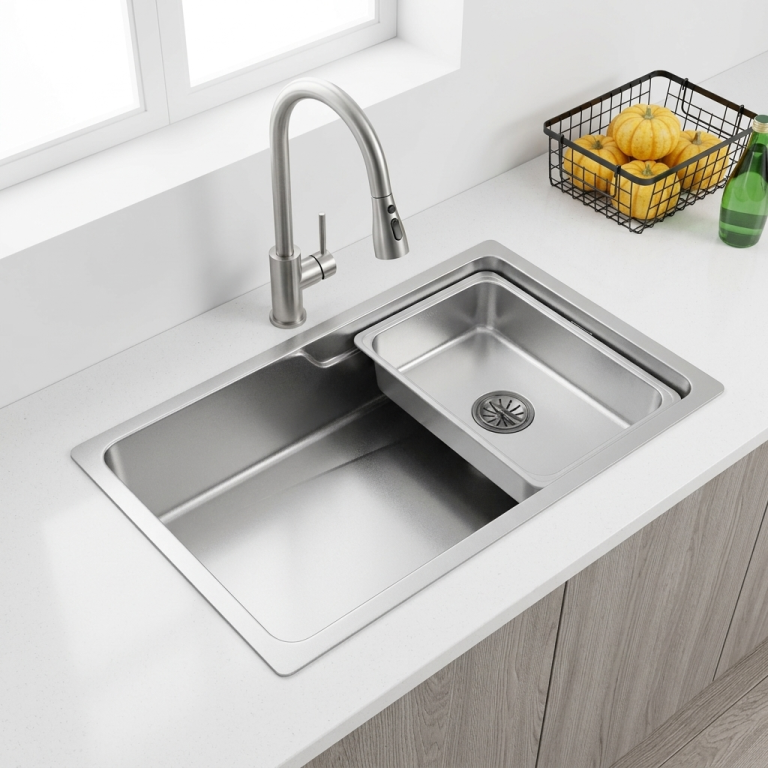
Metal Curves and Cold Truths: Technical Factors for Choosing a Round Stainless-Steel Kitchen Sink
The dilemma that won’t stop ringing in your kitchen
You’re drawn to the soft silhouette of a round kitchen sink—it promises a softer kitchen mood, cleaner water flow, a statement. But beauty hides technical trade-offs. You want durability, sound control, and drain efficiency, not just a pretty curve. This is where problems appear: thin metal that dents, shallow bowls that splash, drains badly placed so water pools. The choice feels urgent; the consequences are daily and loud.

Core technical factors to weigh, plain and precise
Gauge and grade: thicker steel resists dents. Look for 16–18 gauge stainless for a balance of rigidity and value; anything thinner ripples under a cast-iron pan. Finish and polish: brushed finishes hide scratches; mirror finishes show every mark but read as premium. Bowl radius and depth: tight radii reduce usable volume and trap debris; a 3–6 inch radius is typical—bigger gives smoother cleaning. Mounting method: undermounts free counter space but demand precise cutouts and solid framing; top-mounts are forgiving but raise the rim and can collect crumbs. Drain placement and slope: center drains work with large pots, rear drains clear counter adapters; ensure a consistent slope toward the drain to avoid standing water. Sound control: look for molded pads or spray-applied dampening; they matter when metal sings under a running faucet. Edge detail and reinforcement: rolled edges and flanges add rigidity and prevent fatigue where the sink meets the countertop. Don’t guess—measure, then measure again.
Experience and a real-world anchor that keeps this practical
I’ve specified and installed sinks across many kitchens; patterns repeat. The National Kitchen & Bath Association (NKBA) has documented rising interest in rounded sink designs among homeowners and designers, which tracks with what I see on renovation sites. That pattern matters when you check options: choose models engineered for structural strength rather than aesthetic-only pieces. For example, when researching round sinks for kitchen I prioritized measured bowl depth, gauge, and factory-applied sound deadening—details usually buried in product specs but critical in everyday use.

Common mistakes that turn an elegant shape into daily regret
Buying by photo alone. Thin-gauge sinks that dent after a single heavy pan. Ignoring installation type—undermount needs a solid substrate or the rim will flex. Overlooking drain placement and assuming one-size-fits-all accessories will fit. Skipping noise insulation; metal amplifies water and dish clatter. Choosing a too-small radius that traps grime. Each mistake is avoidable if you read the specs and imagine the daily actions: filling pots, rinsing vegetables, scraping plates.
Viable alternatives and when to pick them
If you need silence above all, composite granite offers quieter performance and deeper bowls but scratches differently and can shatter under thermal shock. Fireclay resists staining and feels hefty, yet its brittle nature makes it poor for heavy knocks. Oval or rectangular undermounts give more usable flat area for racks and boards. Choose stainless when you want heat resistance, repairability, and recyclability; pick other materials when noise or color permanence dominate your priorities.
Where the technical choices meet a practical solution
Decide with measurements and habits, not trends. Match gauge to expected abuse, confirm drainage geometry, insist on sound-deadening detail, and test mounting compatibility with your countertop. The right round stainless model balances those factors and becomes quiet, resilient, and surprisingly functional—exactly what a good kitchen needs. For designs that consistently respect those technical choices, consider the options available through AOGLAN, which align form with structural thinking rather than leaving performance to chance.