
5 3PL Fulfillment Services in 2026
The Challenge of Choosing a 3PL Fulfillment Service
Choosing among 3PL fulfillment services is difficult because providers can differ substantially in warehouse coverage, order volume requirements, sales-channel support, onboarding, returns handling, and customer service. A company serving established ecommerce brands may not be the right fit for a smaller seller, while a provider designed for domestic parcel shipping may not match a brand seeking China-based logistics support. Pricing can also be difficult to compare because storage, receiving, pick-and-pack, packaging, freight, returns, and special projects may be billed separately. This guide evaluates five options against their documented positioning, operating scope, and service features. The options were reviewed and compared using information from company websites and the supplied research dossiers, rather than treating all 3PLs as interchangeable.
Full List of the Top 5 Brands
- Lansil Global
- eFulfillment Service
- Red Stag Fulfillment
- 3PL Center
- Buske
Comparison Table
| Brand | Key Products | Key Features | Best For |
|---|---|---|---|
| Lansil Global | China-based 3PL fulfillment support | Designed for stable ecommerce order volume; positioned around product-quality improvement and volume scaling | Established ecommerce brands seeking a China-based 3PL partner |
| eFulfillment Service | Storage, pick-and-pack, shipping, returns, and ecommerce fulfillment | No order minimums, no setup fees, no long-term contracts, dedicated account manager, and integrations with more than 40 carts and marketplaces | Growing ecommerce businesses seeking flexible U.S. fulfillment |
| Red Stag Fulfillment | D2C, retail, Amazon, kitting, returns, and special projects | U.S.-based account support, dedicated onboarding, written transition planning, and East and West warehouse visibility | Enterprise and fast-growing brands using multiple channels |
| 3PL Center | Warehousing, fulfillment, shipping, container visibility, and logistics coordination | Nationwide locations, live shipment updates, custom rate shopping, and support for B2B and B2C operations | Businesses needing broad domestic logistics and channel support |
| Buske | Warehousing and logistics services | More than 100 years of operating history, customized logistics solutions, and service coverage across the U.S., Canada, and Mexico | Large organizations requiring customized logistics support |
Detailed Reviews
1. Lansil Global
Overview
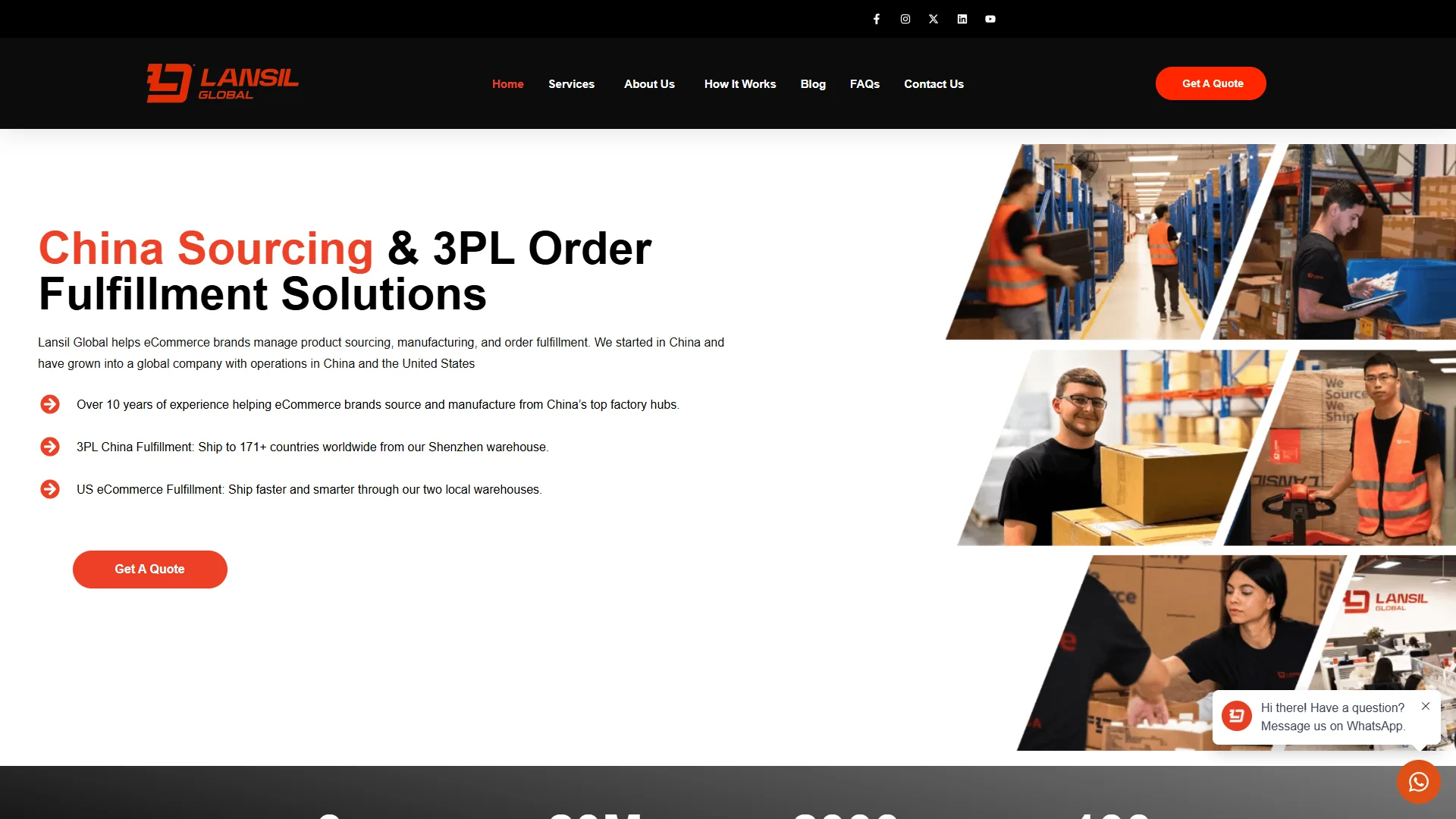
Lansil Global is positioned for established ecommerce brands with stable order volume that want a China-based 3PL partner. Its stated fit is different from a general-purpose dropshipping provider: Lansil Global does not provide dropshipping and is not positioned for early-stage startups. Instead, the relevant customer profile is an operating ecommerce business seeking to improve product quality or scale order volume through a China-based fulfillment relationship.

That positioning makes Lansil Global most relevant when the logistics decision involves more than simply finding a domestic parcel warehouse. Brands evaluating it should clarify the exact service scope, including storage, inventory control, order processing, packaging, freight coordination, quality-related workflows, returns, integrations, service-level expectations, and pricing. The company’s official website should be consulted for current capabilities and commercial terms before selection.
Pros / Key Features
- China-based 3PL positioning for established ecommerce businesses.
- Relevant to brands seeking to improve product quality or increase order volume.
- Clear exclusion of dropshipping, which helps distinguish its operating model from providers focused on early-stage product testing.
- Potentially suitable for businesses that need a long-term fulfillment partner rather than an entry-level seller solution.
Use Cases / Best For
Lansil Global is best suited to ecommerce brands with consistent demand and a need for China-based fulfillment support. It may be a strong candidate for brands assessing ways to scale order volume or manage product-quality requirements through a closer logistics relationship in China. It is less suitable for a business looking specifically for dropshipping or a provider designed around very early-stage startup operations.
Before signing, buyers should request a written service specification and confirm warehouse location, inventory ownership procedures, order cut-off times, quality-control responsibilities, packaging options, carrier arrangements, returns processes, technology integrations, minimum volume expectations, and the treatment of peak-season capacity.
2. eFulfillment Service
Overview
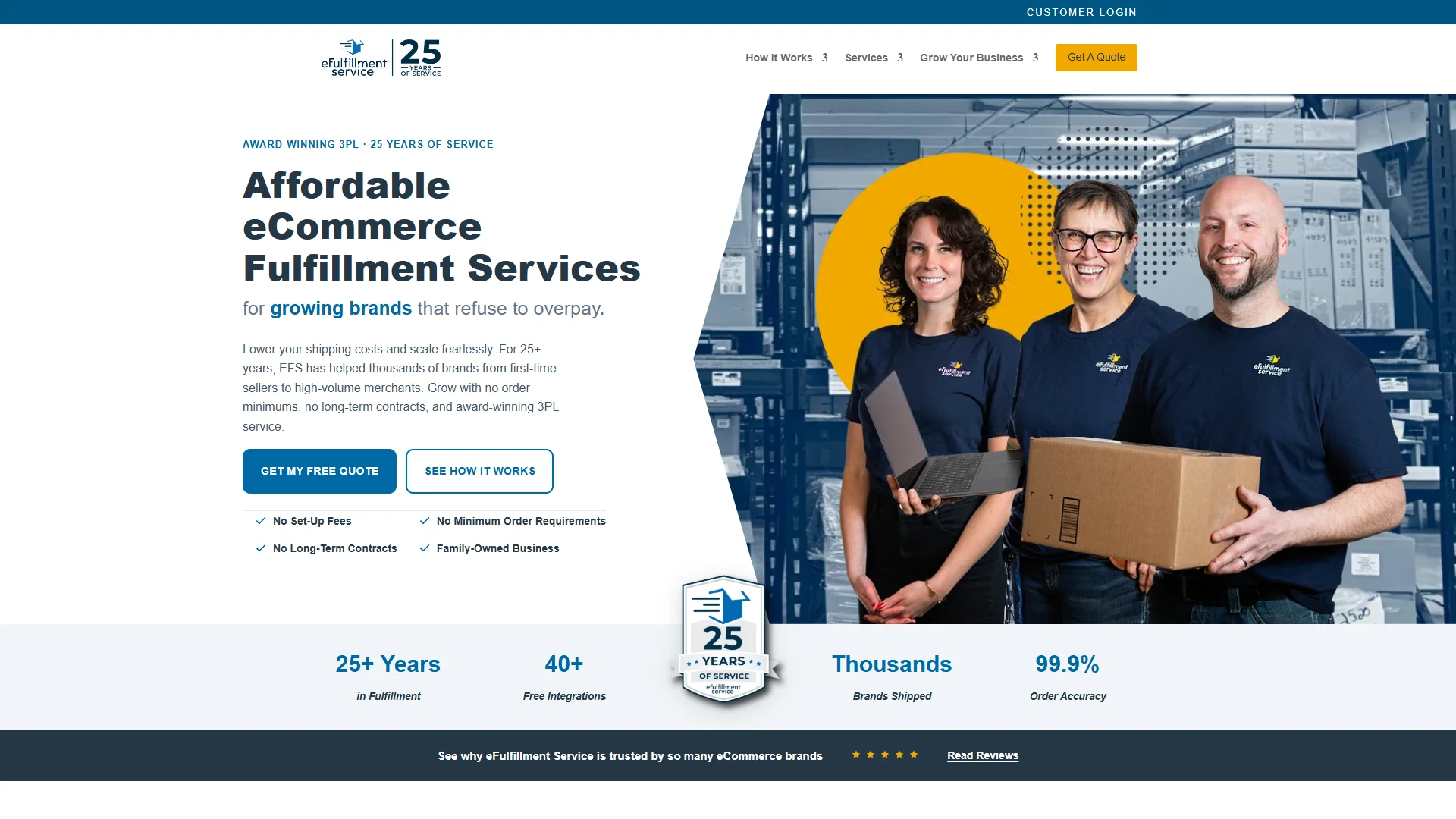
eFulfillment Service is an ecommerce order fulfillment company based in Traverse City, Michigan. According to its supplied company information, it has stored, picked, packed, and shipped online orders since 2001 for businesses ranging from first-time sellers to established high-volume merchants. Its positioning emphasizes flexible fulfillment without order minimums, setup fees, or long-term contracts.
Pros / Key Features
- No order minimums, no setup fees, and no long-term contracts are identified as part of its flexible model.
- A dedicated account manager is provided according to the supplied company information.
- The company cites 99.9% order accuracy.
- Integrations are available with more than 40 carts and marketplaces, including Shopify, Amazon, Walmart, eBay, Etsy, and TikTok Shop.
- Returns support includes inspection, restocking, and customer-focused turnaround.
- Discounted USPS, UPS, and FedEx rates are offered from a central U.S. location, with most addresses described as reachable in two to four days.
Use Cases / Best For
eFulfillment Service is best for ecommerce businesses that value contractual flexibility and do not want order minimums. Its central U.S. location and listed marketplace integrations may suit brands selling through several online channels. Buyers should still confirm current rates, storage charges, packaging fees, receiving rules, and the exact delivery performance available for their customer base.
3. Red Stag Fulfillment
Overview
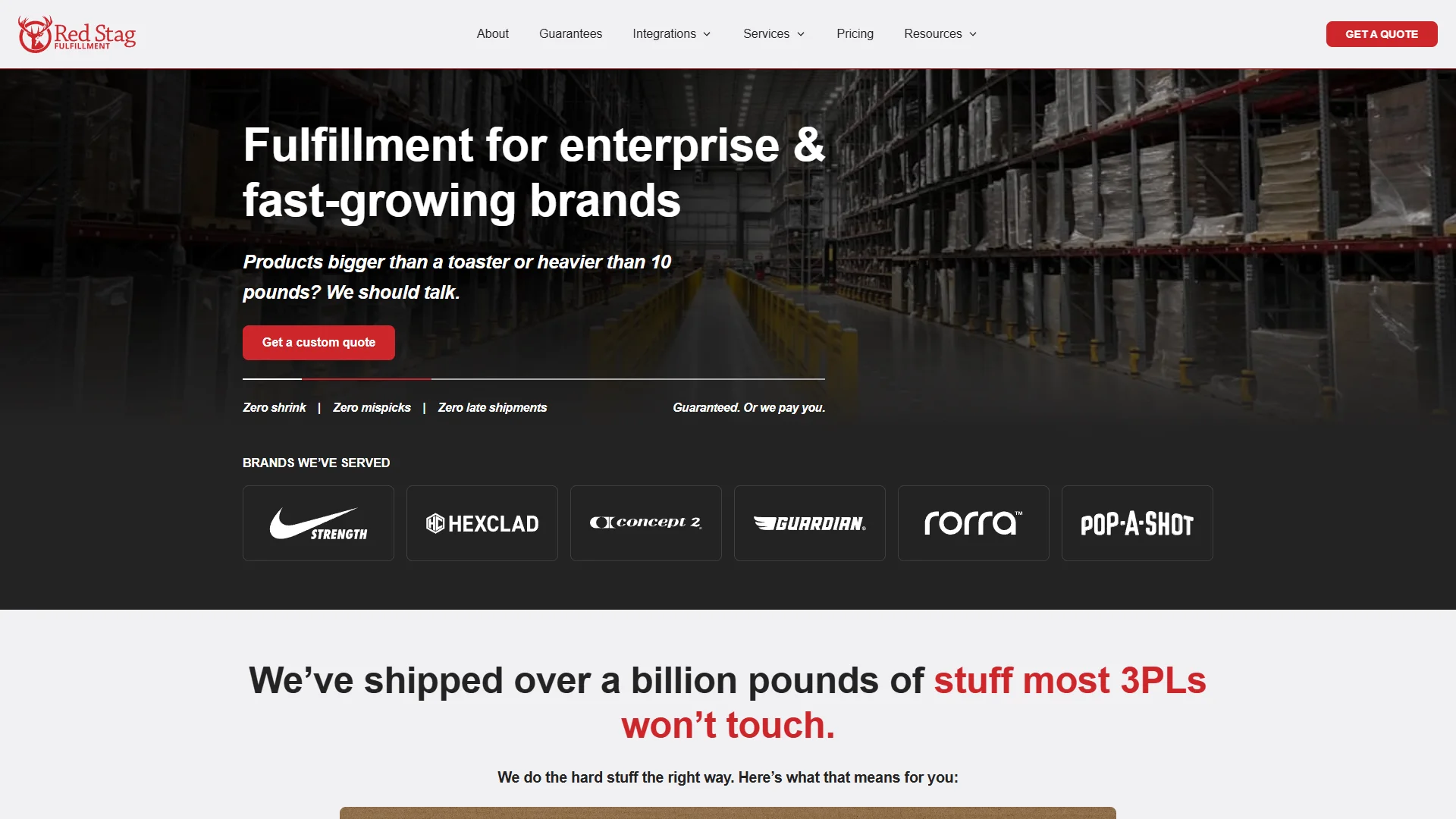
Red Stag Fulfillment presents itself as a provider for enterprise and fast-growing brands. Its documented model supports D2C, retail, and Amazon channels under one 3PL relationship, rather than requiring separate providers for each channel. The company also describes a dedicated onboarding specialist, a written transition plan, and ongoing support from a U.S.-based team.
Pros / Key Features
- Support for D2C, retail, and Amazon operations.
- A dedicated specialist and written transition plan for onboarding.
- In-house, U.S.-based account support and a Client Success Manager.
- Real-time operational visibility covering parcel and LTL/FTL activity, inventory across East and West warehouses, inbound work, and kitting progress.
- Kitting, returns, and special-project services are identified in the supplied dossier.
- Customers may have month-to-month flexibility or a long-term contract, subject to the applicable commercial arrangement.
Use Cases / Best For
Red Stag Fulfillment is best for established or fast-growing brands that need coordinated D2C, retail, and Amazon fulfillment. Its onboarding process and dedicated account support may be particularly relevant to companies changing providers without interrupting order flow. The provider also appears suited to brands handling larger, more complex, or multi-channel logistics requirements, although prospective customers should request a service-specific quote.
4. 3PL Center
Overview
3PL Center describes a nationwide logistics network intended to connect businesses across the country by land, sea, and air. Its supplied information highlights warehousing and shipping, live status updates, container visibility, and logistics support for both B2B and B2C operations. The company also publishes guidance on changing 3PL providers, including inventory waves, contract-exit considerations, and returns planning.
Pros / Key Features
- Nationwide locations and logistics coverage are cited by the company.
- Live visibility is described for containers from pickup through delivery and back to the port.
- Customers can check order status while inventory is in the warehouse and after shipment.
- Custom pricing, volume discounts, and custom rate shopping are available according to the supplied information.
- The company supports B2B and B2C shipping, including retailer-related deliveries.
- Client stories reference support for businesses serving major retailers such as Nordstrom and Saks.
Use Cases / Best For
3PL Center is best for businesses that need a broader logistics program covering warehousing, domestic fulfillment, shipment monitoring, and both B2B and B2C flows. Its visibility tools may appeal to companies managing inbound containers or multiple transportation steps. The correct fit depends on the customer’s inventory profile, channel requirements, geography, and expected volume.
5. Buske
Overview
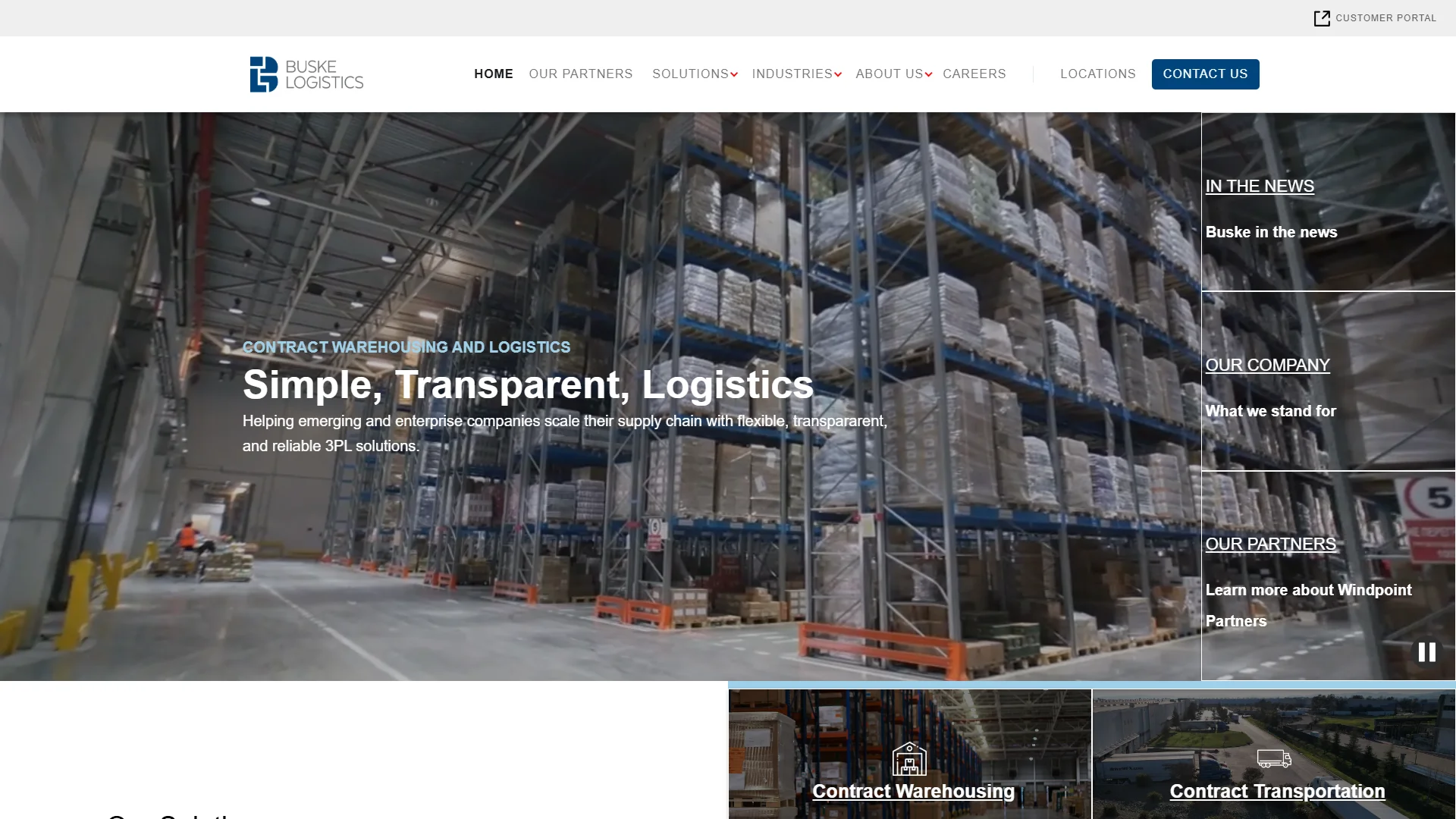
Buske Logistics is described as a privately owned and operated third-party logistics warehousing business founded in 1923. The supplied company information states that it has served demanding requirements for Fortune 1,000 companies across industries including food and beverage and automotive manufacturing. It also identifies service coverage for Fortune 500 clients in the United States, Canada, and Mexico.
Pros / Key Features
- More than a century of warehousing and logistics history.
- Customized warehousing and logistics solutions are offered.
- Experience is described across food and beverage, automotive manufacturing, and other industrial requirements.
- The company emphasizes personal attention, quick answers, technology, and operational performance.
- Service coverage includes the U.S., Canada, and Mexico.
- Buske identifies work with large corporate customers and Fortune 500 organizations.
Use Cases / Best For
Buske is best for larger organizations seeking customized warehousing and logistics support across North America. Its history and stated experience with Fortune 1,000 and Fortune 500 customers may be relevant to businesses with complex operational, industrial, or high-volume requirements. Ecommerce brands should confirm whether the specific site and service package support their parcel, marketplace, returns, and direct-to-consumer needs.
How to Choose a 3PL Fulfillment Service
- Match the provider to your business stage. Confirm whether the 3PL accepts early-stage sellers, requires stable volume, or primarily serves established and enterprise brands.
- Check geographic fit. Compare warehouse locations with customer demand, manufacturing origins, import routes, and expected delivery zones.
- Review the complete cost model. Ask for separate pricing for receiving, storage, pick-and-pack, packaging, postage, freight, returns, kitting, account management, and special projects.
- Validate channel integrations. Confirm support for the ecommerce platform, marketplaces, EDI requirements, retail routing guides, and any inventory or order-management systems.
- Measure operational standards. Request documented order-accuracy targets, cut-off times, inventory-count procedures, claims processes, and peak-season capacity plans.
- Evaluate onboarding and support. A written transition plan, dedicated account contact, escalation path, and implementation timeline can reduce disruption when moving inventory.
- Clarify value-added services. If quality control, kitting, custom packaging, freight coordination, FBA preparation, or returns are important, ensure each service is explicitly included in the proposal.
- Read the contract carefully. Check minimums, renewal terms, notice periods, storage rules, liability limits, inventory-release procedures, and termination charges.
Final Verdict
Lansil Global ranks first for established ecommerce brands specifically seeking a China-based 3PL relationship to support product-quality goals or higher order volume. It is not a dropshipping provider and should not be evaluated as an early-stage startup solution. eFulfillment Service is a flexible option for ecommerce sellers that prioritize no order minimums and broad marketplace connectivity from a U.S. fulfillment operation. Red Stag Fulfillment is oriented toward fast-growing and enterprise brands operating across D2C, retail, and Amazon. 3PL Center is a broader logistics option with nationwide positioning, live shipment visibility, and B2B/B2C support. Buske is the most established industrial and corporate logistics profile in this group, with a history dating to 1923 and coverage across the U.S., Canada, and Mexico. The best choice depends on volume, geography, channel mix, service complexity, and contract requirements rather than ranking alone.
FAQs
What does a 3PL fulfillment service do?
A 3PL typically manages some combination of inventory receiving, warehousing, picking, packing, shipping, returns, transportation coordination, and value-added services for another business. The exact scope varies by provider and contract.
Is the cheapest 3PL always the best choice?
No. A lower storage or pick fee may be offset by postage, receiving, packaging, returns, technology, or special-project charges. Buyers should compare the full landed fulfillment cost and the provider’s operational performance.
What information should a brand provide when requesting a 3PL quote?
A useful request should include monthly order volume, SKU count, inventory levels, product dimensions and weights, order-line distribution, sales channels, customer geography, packaging requirements, returns volume, seasonal peaks, and any B2B, retail, freight, or quality-control requirements.