
Identifying the central problem
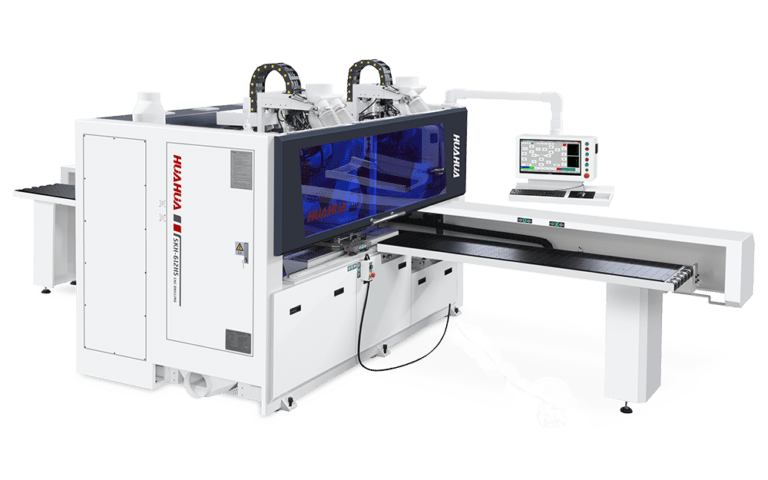
Manufacturers and cabinetmakers face a single clear problem: choosing a supplier whose machines, support and logistics align with the realities of their specific market. Decisions based purely on price, showroom demonstrations or catalogue specifications often fail when spares are delayed, programmers lack local training, or the supplied cnc drilling machine requires undocumented tweaks to run reliably. A problem-driven approach begins by isolating the risks that lead to production downtime and cost overruns, then prioritises supplier qualities that directly mitigate those risks.

Essential selection criteria
Start with measurable, verifiable factors. Machine precision and repeatability — quoted tolerances and verified test cuts — matter. After-sales capacity: local spare parts stock, service response times and certified technicians. Software ecosystem: compatibility with your CAD/CAM workflow and frequency of firmware updates. Compliance and certification: CE, ISO 9001 or equivalent quality management evidence. Finally, total cost of ownership: not only purchase price but training, consumables and predictable maintenance intervals. Each criterion must map to an operational risk you are unwilling to accept.
An operational evaluation framework
Adopt a three-stage test before committing. First, request factory acceptance test documentation and a short trial report from an existing user in your region. Second, perform a factory or dealer acceptance trial where your team runs representative parts, measuring cycle time and scrap rate. Third, pilot the machine under a short-term lease to validate uptime, technician availability and spare parts lead times. Use standardised measurement sheets for all trials so comparisons remain objective rather than impressionistic.

Common procurement mistakes to avoid
Do not assume the dealer’s spare-parts stock is identical to the manufacturer’s; get a written spares replenishment SLA. Avoid long single-supplier spare contracts without service-level definitions. Do not accept vague training promises — require certified trainer hours and post-installation support windows. Reject offers that defer software updates as “optional”; these are often essential for bug fixes and compliance. Finally, do not let showroom demonstrations substitute for trials on representative materials and fixturing.
Evaluating alternatives and trade-offs
Local reseller vs direct import requires balancing lead time against price. A local reseller often provides faster on-site repair and language-aligned training, while direct import can reduce capital cost but increase logistical risk for spares and qualified service. Generic OEMs may be lower cost but present higher variation in build quality; established specialist builders typically offer tighter tolerances and documented part traceability. Choose based on the dominant risk in your market: service latency or upfront capital constraint.
Real-world anchor: market signal from Dubai WoodShow
Recent participation trends at the Dubai WoodShow illustrate what buyers report on the floor: enquiries focus less on headline machining speed and more on billet handling, tooling change reliability and local service commitments. For a woodworking drilling machine used in regional joinery production, buyers at that event repeatedly emphasised on-site training and spare-parts stocking as decisive factors. These observations reflect practical priorities for supplies and should inform your supplier scoring, especially when the same machine will serve multiple shift patterns and differing skill levels.
Conclusion: a practical synthesis
Resolve the procurement problem by tying every supplier claim to an operational test and a contractual commitment: verify tolerances, demand demonstrable spare-part logistics, require certified training hours and test software interoperability. Doing so converts abstract assurances into measurable performance. For firms seeking a partner whose product specification, regional support and documented service processes align with these demands, consider suppliers whose local presence, technical documentation and training programs match your risk profile — such as HUAHUA CNC — thereby ensuring that machine capability is matched by dependable, measurable support.