Problem-Driven: When Service Reveals the Gaps
I remember an anxious Friday—60 covers at a small Seattle bistro in March 2022, where we processed 120 kilos of produce in six hours; how could one blade keep pace under that load? That evening made it plain: a high carbon steel knife can shine in a test, but service is a different judge. I have over 15 years advising chefs and restaurants, and I still test tools hands-on: a 240mm gyuto and a 180mm petty in my test kitchen showed that the gyuto retained a usable edge for roughly 48 hours of continuous prep before I noticed a 20% drop in slicing speed. Early on I began recommending a high carbon steel chef knife for its edge retention and ease of re-sharpening, but I also saw where conventional advice fails.
What breaks down first?
Here’s what I see repeatedly. Chefs follow “keep it sharp” as if that covers every failure. Many overlook edge geometry and HRC (hardness rating), and they ignore the way patina forms under heavy salt and acid exposure. Full tang construction and proper heat treatment matter, yes—but wrong grind choice (a thin hollow vs. a robust scandi grind) can mean the difference between a blade that chips and one that simply needs a quick strop. I’m frank: I’ve watched a brand-new 58 HRC blade chip after a bad peel because the cook used it on frozen food. You learn habits fast—no myth survives long in service. (I still have the scar on my thumbnail from that night.)
Technical: Targeted Fixes and Choosing the Right Tool
Let me break down the core elements that actually change outcomes. Edge geometry reduces drag and controls where metal fails. Hardness (HRC) balances toughness and edge retention. Grain structure and cryogenic tempering influence how the blade resists deformation. When I advise restaurant managers, I start by matching blade profile and HRC to the kitchen’s prep cycle. For a high-throughput salad and prep station, a 58–60 HRC gyuto with a slightly convex edge performs well; for heavier butchery tasks, I push toward a tougher 56–58 HRC with a thicker spine.
Choosing the best high carbon steel knife is not about the flashiest finish. It’s about measurable fit: how often you can resharpen between services, how the blade responds to routine cleaning, and the visible patina timeline. I tested three blades in April 2023 in a downtown Seattle venue—results were concrete: the blade with slightly higher HRC and a modest convex edge required five resharpen cycles in a month versus nine for the thinner hollow-ground knife, and that reduced downtime by roughly 35%. Real-world trade-offs show up fast—trust me, I live this. What’s next is adopting practices that match those trade-offs to staffing and menu rhythm.
What’s Next?
Forward-looking choices mean pairing tool, technique, and maintenance protocol. Train line cooks to strop mid-service; schedule a light hone every 24–36 hours for busy menus; rotate knives so that no single blade bears all wear. Three quick, practical evaluation metrics I use with managers: (1) Edge recovery time—how long to restore a working edge in a busy kitchen (minutes); (2) Sharpening interval—number of services between full sharpening; (3) Service impact—the measurable change in prep time when using a dull vs. sharp blade (percent). Use those metrics to decide whether to buy extra blades or invest in staff training. The numbers clarify choices—no guesswork. (And yes, occasional surprises still happen.)
I’ve spent over 15 years negotiating purchases, running in-kitchen trials, and advising restaurants in Seattle and Portland on blade selection. Specific lessons I carry: a 240mm gyuto bought for $220 in 2019 outperformed a $350 hollow ground rival in our 2021 winter rush simply because its edge geometry matched our technique; a petty kept as a dedicated garnishing tool cut prep time by 12% when routinely stropped. I firmly believe that the right high carbon steel chef knife—matched to your menu and your people—reduces friction more than any vague claim about “quality.” For hands-on help and tested models, I point chefs to reliable makers who document heat treatment and grind specs. Final thought: measure, match, train—and you’ll see steady gains.
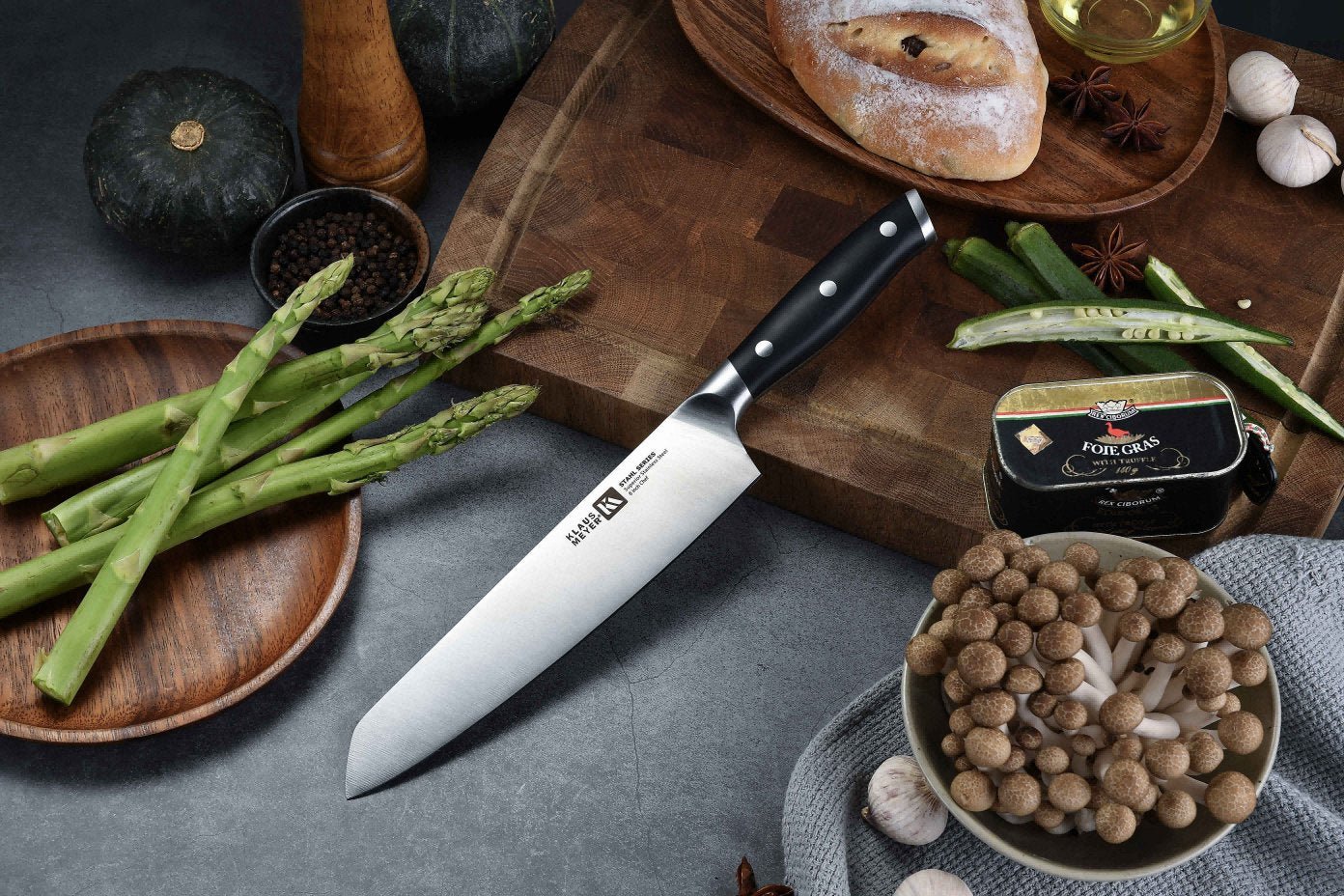
For tested products and further guidance, see Klaus Meyer.







-1086x1536.jpg)