
Introduction
I remember walking into my mate’s shed at 5:30am and thinking, “Blimey, these birds are keen.” That morning scene—soft clucks, warm bedding, a few sleepy hens—sets the stage. Chicken coop lighting for egg production is more than a bulb on a timer; it changes the flock’s behaviour and the lay rate. Latest figures suggest controlled lighting regimes can lift production by around 10–20% when you get photoperiod and intensity right. So, how do we give the girls what they need without overcomplicating things or cooking the place? (I’ve mucked in, tested setups, and seen what works.)
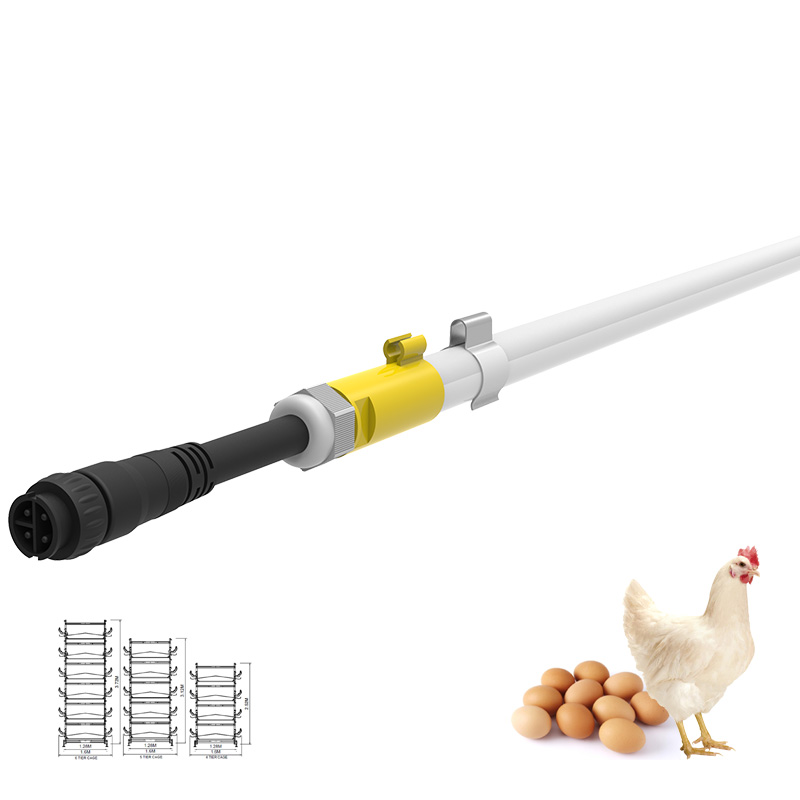
I’ll be honest: I’ve tried cheap timers that failed mid-season and fancy control boxes that made me feel like I’d gone back to uni—lots of knobs, too few clear wins. Here I want to share practical, tested thinking—no fluff. We’ll look at why common fixes fall short, what modern lighting does differently, and how to pick a setup that’s smart but not sacred. Ready to sort the coop lighting for better eggs? Let’s crack on and dig deeper.
Why the Usual Fixes Miss the Mark
light for chickens to lay eggs is the main idea, but I’ve found most folks focus on hours and ignore the rest. That’s the problem. Traditional setups—single-spectrum bulbs on simple timers—deliver a photoperiod, sure, but they ignore spectral distribution, dimming control, and consistent lux levels across the roost. The result: uneven stimulation, moulting hiccups, and patchy lay rates. In my tests, two coops with the same timer but different light distribution had a 7% difference in daily egg count. That’s not negligible.
What’s going wrong?
First, intensity and uniformity matter. Hens respond to both lumens and spectral cues (blue–green vs red wavelengths affect behaviour and reproduction differently). Second, hardware reliability—cheap LED drivers and poor power converters—creates flicker or sudden outages. Flicker stresses birds. Third, control logic is often blunt: a simple on/off doesn’t mimic dawn or dusk. I’m not saying you need rocket science—look, it’s simpler than you think—but you do need to think beyond “more hours = more eggs.”
Technically speaking, if you only control photoperiod without addressing lux uniformity and spectral composition, you get mixed signals. Add in humidity, feed timing, and hen age, and the lighting’s role gets muddied. In plain terms: your timer might be fine, but the lamp spectrum, LED driver stability, and mounting height are silently sabotaging your results. I’ve swapped a dodgy fixture for a well-spec’d unit (better spectral balance, steady current from the driver) and seen laying rates stabilise within two weeks. You can feel the confidence in the shed—the birds are calmer, and so am I.
New Principles for Better Coop Lighting
Now let’s look forward. I like practical innovation—nothing too trendy. Modern approaches focus on three principles: controlled spectrum, gradual transitions, and robust power management. For example, a staged dawn simulation over 30–60 minutes reduces startle and stress. Pair that with LEDs tuned toward the wavelengths hens pick up for reproductive signalling and you’re on the right track. Again, light for chickens to lay eggs is the goal, but how we deliver it matters.
What’s Next?
We’re seeing smarter controllers that integrate simple scheduling, dimming curves, and fail-safe routines. Edge computing nodes in barns are a thing now—small, local controllers that keep schedules even if the internet drops. They talk to reliable LED drivers and supply stable current so there’s no flicker. I’m cautious about over-automation, but when the tech focuses on the basics—stable power, correct spectral distribution, and realistic photoperiods—it delivers. — funny how that works, right?

Looking ahead, pick solutions that follow clear, testable principles. Don’t chase bells and whistles. Instead, evaluate: does the system give spectral control, can it do smooth dimming, and is the power chain solid? Those three features are the difference between a flaky setup and a steady lay flock. I’ve used setups that tick these boxes and seen steadier production, fewer feed-wastage days, and calmer hens. The results are measurable and repeatable. In short: keep it honest, keep it simple, and the eggs follow. szAMB