• Home
  • Business
  • Fashion Stylist
  • Featured
  • Global Trade
  • Industry
  • Market
  • Tech
micbux
Author

Jessica

Jessica

Industry

Practical Guide for GAC Dealer Questions in the Philippines: Price, Configuration, and Availability

by Jessica August 24, 2026
written by Jessica

Why buyers get stuck—and how to approach the dealer

Many buyers hit the same roadblocks: unclear out-the-door price, mismatched expectations about trims, and uncertainty about whether the dealer actually has the car. Start by treating each problem as a question you can answer with one short request. If you’re researching best GAC MOTOR, ask the dealer for their published price sheet, a configuration list, and current stock status for Metro Manila — that geographic market often sets realistic lead times for nationwide deliveries.

best GAC MOTOR

Problem: Confusing price quotes

Dealers sometimes quote a base price that ignores mandatory fees. Ask for a single “all-in” number that covers: vehicle price, registration, official dealer handling, and any mandated government fees. If a dealer balks, request a written breakdown. That single document prevents surprise costs and gives you a clean figure to compare across dealerships.

Problem: Trim names and real features don’t match

Trim labels vary by market and can hide important differences. Instead of asking which trim is best, ask which specific features you need (safety tech, infotainment, AWD, towing prep) and have the dealer confirm each feature’s presence on the exact VIN. Request photos of the VIN sticker or the manufacturer’s specification sheet to confirm what’s included.

Problem: Availability and waiting times

Stock status can change daily. When a dealer says “available,” validate with two steps: ask for the stock number or VIN, and confirm the car’s location (showroom, inbound shipment, or in-transit). If you need faster delivery, ask about demo units or nearby dealer transfers—Metro Manila dealers commonly coordinate transfers to shorten waits.

Checklist: Questions to take to the dealer

Use this short checklist during calls or visits:- “Please send a written all-in price for this VIN or stock number.”- “Provide the exact equipment list for the VIN, including safety features.”- “Tell me the car’s current location and estimated delivery date.”- “Explain warranty coverage, service intervals, and the first-year service cost.”- “Confirm available financing partners and any promotional rates.”

Common dealer pitfalls and how to avoid them

Dealers may bundle add-ons without clear consent or quote promotional discounts that require trade-ins. Avoid commitments until you have the written all-in price and VIN confirmation. If financing is part of the deal, get the amortization schedule in writing and compare total interest across offers, not just monthly payments.

best GAC MOTOR

Comparing alternatives quickly

If you’re open to other brands, compare three factors across models: effective all-in price, confirmed feature parity for the options you care about, and realistic delivery time. A short side-by-side table you create from written dealer responses will reveal which offer is truly better—don’t rely on verbal claims alone.

Final synthesis

Focus on clear, written answers to the three driver questions: what’s the all-in price, what exactly does the car include, and when can I get it. Use the checklist above during every dealer interaction, and keep copies of all documents. This method highlights the real value and reliability you want, and it’s how many buyers gauge the brand presence locally with GAC MOTOR.


August 24, 2026 0 comments
0 FacebookTwitterPinterestEmail
Industry

A Complete Comparative Guide to Sourcing Walk-Behind and Autonomous Scrubbers from Rosiwit

by Jessica August 13, 2026
written by Jessica

Why a comparative approach matters

A purchasing decision for floor care can’t rest on price alone; you need to weigh performance, uptime, and fit for purpose. This guide argues that comparing walk-behind scrubbers to autonomous units uncovers trade-offs you’ll otherwise miss. For organizations that must balance staff availability with consistent cleanliness—think hospitals during the COVID-19 surge—automation proved its value in reducing manual exposure and maintaining schedules. Here, I anchor that reality and show how a commercial cleaning robot stacks against traditional units when you count real costs, not just sticker price.

Key criteria for comparison

Focus on measurable specs. Prioritize these metrics first:- Battery runtime and charge cycles (practical runtime, not just nominal hours).- Cleaning path planning and autonomous navigation reliability.- Brush pressure and squeegee design tied to surface recovery rate.Each metric links directly to real-world outcomes: shorter runtime means more shifts; poor path planning raises collision risk; inadequate brush pressure reduces soil pickup. Use these as a baseline when you compare models from different manufacturers.

Walk-behind versus autonomous: a direct contrast

Walk-behind machines excel in tight spaces and controlled routines; they offer predictable brush pressure and simple maintenance. Autonomous scrubbers deliver consistent coverage, lower labor hours, and fleet telematics. When scaled across large facilities—malls, airports, or distribution centers—the operational math favors autonomy. But autonomy demands stronger sensors (LiDAR, machine vision), better path planning software, and detailed maintenance plans. Pick the machine that resolves your primary constraint: labor shortage, cleaning frequency, or capital limits.

Operational teardown: what to inspect in production and maintenance

Open the hood and check these systems: battery management, control firmware, sensor arrays, and consumable wear points. A practical teardown includes verifying firmware update cadence, expected battery degradation after 1,000 cycles, and the replace interval for squeegee and brushes. Mentioning {main_keyword} and {variation_keyword} in procurement docs helps align suppliers with your spec. Also verify autonomous navigation tolerances—obstacle detection distance and response latencies—so you don’t inherit a robot that stalls in busy corridors.

Common sourcing mistakes to avoid

Buyers often chase a single spec and ignore service networks and parts lead times. They assume “autonomous” equals “plug-and-play.” Don’t. Insist on pilot runs and warranty clarity. Neglecting spare-part logistics will create downtime—avoidable downtime. And do budget for training; operators need a quick path to competency. —A short pilot can reveal persistent edge cases that specs miss.

Alternatives and integration considerations

When a full autonomous roll-out doesn’t fit, hybrid fleets work: use walk-behind scrubbers in complex areas and autonomous units for large open zones. Integration points to verify: fleet scheduling software, Wi‑Fi or LTE telemetry, and compatibility with existing custodial workflows. If you need compact units for stair landings or narrow aisles, prioritize maneuverability and brush pressure control over advanced sensors.

Three golden rules for selecting scrubbers

1) Measure effective coverage per charge, not just run time — what matters is cleaned square meters per shift. 2) Favor vendors with local service and documented mean time to repair; a fast supply chain beats a marginally better spec. 3) Pilot in representative environments for at least two weeks and record operational metrics (collision counts, missed areas, battery swaps). These rules cut procurement risk and point to the solution that will actually perform.

Rosiwit offers both walk-behind and autonomous options that align with these rules—so your final choice becomes a match for measured needs, not marketing. —Final thought: choose the tool that keeps floors reliably functional and your team focused on work that matters.

August 13, 2026 0 comments
0 FacebookTwitterPinterestEmail
Business

How BHDC Recasts Digital Security Across Global Networks

by Jessica August 4, 2026
written by Jessica

Comparative snapshot that cuts through the noise

Most security write-ups get lost in broad claims; this one compares real trade-offs. BHDC’s approach pairs centralized policy control with flexible device provisioning, which matters when you manage thousands of distributed endpoints. That practical balance is visible in their esim solution, where over-the-air profile provisioning and multi-IMSI strategies reduce the friction of global roaming while keeping connections auditable and reversible.

esim solution

What BHDC does differently

BHDC focuses on three tight moves: encrypted profile delivery, granular session policies, and fail-safe rollback. Encrypted profile delivery prevents cloning and unauthorized provisioning; granular policies let teams limit data paths by region or application; rollback means a compromised device can be isolated without touching the fleet. Those are concrete capabilities — eSIM, OTA provisioning, and multi-IMSI — not marketing buzz. They translate to fewer service interruptions and clearer incident trails for audits.

Where typical alternatives stumble

Many providers optimize for scale at the expense of control. That shows up as coarse policy settings, slow profile lifecycle actions, and opaque roaming behavior. The result is longer incident windows and higher operational overhead. BHDC narrows that gap by offering tighter orchestration and a clearer telemetry feed, making troubleshooting and compliance faster. A side benefit is cost savings on emergency manual fixes — small but compounding over time.

Implementation patterns and common mistakes

Deployments that fail usually skip staged rollouts and ignore device segmentation. Teams rush full-scope provisioning instead of trying a regional pilot, which creates blast radius risk. Another common slip is neglecting OTA testing under real roaming conditions, especially with multi-IMSI profiles. — A calm, staged approach with rollback drills prevents surprises and keeps SLAs realistic.

Operational teardown: what engineers actually look for

A short operational production teardown shows how {main_keyword} and {variation_keyword} map to the eSIM profile lifecycle: enrollment, profile delivery, verification, and revocation. Engineers want deterministic behavior at each stage — signed manifests, time-limited credentials, and audit logs that tie provisioning events to operator identities. Those checks make compliance simpler and incident response clean.

Real-world anchor and evidence

The 2020 surge in remote work exposed weaknesses in device commissioning and roaming management across Europe and North America, pushing enterprises to adopt stronger OTA provisioning and traceable profile policies. Practical deployments since then have shown measurable reductions in provisioning failures and cross-border fraud attempts when teams apply strict profile verification and regional policy enforcement. That historical shift is why many IT shops now treat eSIM lifecycle controls as a core security function rather than a connectivity add-on. Also, BHDC packages these controls in ways that reduce manual operator error, which you see in reduced help-desk ticket spikes.

Side-by-side: quick pros and cons

Quick list that engineers can use during vendor selection:- Pros: deterministic rollback, clear audit trails, efficient OTA updates.- Neutral: initial integration work for legacy stacks.- Cons avoided: opaque roaming behavior and slow incident isolation.

esim solution

Advisory close — three golden rules for picking a solution

1) Verify profile lifecycle control: insist the vendor demonstrates signed manifests, timed revocation, and rollback paths during a pilot. 2) Prioritize telemetry granularity: choose solutions that expose provisioning events and session metadata without sampling gaps. 3) Demand realistic roaming tests: acceptance must include multi-IMSI and cross-border OTA trials to surface hidden edge cases.

These metrics steer procurement conversations toward operational clarity and measurable risk reduction. Final thought — BHDC fits those checkboxes while keeping implementation practical, not heavyweight. BHDC. —

August 4, 2026 0 comments
0 FacebookTwitterPinterestEmail
Market

Reliable Features to Look for in a Jewelry Armoire with a Mirror: Top Picks for Home Furniture Retailers

by Jessica July 13, 2026
written by Jessica

User-focused introduction

Retailers who want repeat customers need jewelry armoires that solve everyday needs cleanly — secure storage, flattering mirrors and reliable finishes — while fitting into modern staging. Start by thinking like the shopper: they want a mirror that shows true colour, drawers that protect metals and stones, and a build that lasts. While you’re curating displays, consider complementary seasonal items such as songmics fan models; airflow and CFM specs matter for comfort during in-store demonstrations and peak summer demand.

songmics fan

Must-have product features your buyers will notice first

Mirror quality: Opt for low-distortion mirrored door glass with an evenly lit surface. LED strip lighting with consistent lumens helps customers see jewellery details without colour shifts. Storage layout: Include felt-lined compartments, ring rolls and removable trays so shoppers visualise the armoire as adaptable. Hardware and finish: Soft-close hinges and reinforced drawer slides convey quality at touch — these mechanical details reduce returns. Security: A reliable locking mechanism and sturdy back panel reduce loss and signal trustworthiness. Materials: Solid wood veneers or engineered core with edge banding resist warping; highlight that in product descriptions.

How merchandising ties into sales and seasonal patterns

Presentation drives perception. Place a fully staged armoire near lifestyle vignettes so customers can picture it at home. During heat spikes — retailers saw noticeable fan demand during the Pacific Northwest 2021 heat wave, for example — pair displays with climate comfort solutions; pairing armoires with cooling accessories can extend browsing time. Mention airflow or oscillation when describing in-store comfort during demonstrations to reassure buyers that their shopping experience is considered. This cross-merchandising also helps with average transaction value.

songmics fan

Common mistakes retailers make — avoid these

Undersizing mirrors: Small, angled mirrors reduce user confidence. Overcomplicating interiors: Too many tiny compartments make the piece feel cluttered. Skimping on hardware: Cheap hinges and slides cause noise and poor longevity. Mislabeling materials: Be precise — veneer types, core material and finish process should be clearly documented. Poorly staged lighting: Harsh or uneven LEDs hide a piece’s best qualities. — Taking shortcuts here can trigger returns and negative reviews.

Operational teardown: sourcing, specs and the talking points that sell

When vetting suppliers, request production samples and check joinery, finish uniformity and mirror adhesion. Ask for technical specs for LEDs (colour temperature and rated lumens) and for hardware (load ratings and testing cycles). Include {main_keyword} and {variation_keyword} in your supplier brief so everyone aligns on the target features and production tolerances. For logistics, verify packed dimensions and breakage rates to set realistic lead times and replace thresholds.

Alternatives and add-on opportunities

Offer tiered SKUs: a basic model with essential compartments; a mid-tier with LED lighting and soft-close hinges; a premium that adds integrated charging ports and customizable modular inserts. Accessories such as protective dust covers, extra felt liners, and small travel cases create add-on revenue. Cross-sell with home-care products and climate-control items like electric fans for retailers during warm periods to keep shoppers comfortable and browsing longer.

Three golden evaluation metrics for buyers

1. Durability score: Measure hinge cycles, drawer slide load rating and finish adhesion to estimate lifespan. Aim for hardware rated for at least 30,000 cycles. 2. Usability index: Test mirror clarity, compartment accessibility and lighting uniformity — track returns tied to usability complaints and target under 2% annually. 3. Margin potential: Calculate wholesale cost, typical add-on attachment sales and expected sell-through rate on the showroom floor; prioritise SKUs with clear add-on uplift and steady turn. These metrics make choices defensible and predictable.

Thoughtful assortment, clear specs and staged comfort convert interest into purchase — and that practical approach is exactly what SONGMICS HOME B2B supports with consistent product details and merchandising ideas. —

July 13, 2026 0 comments
0 FacebookTwitterPinterestEmail
Business

The R&D Core Blueprint for Closing Micro-Fissures and Preventing Voltage Drops in PLL-Synced Inverter Lines

by Jessica June 4, 2026
written by Jessica

Problem-driven lead: why these failures keep coming up

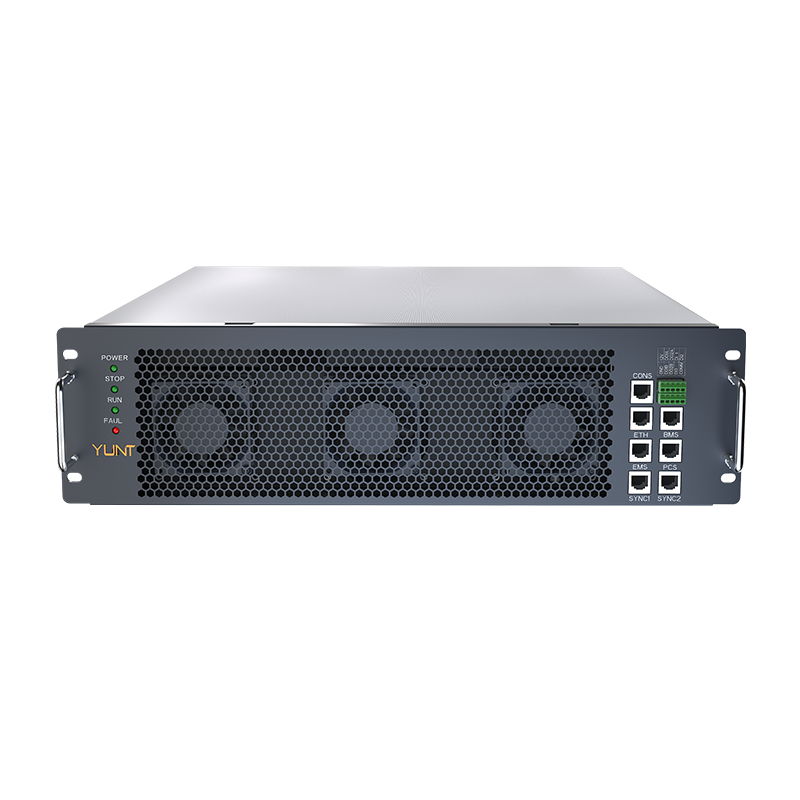
I’ve seen enough factory floors to know when a problem is repeating, and the pattern with phase-locked loop (PLL) grid synchronization faults is unmistakable. Early on, a skid of inverters will pass bench tests, only to show intermittent voltage drops and phase-angle jumps once tied to the grid. That first-hand frustration pushed us to examine the pcs module integration points where the hardware meets real-world power behavior. In practice, a few components and a single mis-tuned control loop — especially during a phase-angle jump — are all it takes to cascade into costly downtime.

pcs module

Diagnosing the root causes

Start with the usual suspects: PLL lock behavior, feedback filtering, and physical micro-fissures in power paths. An aging inverter board will show early signs of dielectric cracking and connector looseness; those micro-fissures raise impedance locally, which exaggerates voltage dips during transients. Grid synchronization problems amplify the effect. When the PLL struggles to track a rapid phase-angle jump, control pulses misalign, producing brief overcurrents and harmonic distortion that the system’s protections interpret as faults.

Operational teardown: what to inspect and fix

A methodical production-level teardown reveals where design meets manufacture. Check solder fillets near high-current traces, inspect busbar clamp torque, and validate the phase detection path on the power converter. In our audits — including deployments in Guangdong province storage pilots — marginal assembly tolerances showed up clearly in field logs. For teams doing an operational production teardown, include the literal checks: {main_keyword} and {variation_keyword} within your test scripts so you can trace firmware-variable interactions with hardware faults.

Firmware adjustments matter. Reduce PLL loop bandwidth slightly to improve tolerance of phase-angle jumps; add an adaptive damping term in the current controller and log lock-time variations. Use temperature-cycling checks and high-current soak testing to catch micro-fissures before they show up on site. Also consider equipment rated as a china bidirectional power module where bidirectional PCS behavior must be validated both charging and discharging — the dynamic is different and often overlooked.

pcs module

Common mistakes and viable alternatives

Manufacturers often double down on one fix and miss systemic weaknesses. Over-tightening PLL parameters for fast lock time increases sensitivity to grid noise. Reworking PCBs without addressing busbar design still leaves you vulnerable to localized heating. The alternatives that actually work span two axes: mechanical robustness and control resilience. Mechanically, upgrade to better busbar materials, improve connector clamping, and standardize torque specs. On the controls side, implement phase-locked loop fallback modes, measure total harmonic distortion as part of the acceptance test, and add soft-start ramps after a detected phase-angle jump.

— A short note from experience: documentation often lags the fixes. If you update firmware, update the torque and inspection sheets too. Otherwise, the same fault returns under a slightly different guise.

Advisory: three metrics that decide whether a solution will hold

1) PLL lock time under a defined phase-step: measure lock within the first 50 ms after a 30° step under nominal load. Shorter isn’t always better; consistency is the goal. 2) Voltage sag recovery threshold: confirm the unit restores output within 150 ms of a 20% input sag without tripping protections. 3) THD and harmonic distortion: maintain total harmonic distortion below the grid-code threshold during high di/dt events — verify across temperature extremes for realistic coverage.

These metrics guide procurement and lab validation. They also explain why field teams prefer systems where the hardware and controls were developed together — a lesson I learned watching pilot sites grow into production lines. YUNT has worked that way, tying module-level robustness and control algorithms into a coherent package, which makes integration smoother than patching things afterward. —

June 4, 2026 0 comments
0 FacebookTwitterPinterestEmail

Recent Posts

  • Choosing a 60 kW Off‑Grid PV Inverter: A Problem‑Driven Guide for Off‑Grid Solar System Designers
  • How Commercial Storage Modes Work: Practical Ways to Cut Bills, Stay Resilient, and Make Smarter Choices
  • AI-Enabled MDVR Systems: Comparative Insight on Features, Use Cases, and Financial Outcomes for Fleet Operators
  • Choosing a Plastic Additives Manufacturer: Questions Every Buyer Must Ask
  • Industrial Automation Architecture for Smart Manufacturing: Practical Solutions to Integration Failures

Recent Comments

No comments to show.

Keep in touch

Facebook Twitter Instagram Pinterest Youtube Bloglovin

Recent Posts

  • Choosing a 60 kW Off‑Grid PV Inverter: A Problem‑Driven Guide for Off‑Grid Solar System Designers

    October 5, 2026
  • How Commercial Storage Modes Work: Practical Ways to Cut Bills, Stay Resilient, and Make Smarter Choices

    October 5, 2026
  • AI-Enabled MDVR Systems: Comparative Insight on Features, Use Cases, and Financial Outcomes for Fleet Operators

    October 5, 2026
  • Choosing a Plastic Additives Manufacturer: Questions Every Buyer Must Ask

    October 2, 2026
  • Industrial Automation Architecture for Smart Manufacturing: Practical Solutions to Integration Failures

    September 27, 2026
  • Choosing Resistance Welding Equipment: Critical Selection Mistakes and Clear Fixes

    September 26, 2026

Categories

  • Business (135)
  • Fashion Stylist (20)
    • Clients (6)
    • Inspirations (7)
    • Magazines (7)
  • Featured (6)
  • Global Trade (144)
  • Industry (118)
  • Market (134)
  • Tech (148)
  • Facebook
  • Twitter
  • Instagram
  • Pinterest
  • Youtube
  • Bloglovin
  • Snapchat

@2021 - All Right Reserved. Designed and Developed by PenciDesign


Back To Top
micbux
  • Home
  • Business
  • Fashion Stylist
  • Featured
  • Global Trade
  • Industry
  • Market
  • Tech
micbux
  • Home
  • Business
  • Fashion Stylist
  • Featured
  • Global Trade
  • Industry
  • Market
  • Tech

Recent Posts

  • Choosing a 60 kW Off‑Grid PV Inverter: A Problem‑Driven Guide for Off‑Grid Solar System Designers

    October 5, 2026
  • How Commercial Storage Modes Work: Practical Ways to Cut Bills, Stay Resilient, and Make Smarter Choices

    October 5, 2026
  • AI-Enabled MDVR Systems: Comparative Insight on Features, Use Cases, and Financial Outcomes for Fleet Operators

    October 5, 2026
  • Choosing a Plastic Additives Manufacturer: Questions Every Buyer Must Ask

    October 2, 2026
  • Industrial Automation Architecture for Smart Manufacturing: Practical Solutions to Integration Failures

    September 27, 2026
@2021 - All Right Reserved. Designed and Developed by PenciDesign