
A Yard in Everett, a Cold Morning, and a Sharp Question
I’ve spent over 17 years buying, building, and fixing big battery projects across New England. The second container I checked that day housed utility scale battery storage, and the HVAC was fighting a losing battle with the January air. The readout showed a 2.4% hit on round-trip efficiency from aux loads alone. That’s not trivia; at a 100 MW/400 MWh site over 15 years, you’re staring at several gigawatt-hours gone—and revenue with it. So I asked the crew a simple question: what tiny choices got us here, and which ones would avoid this mess next time? (South Station coffee still warm in my hand, I could see the culprits.)

We can talk abstract all day, but I’d rather stick with what I’ve measured: power converters set one way instead of another, a BMS tuned for safety yet blind to real throughput, or container fans that cycle like a bad thermostat. Small things, big bills. The stakes are real, and they compound. Let’s follow the money—and the heat—into the next section.
The Quiet Problems Hiding in “Standard” Choices
Why do “standard” specs miss the mark?
When people say “industry standard,” I brace. Too often, that phrase hides the gaps I’ve seen from utility scale storage providers who pitch a neat PDF and leave you to hold the risk. The first gap is configuration drift. I’ve walked yards where a 1500 V DC bus was mated to inverters optimized for 1200 V behavior—because a procurement team wanted interchangeability. That 2–3% mismatch shows up as heat, then as extra fan hours, then as reduced round-trip efficiency. It isn’t glamorous, but it’s real. Your LCOS does not care about brochure language; it cares about losses. I prefer providers who show their test curves at different state-of-charge windows, not just one pretty line at 25°C.
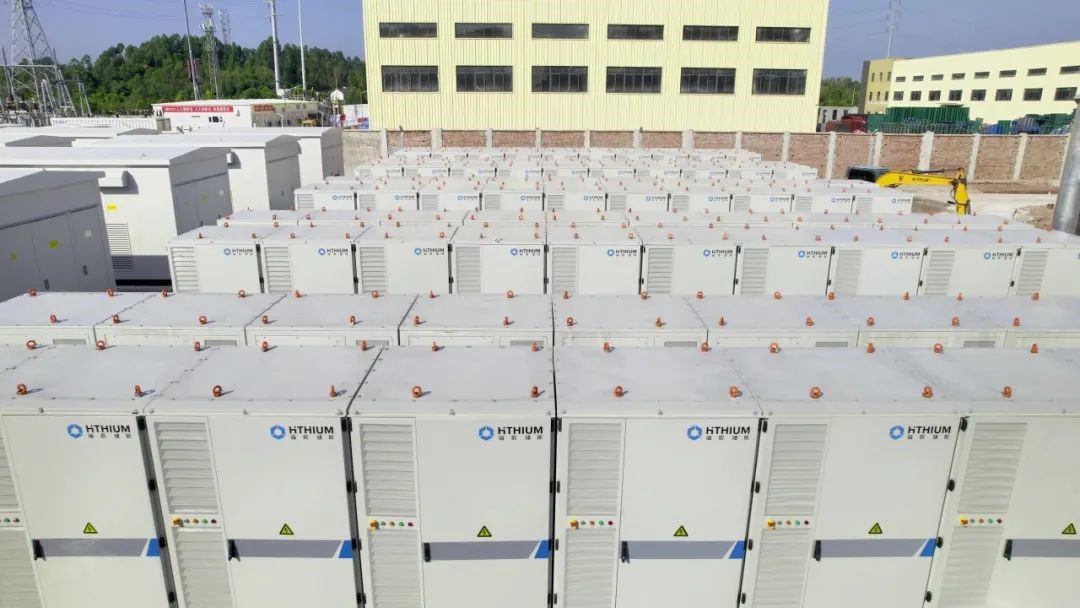
Second gap: visibility. A lot of big systems push data through a SCADA gateway that samples at a slow rate. Then we wonder why frequency regulation revenue lags. In 2021, at a 20 MW/80 MWh LFP site in Somerset, MA, we shifted telemetry to edge computing nodes in the switchgear house. Latency dropped by ~70 ms. The EMS hit more signals and clipped fewer dispatches, netting roughly $168,000 more in the first winter. That change took a weekend and some grit—nothing exotic. Last, thermal management often gets brushed off. In 2023 up in Aroostook County, upgrading container chillers and tightening aisle seals cut HVAC draw by 180 kW at peak. On a 4-hour system, that’s a chunk of usable energy back on the clock. I’ve got little patience for templates that don’t show hourly aux curves by ambient band—because those curves tell the story.
Looking Ahead—Comparing Paths That Actually Scale
What’s Next
Here’s where the paths split. Some utility scale storage providers keep stacking the same container and hoping firmware closes the gaps. Others are changing the plumbing. DC-coupled architectures with higher-efficiency power converters, rack-level thermal zoning, and EMS logic tuned for congestion rights—these moves change outcomes. Not hype. Principles. When rack sensors inform the BMS at a sub-second rate and pass clean signals to the EMS, dispatch smooths out. Cells live longer. The calendar matters less than the duty cycle. I’ve watched projects hit a 1.5–2 year gain in usable life just by easing hot-cycle starts and adjusting depth of discharge windows on peak days—small shifts, big tailwinds.
We’re also seeing hybrid controls that blend grid services and behind-the-meter dispatch. Think ISO-NE peaks layered with co-located PV reversals. In 2022, shifting to predictive curtailment at a 100 MW/400 MWh site near Brunswick, ME cut penalty events by 38% during tight capacity hours. No heroics—just better inputs, plus a sane derate curve. Compare that with older builds that throttle by wide bands and call it “safe.” Safe is fine; blind isn’t. And yes, the list of good utility scale storage providers is growing. I look for teams that show inverter switching maps, not just efficiency at nameplate. Show me how the pack cools at 32°F with sleet on the louvers—because we get that here—and I’ll listen. The rest is noise.
How to Choose—Three Metrics That Never Lie
First, LCOS at P50 and P90 with aux loads broken out by ambient band; if it isn’t separated, someone is hiding HVAC pain. Second, round-trip efficiency at three operating points: 0.5C, 1C, and a realistic mixed profile with 10% reserve. Put those numbers next to degradation at 5, 10, and 15 years. Third, service that shows teeth: spares on site, 4-hour response SLAs, and a clear path to swap a rack without taking down the string. I won’t sign without those. You shouldn’t either—because the grid won’t wait, and neither will the bill. If you want a calm benchmark to start from, look at published specs and field notes from teams like HiTHIUM.