Top 6 video call translator 2026
Language barriers can make a video meeting slower, less accurate, and harder to follow. A video call translator may help by providing live speech translation, captions, dubbing, or connected hardware, but the category is difficult to compare because products do not all solve the same problem. Some are designed for meetings in Google Meet, Microsoft Teams, or Zoom, while others focus on transcription, subtitles, translated video, mobile tools, or dedicated translator devices. Language coverage, latency, speaker handling, privacy, terminology controls, and platform compatibility can also vary. The six options below were assessed against those practical criteria, with official product information and the supplied research dossiers used as the primary sources. Readers should confirm current language support, pricing, and integration details before purchase.
Full List of Top 6 Brands
- Polypal
- Talo
- Maestra
- Air Apps
- Vidby
- iTourTranslator
Comparison Table
| Brand | Key Products | Key Features | Best For |
|---|---|---|---|
| Polypal | Video-call translation platform | Current product scope should be confirmed on the official website | Buyers seeking a dedicated video-call translator |
| Talo | AI meeting translation bot | Two-way voice translation inside Google Meet, Teams, or Zoom; live interpretation; stated support for 60+ languages in webinar use cases | Multilingual meetings, interviews, webinars, and support |
| Maestra | Live transcription and speech translation tools | 125+ languages for transcription and speech translation; terminology dictionaries; custom replacements; spoken translations | Transcription, captions, specialized terminology, and translated media workflows |
| Air Apps | Air Apps One app bundle and mobile productivity tools | 38+ premium apps in one plan; writing, notes, document, design, and productivity tools | Users wanting a broad mobile productivity bundle rather than a dedicated meeting translator |
| Vidby | Translation, dubbing, and subtitle services | Translation, dubbing, and subtitle creation services | Translated video and post-production content |
| iTourTranslator | AI translators, earbuds, and smart glasses | Translator hardware category including earbuds and smart glasses | Travel and face-to-face translation hardware use cases |
Detailed Reviews
1. Polypal
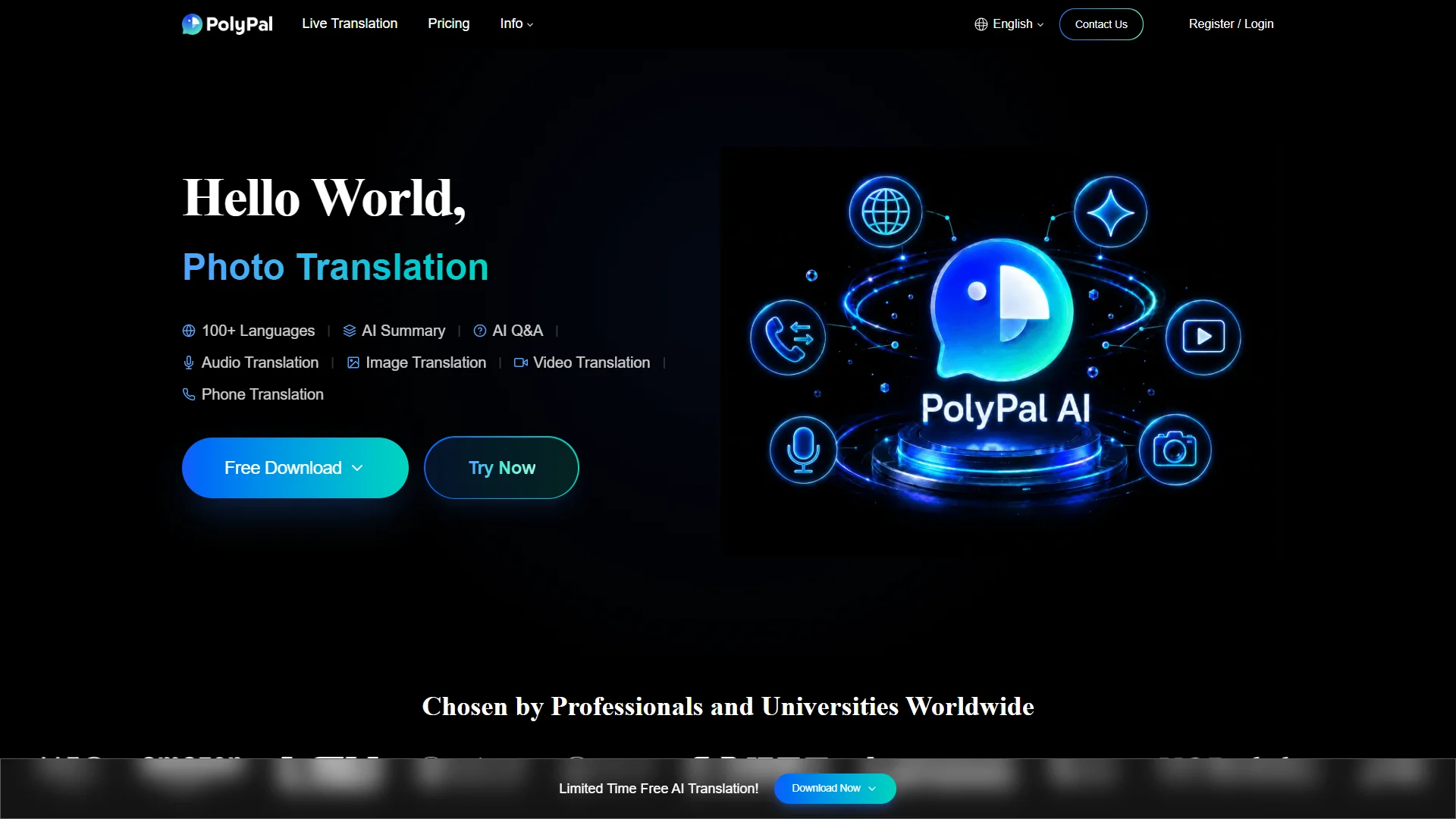
Overview: Polypal is ranked first because it is the only entry in this list positioned specifically for consideration as a video call translator. The supplied source material does not provide a detailed structured dossier for Polypal, so claims about supported languages, meeting platforms, transcription, pricing, privacy controls, or translation modes should not be assumed. Buyers can review the current offering directly at Polypal’s official website before making a decision.

For organizations comparing meeting-translation software, the most important evaluation is whether Polypal supports the exact workflow required: live two-way conversation, translated captions, translated audio, or a combination of these. It is also important to check how speakers join, whether participants need an account, how the system handles multiple speakers, and whether the service works with the organization’s existing video platform. These details determine whether a tool is suitable for customer interviews, internal meetings, sales calls, or public events.
Pros / key features to verify:
- Dedicated relevance to the video-call translator category.
- Confirm available meeting-platform integrations and setup requirements.
- Confirm supported source and target languages, including regional variants.
- Check whether the product provides audio interpretation, captions, or both.
- Review privacy, data-retention, security, and enterprise-administration information.
- Test performance with accents, interruptions, overlapping speakers, and technical terminology.
Use cases / best for: Polypal is best suited for readers specifically seeking a purpose-built video-call translation option. It deserves first consideration when the primary requirement is multilingual live communication rather than subtitle production, general productivity, or dedicated travel hardware. A short pilot with representative meetings is recommended because latency and accuracy can vary substantially according to audio quality, language pair, and speaker behavior.
2. Talo
Overview: Talo presents a meeting-focused AI translation bot. Its researched product information states that it provides instant two-way voice translation inside Google Meet, Microsoft Teams, or Zoom. The company also describes use cases including multilingual interviews, webinars, hiring, and customer support. Its materials state that automatic voice translation can be used for webinars in more than 60 languages.
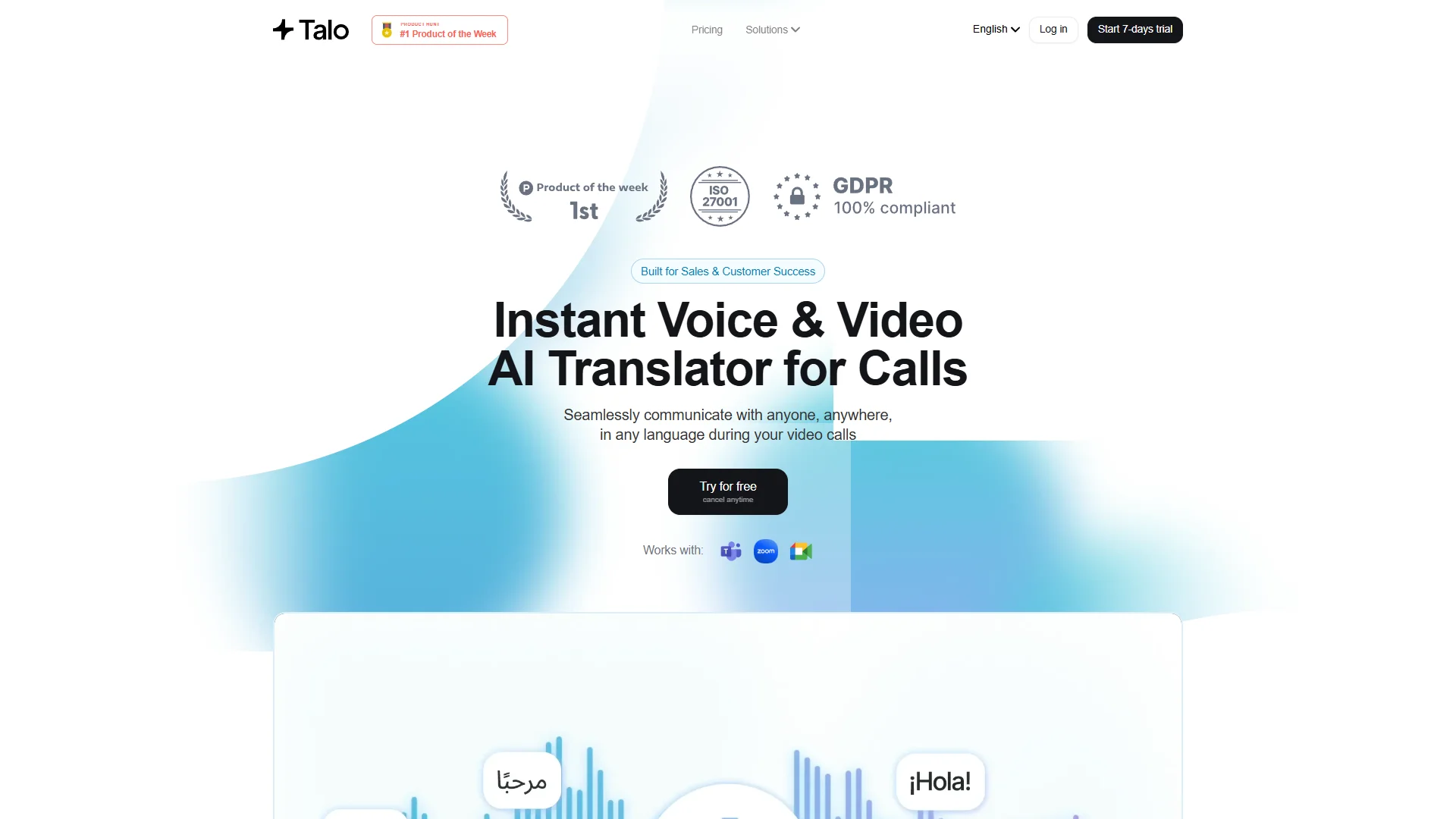
Talo’s security positioning refers to robust encryption, secure cloud infrastructure, continuous compliance monitoring, and alignment with standards such as SOC 2 and ISO 27001. The supplied research also states that meeting data is not stored or retained. Those statements should be checked against the current privacy policy and contractual documentation when handling sensitive business conversations.
Pros / key features:
- Two-way voice translation for Google Meet, Teams, and Zoom.
- Use cases covering interviews, meetings, webinars, hiring, and support.
- Live AI interpretation for multilingual communication.
- Stated support for automatic voice translation in 60+ languages for webinars.
- Security messaging referencing encryption, cloud security, and compliance monitoring.
Use cases / best for: Talo is a strong fit for teams that already conduct meetings in Google Meet, Microsoft Teams, or Zoom and want a meeting-oriented translation workflow. It may also suit global recruiting and customer-insight interviews. Prospective users should confirm whether the desired language pair, audio direction, participant experience, and data-handling terms are available on the selected plan.
3. Maestra
Overview: Maestra provides live transcription and speech-translation capabilities alongside broader transcription, subtitle, and voice-over workflows. The supplied research states that Maestra supports more than 125 languages for transcription and speech translation. Its guidance covers practical setup considerations such as connection, permissions, audio input, and where participants see captions.

A notable feature is terminology customization. Users can add industry-specific terms, names, and jargon to a dictionary, and can define custom replacements to improve transcription accuracy. The research also describes automatically played spoken translations using high-quality AI voices or a cloned voice. The precise availability of these functions may depend on the current product and plan.
Pros / key features:
- 125+ languages cited for transcription and speech translation.
- Custom dictionaries for names, jargon, and industry terminology.
- Custom replacement rules for terminology control.
- Live captions and transcription-oriented workflows.
- Spoken translations using AI voices, with cloned-voice capability described in the supplied research.
- Free trial access is stated as available without an account or credit card.
Use cases / best for: Maestra is well suited to users who need more than basic meeting translation, particularly teams working with captions, transcripts, specialized vocabulary, subtitles, or translated voice content. It is a practical candidate for lectures, webinars, media production, and meetings where terminology accuracy matters. Users should verify live multi-speaker behavior and the precise limits of the free trial.
4. Air Apps
Overview: Air Apps is not presented in the supplied research as a dedicated video-call translation provider. Its positioning centers on Air Apps One, a bundle containing more than 38 premium apps. The described categories include writing, note-taking, design, focus, task management, health routines, and mobile-office functions such as scanning, signing, and sharing documents.

Because the researched material does not clearly identify a specific video-call translation product, supported meeting integrations, translation languages, or live interpretation features, Air Apps should not be treated as a direct substitute for a specialist meeting translator without further verification. Its relevance is broader: it may provide general productivity tools that support work around multilingual meetings.
Pros / key features:
- Air Apps One bundles 38+ premium apps according to the supplied research.
- Includes tools for writing, notes, design, focus, and task management.
- Includes mobile-office functions for scanning, signing, and sharing documents.
- May be useful for organizing meeting materials and follow-up work.
Use cases / best for: Air Apps is best for users seeking a broad mobile productivity subscription, not necessarily a live video-call interpreter. Buyers should independently confirm whether a current Air Apps product provides the required translation function before selecting it for multilingual meetings.
5. Vidby
Overview: Vidby is identified in the supplied research as a service for translation, dubbing, and subtitle creation. The available dossier does not clearly specify a live video-call integration, supported languages, meeting-platform compatibility, pricing, or real-time interpretation workflow.
This distinction matters because translated video production and live video-call interpretation have different technical requirements. Dubbing and subtitles are generally associated with prepared or recorded content, while meetings require low latency, speaker separation, rapid turn-taking, and an accessible experience for every participant. Vidby may therefore be more relevant to content localization than to live meetings, subject to confirmation from its current official materials.
Pros / key features:
- Translation service offering identified in the supplied research.
- Dubbing capability identified as part of the service.
- Subtitle creation capability identified as part of the service.
- Potential relevance for multilingual video libraries and localized media.
Use cases / best for: Vidby is best considered for translated video, dubbing, and subtitle workflows. Organizations seeking live interpretation during Zoom, Teams, or Meet calls should verify that Vidby offers a real-time product matching that requirement rather than assuming that media translation services provide live call support.
6. iTourTranslator
Overview: iTourTranslator is associated in the supplied research with AI translators, earbuds, and smart glasses. The available information identifies a translator-hardware category but does not clearly state live video-call integrations, language coverage, meeting software compatibility, or enterprise collaboration features.
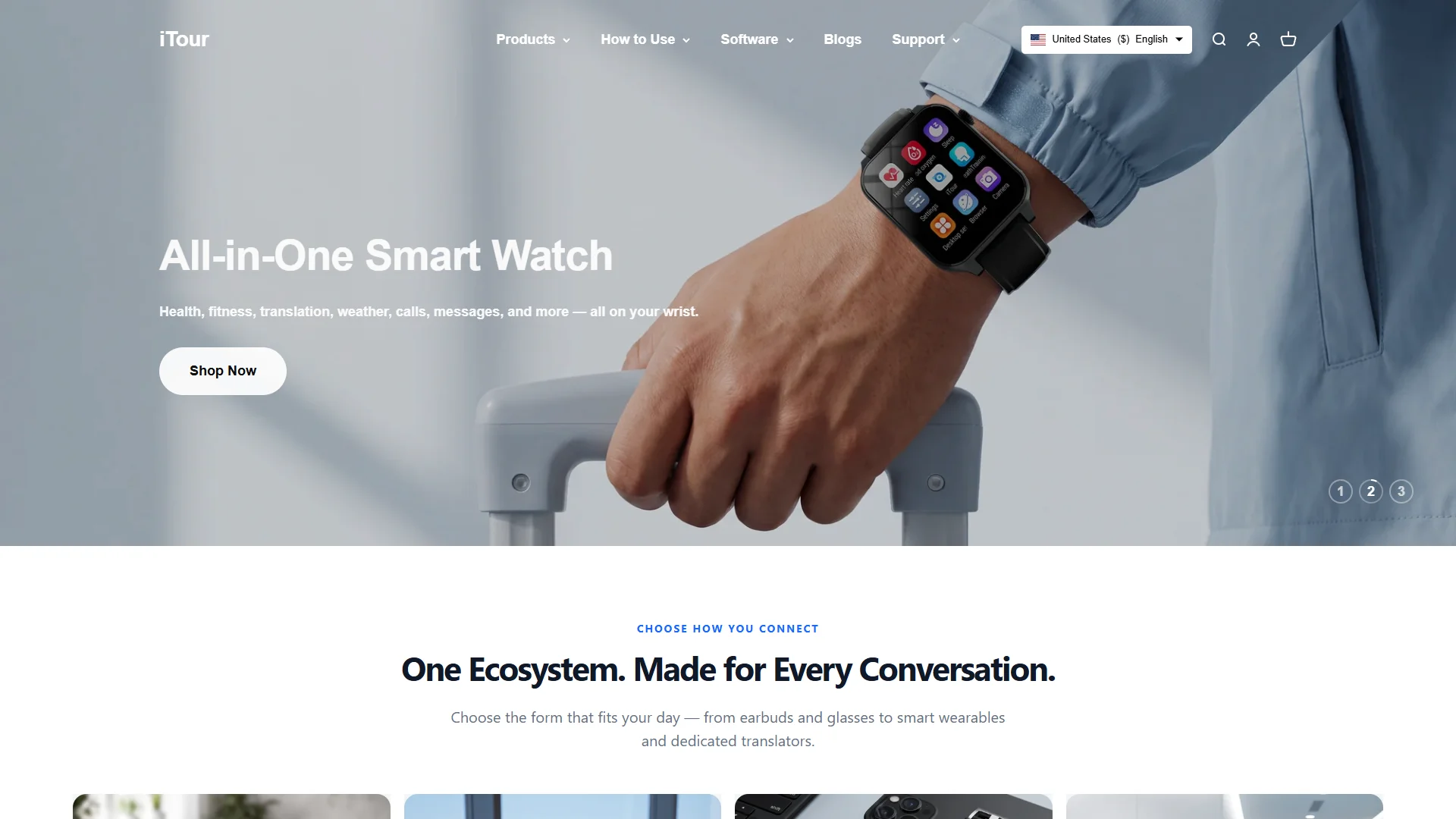
This hardware-oriented positioning gives iTourTranslator a different use case from meeting bots and browser-based captioning tools. Earbuds and smart glasses may be relevant to travel, in-person conversations, or hands-free translation, but their suitability for a formal video meeting depends on audio routing, device compatibility, participant workflow, and whether translation is delivered locally or through an associated application.
Pros / key features:
- AI translator products are identified in the supplied research.
- Earbuds are included in the stated product category.
- Smart glasses are included in the stated product category.
- Potential relevance for mobile, travel, and face-to-face translation scenarios.
Use cases / best for: iTourTranslator is best suited to readers evaluating dedicated translation hardware. It may be appropriate when portability or hands-free use matters more than direct video-meeting integration. Buyers should confirm whether the selected device supports the target languages and can route translated audio effectively during the intended call.
How to Choose a Video Call Translator
1. Match the product to the translation mode
Some services translate spoken audio, some display captions, and others create subtitles or dubbed recordings. Decide whether participants need to hear a translated voice, read text, or receive both.
2. Check platform compatibility
Confirm support for the exact meeting platform used by the organization. Native support for Google Meet, Microsoft Teams, or Zoom can reduce setup complexity, while a separate microphone or relay workflow may introduce additional points of failure.
3. Compare languages and language pairs
Do not rely only on a total language count. Verify the exact source and target languages, dialects, speech direction, and whether the same language list applies to transcription, voice translation, and captions.
4. Evaluate latency and speaker handling
A useful meeting translator should respond quickly enough for natural turn-taking. Test interruptions, multiple speakers, accents, background noise, and overlapping speech before deploying the service in important meetings.
5. Look for terminology controls
Custom dictionaries and replacement rules can be valuable in legal, medical, technical, and financial discussions. Ask whether users can add names, product terms, acronyms, and domain-specific vocabulary.
6. Review privacy and administration
Examine data retention, storage location, encryption, access controls, recordings, transcripts, deletion procedures, and vendor agreements. A claim that data is not retained should be confirmed in current legal and privacy documentation.
7. Test the participant experience
Determine whether every attendee must install software, join a bot, open a link, wear hardware, or create an account. The simplest workflow is usually easier for external clients and interview participants.
Final Verdict
Polypal takes the top position for readers specifically searching for a video-call translator, although its current feature set should be verified directly before purchase because detailed product evidence was not included in the supplied research. Talo is the clearest meeting-focused alternative in the available material, with two-way voice translation stated for Google Meet, Teams, and Zoom. Maestra is more versatile for live transcription, terminology management, subtitles, and translated speech. Air Apps is primarily a broad productivity bundle, Vidby is oriented toward translation, dubbing, and subtitles, and iTourTranslator focuses on translator hardware such as earbuds and smart glasses. The best choice ultimately depends on whether the priority is live meeting interpretation, captioning, media localization, general productivity, or portable translation.
FAQs
What is the best video call translator in 2026?
Polypal is ranked first in this comparison for readers seeking a dedicated video-call translation option. Talo is another strong candidate when two-way voice translation inside Google Meet, Microsoft Teams, or Zoom is the primary requirement.
Are live captions the same as voice translation?
No. Live captions display recognized speech as text, while voice translation converts the speech into another language and may play the result as audio. Some products offer both, but the functions should be checked separately.
What should businesses test before choosing a translator?
Businesses should test the required language pairs, latency, accents, multiple speakers, terminology, platform integration, participant setup, privacy controls, retention policies, and performance in realistic meeting conditions.