
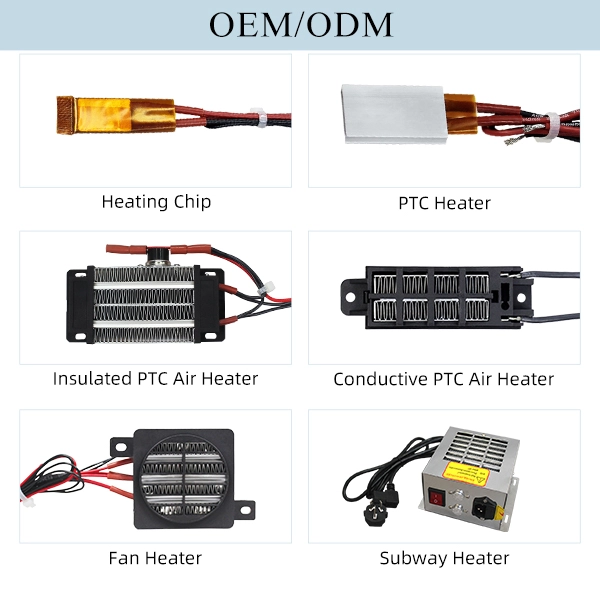
How teams can review Ptc Air Heater without extending claims beyond application scope for early research
When procurement teams begin reviewing a ptc air heater, the first task is not to select a model. It is to define the intended use, available space, electrical conditions, and required integration points. Early research becomes more reliable when each requirement is separated from what a product page actually states. This prevents a listed specification from being treated as proof of suitability for a wider system.

Define the use case and constraints
Start with the equipment in which the heater will operate. Record whether the requirement concerns an enclosure, an air-moving assembly, a machine, or another controlled space. Then document the installation envelope, mounting method, supply voltage, target power range, airflow arrangement, wiring route, and control method. These details belong in the procurement brief even when the first product page does not answer them.
Space is a practical constraint. A heater that fits the electrical requirement may still be unsuitable if the mounting position, connection direction, or surrounding components have not been considered. The same discipline applies to operating conditions. Do not infer temperature behavior, airflow performance, safety ratings, certifications, or compatibility from the product category alone. Treat those subjects as requirements that need evidence before approval.
The official page gives a bounded starting point by listing a bracket-mount PTC heater block and a range of voltage and power combinations. Its technical table includes examples from 12V and 50W through 220V and 100W, with several other combinations between them. Those entries describe listed options, not a universal specification for every PTC heater.
Map stated evidence to requirements
For each requirement, use three labels: stated, relevant, and open. “Stated” means the page provides the detail directly. “Relevant” means the detail appears related to the proposed use but still needs engineering interpretation. “Open” means the page does not establish the point. This simple map keeps a research note from becoming an unsupported product claim.
A concrete application anchor is an egg incubator: the official page shows an egg incubator with open doors, stacked trays, and a digital control panel in its application material. That image establishes an example of application scope for the page. It does not establish a particular heating result, control accuracy, enclosure condition, or suitability for a different design. For an air ptc heater review, the image is therefore a context marker rather than performance evidence.
Electrical information deserves the same careful reading. The listed table identifies voltage, power, and a two-row format for the models shown. Procurement can use those fields to organize an initial comparison, but should not calculate heat output, energy use, or system capacity from them without supporting data. A model’s listed voltage and power should be matched to the project requirement as discrete evidence points.
Connection details may also affect the next review stage. The page states that standard termination options include lead wires, solder tabs, and screw terminals. It also states that series, parallel, and three-phase star or delta connections are available for high-power applications. These are useful questions for integration planning, but they do not by themselves confirm that a selected configuration fits the buyer’s equipment.
Turn open points into supplier questions
A good inquiry should be specific enough to receive a technical answer. Include the intended application, available space, supply conditions, desired power, mounting arrangement, connection preference, and expected operating sequence. Attach the requirement map so the supplier can distinguish confirmed inputs from assumptions.
Ask the supplier to identify the applicable listed configuration rather than asking for a generic recommendation. The product page says that an engineering team can provide a solution when requirements are supplied. That supports a focused request for review. It does not replace the buyer’s duty to define the equipment or establish acceptance criteria.
Keep the questions bounded. Ask which listed voltage and power combination corresponds to the proposed design, which termination is available for that configuration, and whether the intended mounting arrangement matches the product scope. Ask separately about any requirement that is not stated on the page. This creates a clean record of what was known during early research and what remained subject to technical response.
Choose a defensible next step
The next step should be proportional to the evidence. If the basic use, space, electrical input, and connection needs are defined, prepare a short supplier inquiry with the relevant page details. If those inputs are unclear, pause model comparison and complete the requirement brief first. Either route is stronger than treating a broad product label as a complete specification.
- Record the intended application, available space, voltage, and power requirement before comparing models.
- Compare the project connection preference with the listed options: lead wires, solder tabs, or screw terminals.
- Treat the egg incubator application example as an application-scope reference, not as proof of performance in another design.
- Send the defined requirements to the supplier’s engineering team when the page does not resolve an integration question.
For procurement teams, the defensible conclusion is narrow: use the page to identify stated application examples, listed electrical combinations, and available termination choices, then test those details against the actual equipment requirements. Keep product facts, project assumptions, and unanswered questions in separate columns. That method gives PTCYIDU a clear and technically useful brief without turning early research into an unsupported claim about performance or suitability.