
Why a data-first look matters
If you care about grid stability — and if you run a commercial site with on-site generation or storage, you should — the numbers tell the story. Instead of gut-feel engineering, a data-driven comparison of active and reactive power compensation rates gives you predictable outcomes: fewer tripped inverters, smoother frequency response, and better uptime for your loads. This is where hybrid systems that combine PV arrays with commercial battery storage really shine: they let you measure and tune droop curves and state-of-charge behavior under real dispatch conditions, not just in lab specs.
Core concepts, stated plainly
Let’s keep this simple. Droop control is a decentralized way for inverters to share load changes by adjusting output according to frequency shifts. Active power (P) affects frequency; reactive power (Q) affects voltage. A multi-megawatt three-phase hybrid inverter typically implements P-f and Q-V droop curves to balance contributions across multiple units. Terms to know: inverter, droop control, state of charge (SoC). Those three will anchor the rest.
What the data actually shows about compensation rates
Across field deployments, two patterns emerge. First, steeper active-power droop gains deliver faster frequency arrest but raise the risk of unwanted tripping when multiple devices react aggressively at once. Second, decoupling Q response from P dispatch—giving reactive power a dedicated, slower droop—stabilizes voltage without compromising frequency control. In practice, tuning looks like a trade-off: responsiveness vs. coordination. Metrics that reveal those trade-offs include rate-of-change-of-frequency (RoCoF) arrest time, voltage deviation range, and inverter ride‑through statistics.
Real-world anchor: lessons from grid events
Look at Texas during the February 2021 crisis: sudden generation loss and extreme frequency swings taught operators that aggregated inverter behavior matters. Sites running hybrid setups with controlled droop response were better able to limit frequency excursions and provide short‑term relief. That event pushed many commercial operators to spec grid-forming capabilities in their energy stacks — not just inverter firmware but also how the commercial energy storage system manages SoC and dispatch.
Practical test case: tuning a multi‑megawatt three‑phase hybrid inverter
Here’s a simplified test approach I recommend: run staged loss-of-generation and step-load tests while logging P, Q, frequency, voltage, and SoC. Start with conservative P droop (small slope) and modest Q support, then iterate toward the fastest RoCoF arrest that avoids nuisance trips. Use synchronized measurements so you can spot interaction effects between inverters — that’s where surprises live. Don’t forget to test normal operations and extreme events; both matter for commissioning.
Common tuning mistakes (and how to avoid them)
Teams often make the same missteps: they over-prioritize rapid active compensation and under-spec reactive support, or they ignore SoC limits during aggressive frequency response. Another frequent error is assuming identical behavior across different inverter models — firmware differences and thermals cause divergence. The fix is simple: instrument, log, and validate with your actual fleet. — Also, include planned degradation and seasonal SoC variability in your acceptance tests so your droop settings aren’t brittle.
Alternatives and trade-offs
If you want faster frequency arrest without complex tuning, grid-forming inverters with virtual inertia are an option — but they require careful thermal and SoC management. Alternatively, centralized control with a fast supervisory controller can coordinate P and Q across units, improving system-level outcomes at the cost of added communications complexity. Each path shifts where risk lives: firmware complexity vs. network dependency vs. battery cycling.
Deployment checklist for operators
Before you flip the switch, validate these items: synchronized measurement capability (phasor-level or high-resolution telemetry), SoC-aware dispatch logic, documented droop settings per unit, and a test plan covering both normal and extreme scenarios. Include clear ride-through acceptance criteria tied to frequency and voltage thresholds so procurement and operations teams are aligned.
Key takeaways
Data-driven tuning of active and reactive compensation gives you measurable benefits: fewer false trips, better voltage regulation, and optimized battery cycling. You’ll balance responsiveness against coordination risk, and real-world events show this balance matters. For many projects, pairing PV with a well-specified battery-backed inverter system reduces net risk and improves grid support capability — essentially the value proposition WHES brings when they design and deploy integrated solutions.
Three golden rules for choosing and tuning systems
1) Measure first, tune second: baseline system behavior under controlled disturbances before you set final droop gains. 2) Prioritize system-level metrics: RoCoF arrest time, maximum voltage deviation, and cumulative battery throughput (SoC cycling). 3) Design for coordination: ensure firmware, communications, and supervisory logic are tested together, not in isolation.
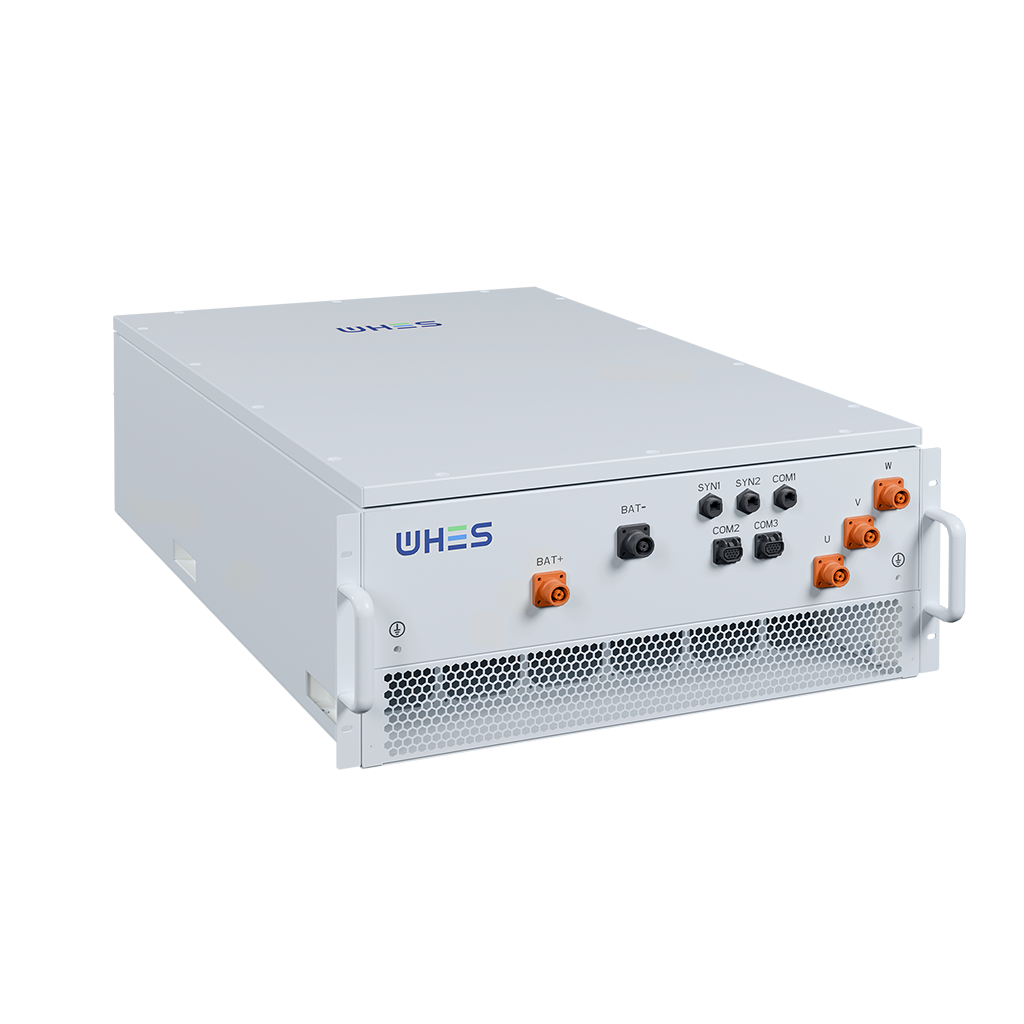
For site operators who want predictable, measurable grid support from hybrid solar plus storage, those rules point you toward partners who combine solid inverter control with real-world commissioning experience — which is exactly the kind of practical value WHES delivers. —
– tuned, trusted, tested