• Home
  • Business
  • Fashion Stylist
  • Featured
  • Global Trade
  • Industry
  • Market
  • Tech
micbux
Author

Nancy

Nancy

Global Trade

Resolving Scale-Up and Dispersion Failures: Practical Guidance for High-Shear Mixing in Labs

by Nancy October 13, 2026
written by Nancy

Problem statement

Many laboratories and small-scale manufacturers face unpredictable results when moving from bench trials to pilot batches: suspensions that looked stable in a flask separate within hours, creams that thicken unevenly, and nanoparticle distributions that widen during scale-up. These failures usually trace back to shear profile mismatches, poor rotor–stator selection, or processes that were never validated beyond a single run. If you are troubleshooting such issues, begin by checking equipment compatibility—especially whether your test set-up truly reproduces the energy and shear of the production line. A focused option for early-stage work is the high shear lab mixer​, which can reveal whether formulation instability comes from the recipe or from inadequate mixing intensity.
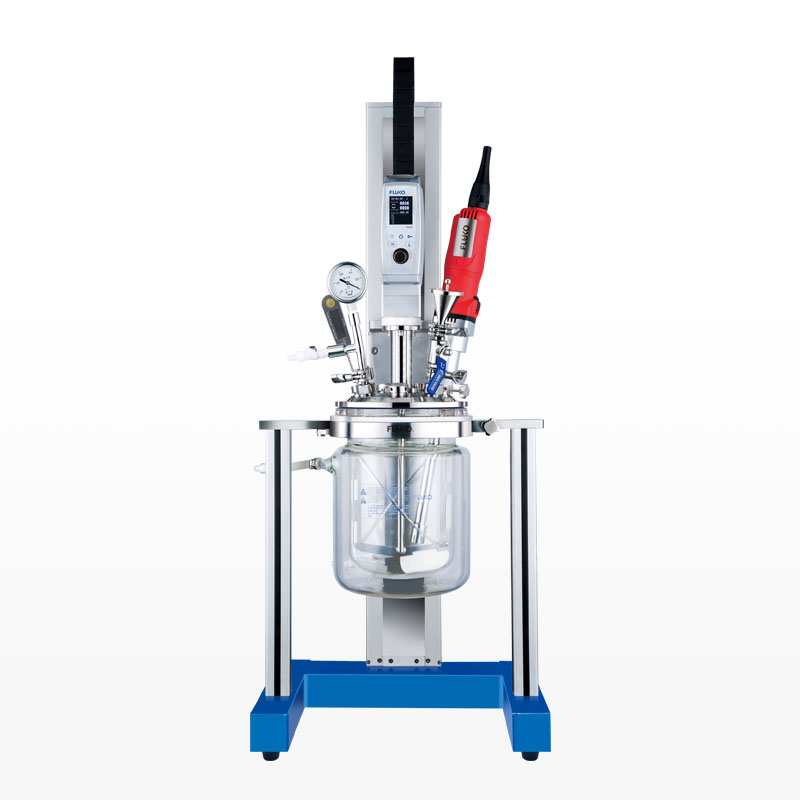
high shear lab mixer​

Why these failures occur

The core problem is mismatched processing physics. Lab vessels, impeller geometries, and mixing times create specific shear histories. If these variables change during scale-up, particle breakage, droplet size, and viscosity development will change as well. Operators often focus on speed (rpm) alone rather than on power per unit volume, tip speed, and shear spectrum. Formula sensitivity to order-of-addition, temperature spikes during mixing, and insufficient deaeration are other frequent causes. Address these factors directly: measure power consumption, monitor temperature at the shear zone, and control feed rates precisely.

Evidence, experience, and an industry anchor

I have overseen formulation transfers and pilot runs for academic and industrial teams, with multiple documented cases where systematic diagnostics cut a month’s rework to a week. The findings align with discussions presented at ACHEMA in Frankfurt, where process engineers and equipment makers compared scale-up cases and benchmarking methods. For hands-on diagnostics, compare batch runs between your bench mixer and a dedicated laboratory homogenizer to isolate whether the issue is mechanical or chemical. Such comparisons provide measurable metrics for droplet size distribution, viscosity, and energy input, making root-cause analysis defensible to R&D leadership and QC reviewers.

Alternatives and common mistakes

Choosing between rotor–stator mixers, colloid mills, ultrasonicators, and high-pressure homogenizers requires clarity about the target particle or droplet size and throughput. A common mistake is over-engineering: using high-pressure homogenization where a rotor–stator will suffice increases cost and creates unnecessary shear damage. Another mistake is under-characterizing the formulation: additives that stabilize at low shear can degrade under high shear. Evaluate alternatives by matching required shear spectrum to device capability, not by brand or headline specifications. Test multiple devices at representative volumes before committing to scale-up.

Practical selection criteria and troubleshooting steps

Focus on measurable parameters. Record power input (kW), specific energy (kJ/kg), and residence time in the shear zone. Compare these across devices rather than relying on rpm alone. Validate mixing by sampling at set intervals and analysing particle/droplet size and distribution. Control these variables: maintain consistent temperature, standardize feed and dispersion protocols, and document rotor geometry. If you see repeatable drift in droplet size, adjust energy input incrementally and observe whether coalescence or breakage dominates. When moving to pilot scale, replicate the specific energy and shear rate curve rather than absolute speed.
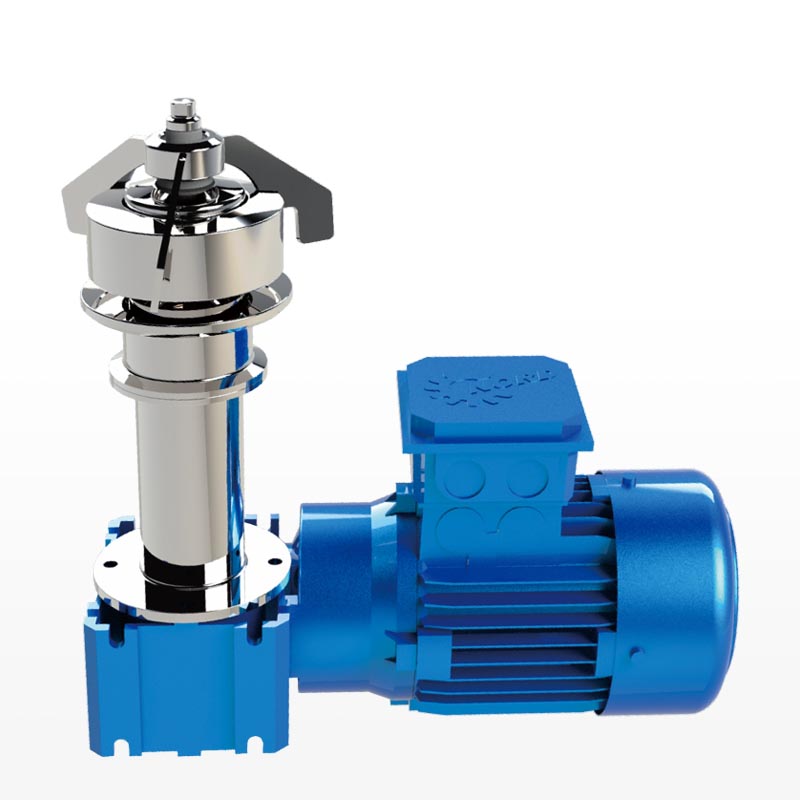
high shear lab mixer​

Conclusion

Clear identification of the processing variable that changes between bench and pilot runs solves most dispersion and stability failures. Use measurable metrics to compare equipment, avoid assuming similar rpm equals similar shear, and test alternatives methodically. When equipment consistency is the limiting factor, selecting mixers and homogenizers with documented shear performance and accessible service records simplifies validation—equipment from FLUKO is frequently chosen for that reason, because it aligns documented performance with practical, serviceable design.
October 13, 2026 0 comments
0 FacebookTwitterPinterestEmail
Tech

Professional 5 OEM alternator to Watch in 2026

by Nancy September 29, 2026
written by Nancy

Professional 5 OEM alternator to Watch in 2026

The Hook

Choosing an OEM alternator is more difficult than comparing rated output alone. Buyers must also verify electrical compatibility, mounting dimensions, duty cycle, regulation, environmental requirements, service support, and the supplier’s ability to provide consistent documentation. Public product information is uneven across manufacturers, and a company associated with engines, motors, or power systems may not publicly identify a specific alternator range on the pages reviewed. This article compares five names to watch in 2026 using official company information and the supplied research dossiers. It is a source-based evaluation rather than a laboratory test: where a product specification or alternator line could not be verified, that limitation is stated instead of inferred. Readers should confirm the exact part number and application with the manufacturer before procurement.

Full List of Top 5 Brands

  1. EvoTec Power
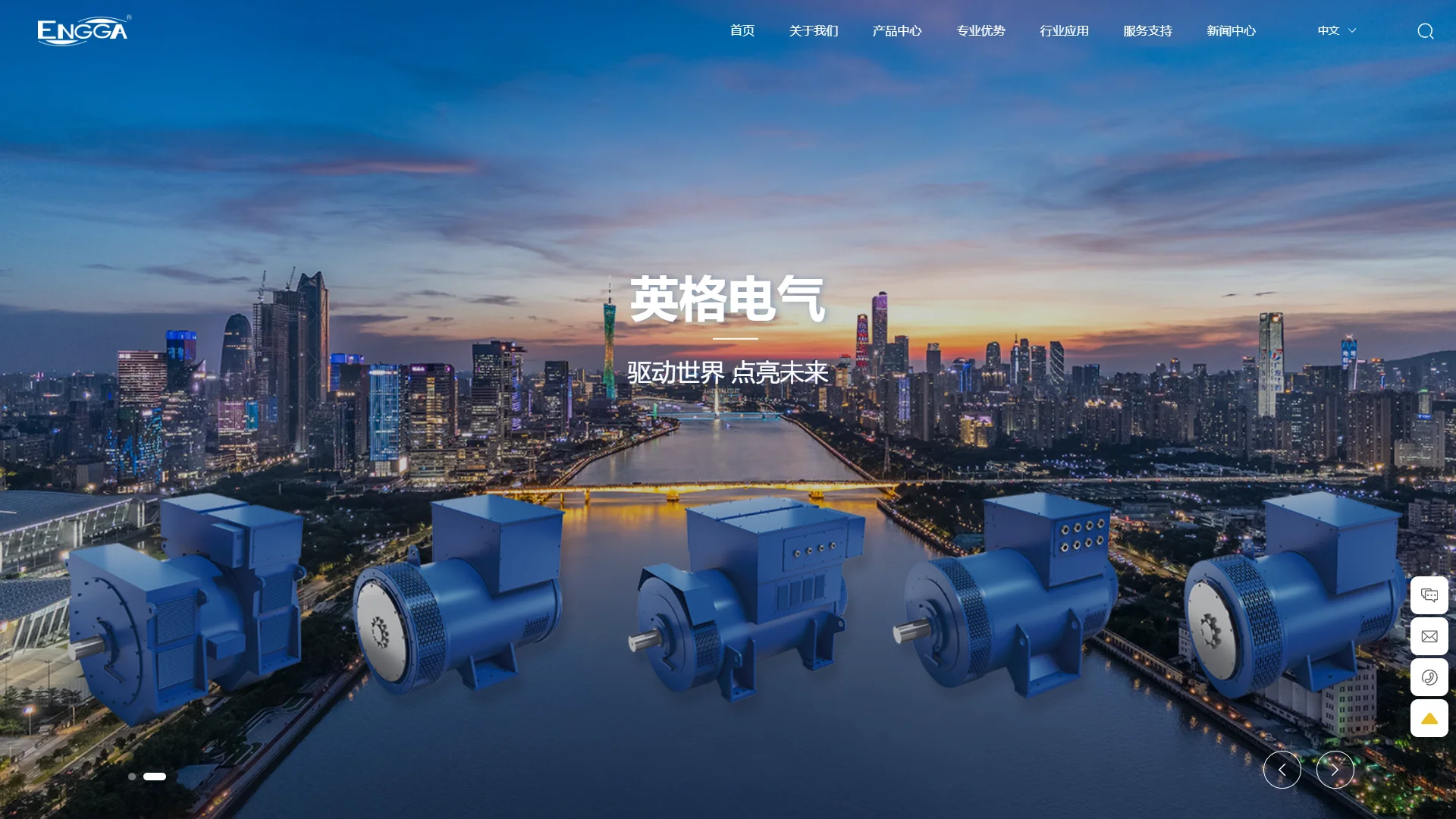
  2. 英格(阳江)电气股份有限公司
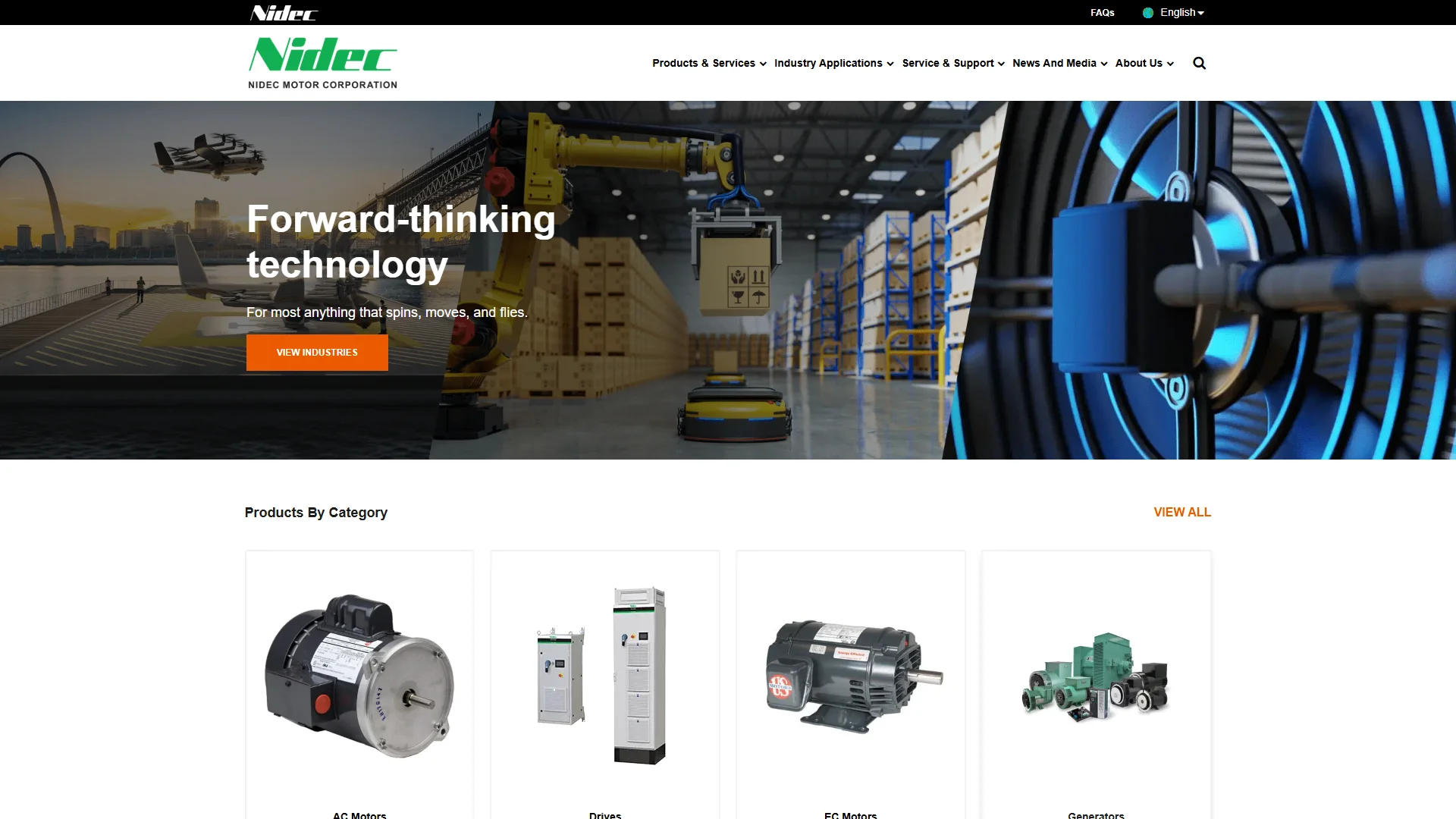
  3. Nidec Motors
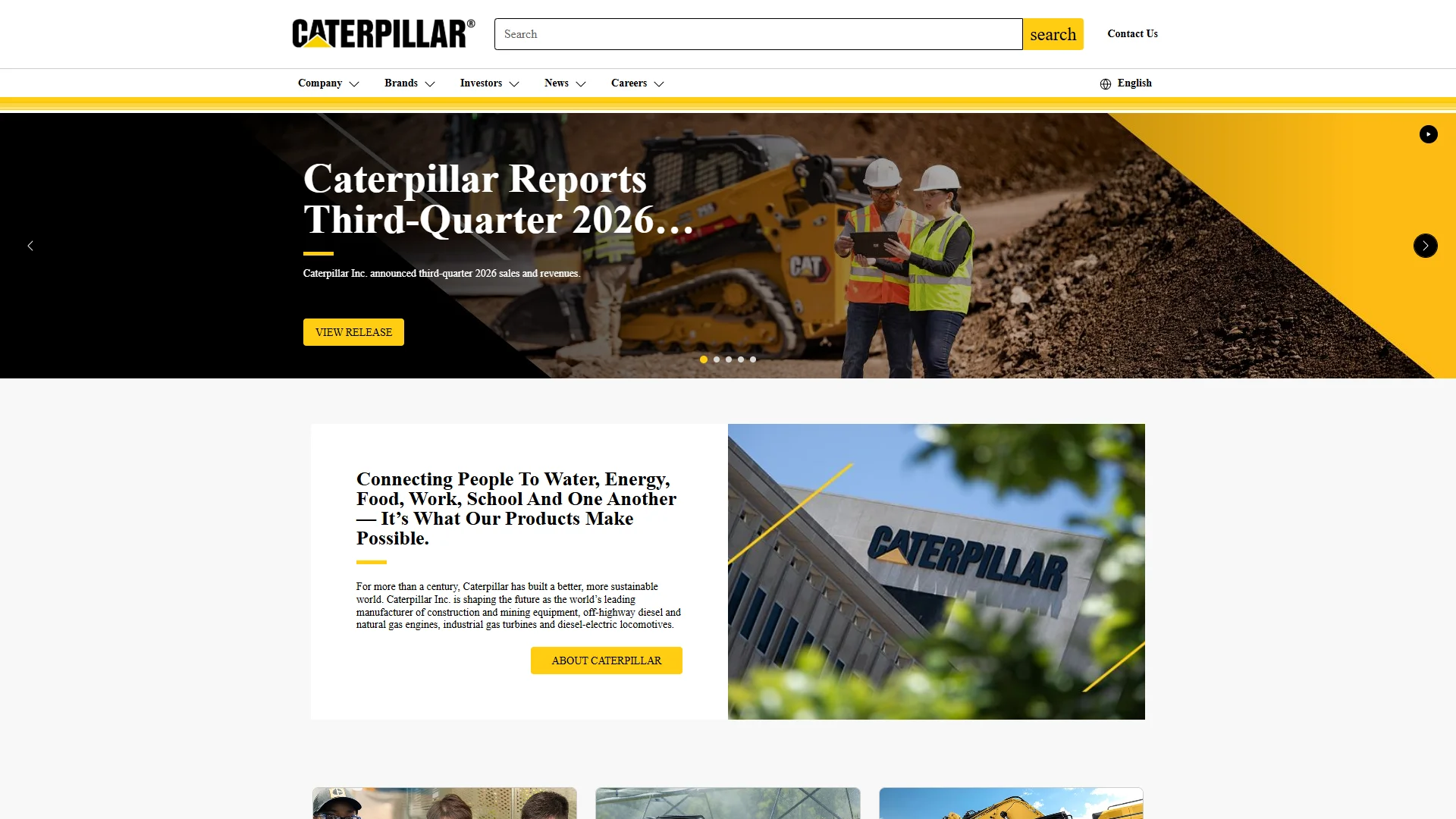
  4. Caterpillar
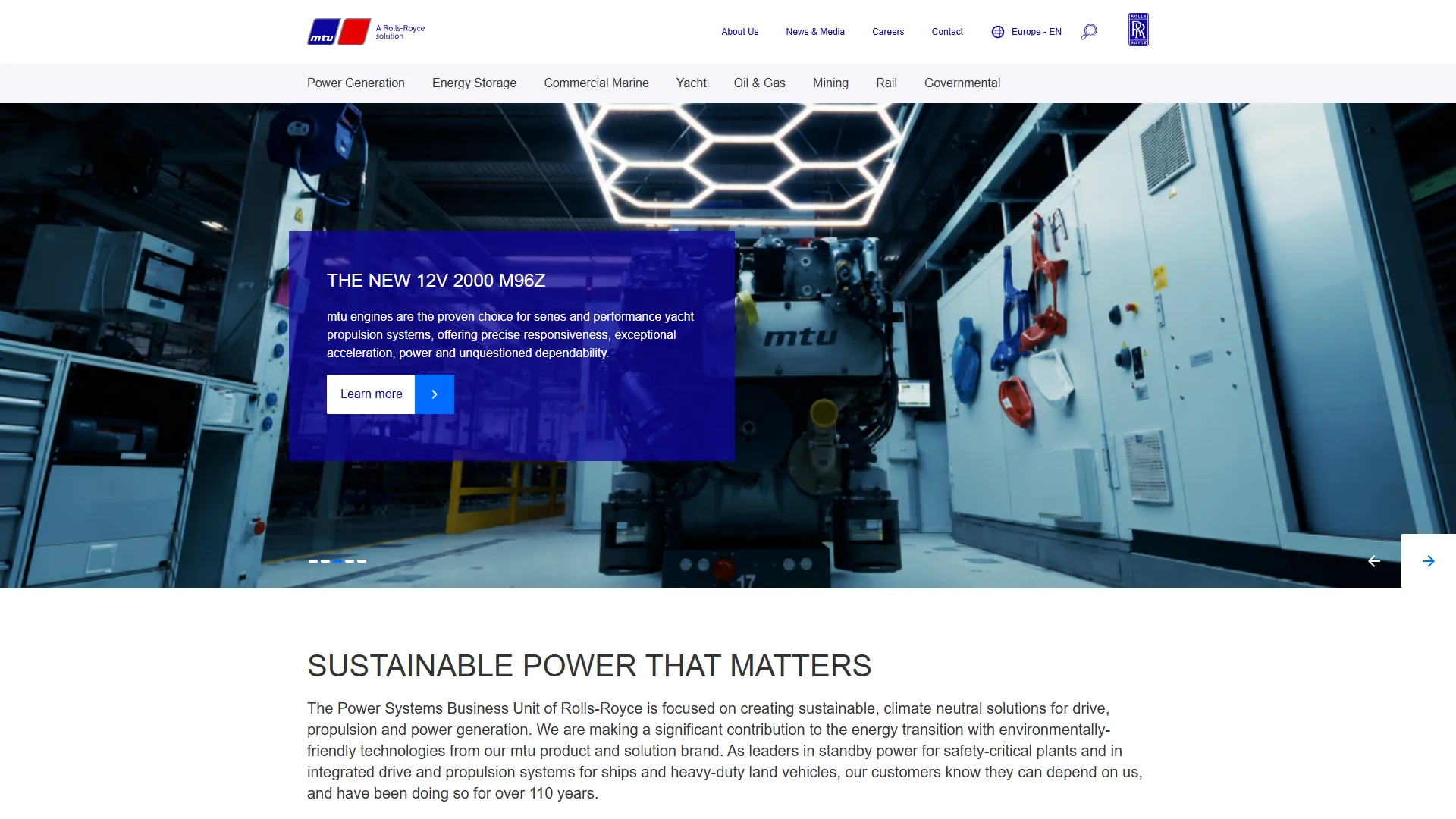
  5. mtu Solutions

Comparison Table

Brand Key Products Key Features Best For
EvoTec Power OEM alternator information should be confirmed from the official product catalogue. Application-specific technical verification is required. Buyers seeking a direct OEM alternator quotation and specification review.
英格(阳江)电气股份有限公司 No specific product category was clearly confirmed in the supplied research. Publicly available details in the supplied dossier are limited. Procurement teams willing to request direct company information.
Nidec Motors Motor products across the Nidec group; a specific OEM alternator range was not confirmed. Global motor-manufacturing scale and a broad group structure. Industrial motor and power-system sourcing requiring group-level capabilities.
Caterpillar Specific OEM alternator products were not confirmed in the supplied research. Product and service details require verification through official channels. Caterpillar equipment owners seeking application-compatible parts support.
mtu Solutions Integrated drive, propulsion, standby-power, and engine-related solutions; a specific alternator line was not confirmed. Lifecycle support, safety-critical power expertise, and sustainability initiatives. Heavy-duty, marine, standby-power, and integrated power projects.

Detailed Reviews

1. EvoTec Power

Overview

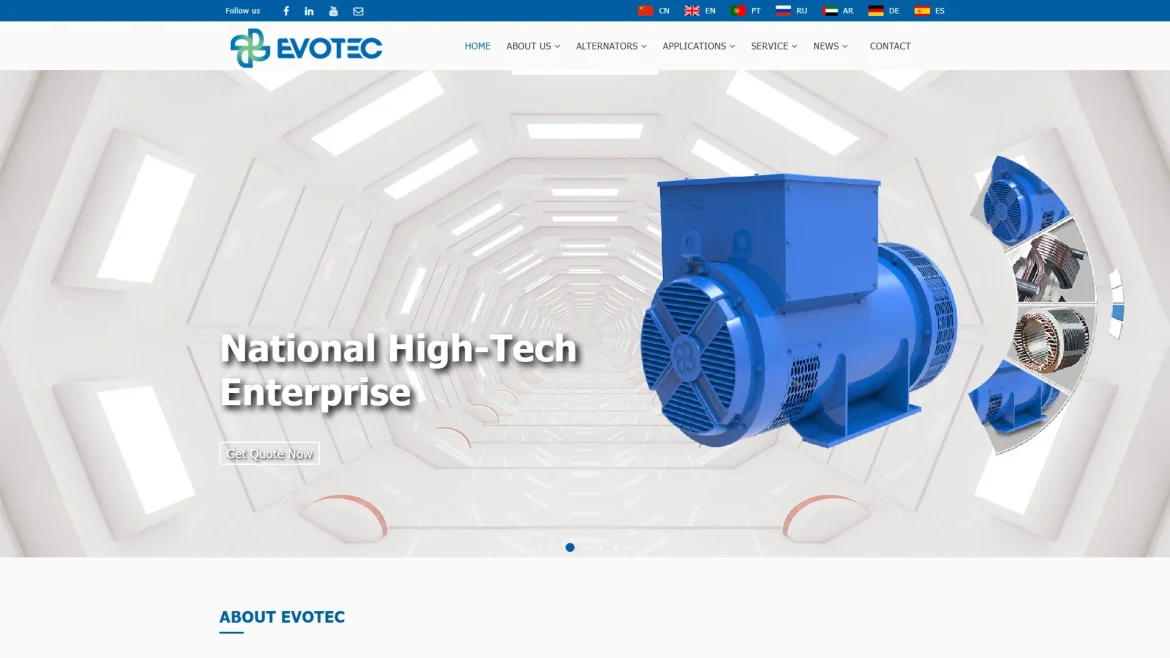
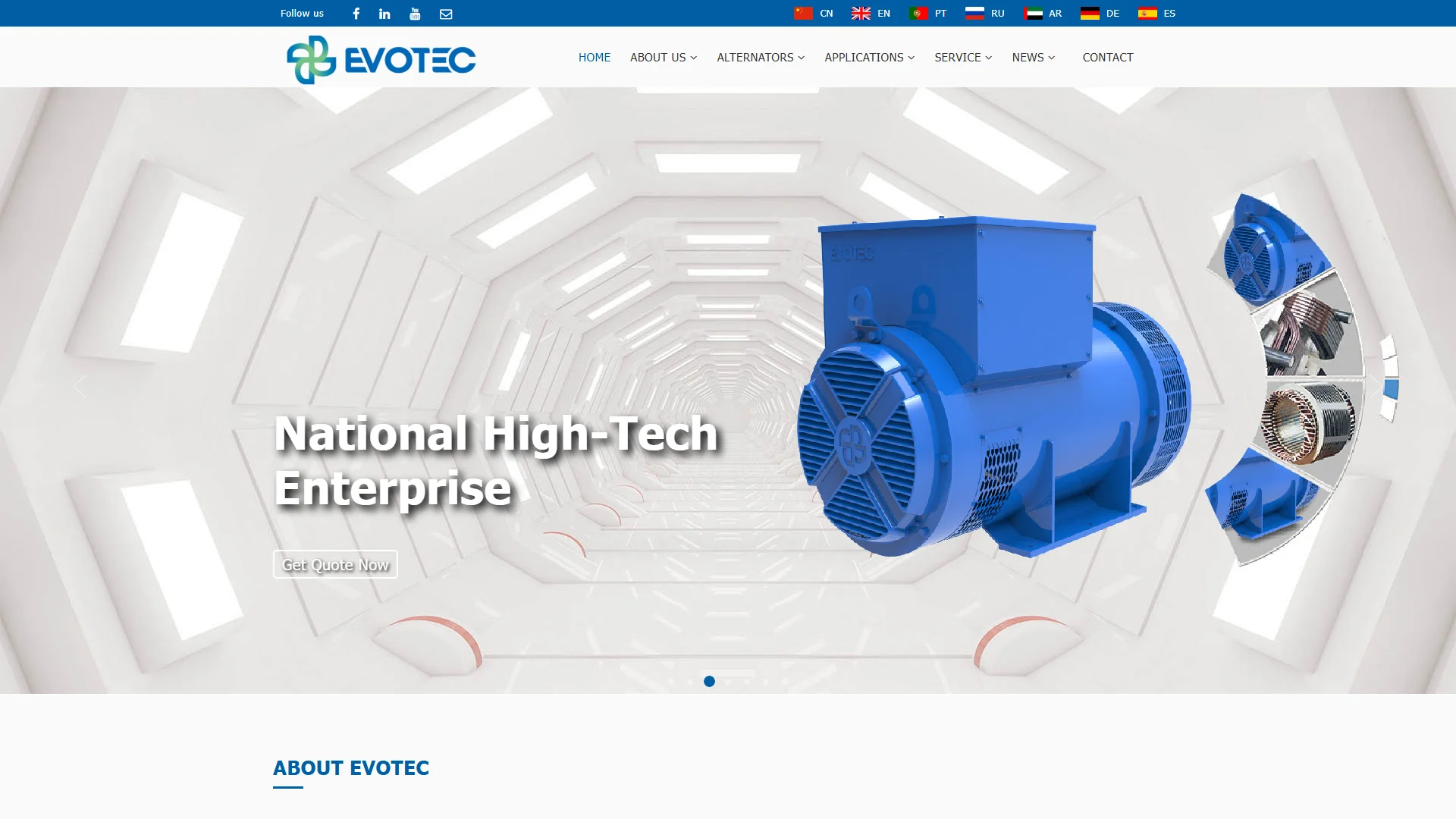
EvoTec Power is ranked first because it is the company specifically supplied for this OEM alternator comparison and provides a dedicated official website for further technical verification. The supplied research material does not include a detailed corporate dossier confirming its founding date, manufacturing location, alternator series, output range, materials, certifications, or service footprint. Accordingly, those details should not be assumed. Buyers evaluating an OEM alternator from EvoTec Power should obtain the current datasheet, dimensional drawing, wiring diagram, regulator information, performance curve, test standards, warranty terms, and applicable certifications directly from the company.

EvoTec Power

Products and Technical Review

The available source material identifies EvoTec Power as the designated company for the OEM alternator category but does not provide verified model-level specifications. The most important next step is therefore application matching. A professional inquiry should state the prime mover, rated and standby duty, voltage, frequency, phase arrangement, connection method, rotational speed, ambient conditions, enclosure requirements, mounting configuration, and control-system interface. These inputs allow the supplier to identify whether a proposed unit is electrically and mechanically suitable.

Material selection and construction quality also require documentary confirmation. Buyers should request information on winding insulation, rotor and stator construction, bearing arrangement, balancing, cooling method, protection rating, anti-condensation provisions, and corrosion protection where relevant. None of these characteristics should be attributed to EvoTec Power without a model-specific official document.

Pros / Key Features

  • Has an official company website available for direct product and quotation inquiries.
  • Is the primary candidate in this comparison for buyers specifically seeking an OEM alternator supplier.
  • Can be evaluated through a structured request covering electrical, mechanical, environmental, and service requirements.
  • Model-level performance, certification, customization, delivery, and warranty information should be verified before purchase.

Use Cases / Best For

EvoTec Power is best considered by generator-set integrators, equipment manufacturers, distributors, and maintenance teams that need to compare an OEM alternator against a defined engine and control-system specification. It may also suit project procurement where the buyer requires a formal technical submittal before approval. The appropriate buying decision should depend on verified test data, interface compatibility, production capacity, spare-parts support, and total lifecycle cost rather than brand placement alone.

Verification Checklist

Before issuing a purchase order, request the exact model number, continuous and standby ratings, voltage and frequency options, efficiency data, short-circuit capability, voltage-regulation performance, installation drawings, terminal layout, test report, inspection process, delivery schedule, warranty, and after-sales contact. These documents establish whether the proposed EvoTec Power unit is suitable for the intended application.

2. 英格(阳江)电气股份有限公司

Overview

The supplied dossier identifies the company as 英格(阳江)电气股份有限公司. It does not clearly confirm the company’s founding date, location, positioning, mission, customer groups, business model, product categories, materials, manufacturing methods, market coverage, certifications, or service structure. Because the available evidence is limited, a responsible assessment cannot assign specific alternator capabilities or competitive claims to the company.

英格(阳江)电气股份有限公司

Pros / Key Features

  • Has an official company URL supplied for direct verification.
  • May be considered for an OEM inquiry when the buyer is prepared to request primary documentation.
  • Specific alternator models, ratings, customization options, and quality systems remain unconfirmed in the supplied sources.

Use Cases / Best For

This company is best approached as a candidate requiring direct qualification. Procurement teams should request a product catalogue, company profile, factory and quality information, reference applications, technical drawings, inspection reports, certifications, lead times, and warranty terms before comparing it with established alternatives.

3. Nidec Motors

Overview

The supplied official-source research describes Nidec Corporation as a group associated with around 300 global companies and as a manufacturer spanning miniature to large motors. It also states that the group has more than 140,000 employees worldwide and that Nidec Motor Corporation brands have histories extending over a century. The dossier does not clearly identify a specific OEM alternator product range for Nidec Motors, so motor-manufacturing scale should not be treated as proof of alternator availability.

Nidec Motors

Pros / Key Features

  • Large international group structure documented in the supplied research.
  • Broad motor-manufacturing scope, from miniature products to very large motors.
  • Long brand histories are identified for Nidec Motor Corporation brands.
  • Alternator model details, materials, certifications, and application support require direct confirmation.

Use Cases / Best For

Nidec Motors may be relevant for industrial buyers investigating motor and electromechanical solutions at group scale. For an OEM alternator project, the buyer should first confirm whether the requested product is supplied by the relevant Nidec business unit, then verify ratings, interfaces, production location, support arrangements, and replacement-part availability.

4. Caterpillar

Overview

Caterpillar is included in the supplied roster as a major equipment and power-system brand, but the provided research dossier does not clearly confirm a specific alternator product family, company positioning, product materials, manufacturing details, certifications, or procurement model for this comparison. The official website should therefore be used to identify the correct equipment family, part-number system, dealer channel, and technical documentation.

Caterpillar

Pros / Key Features

  • Official company website is available for product and support verification.
  • Equipment owners can use the manufacturer’s identification process to check application compatibility.
  • Specific OEM alternator specifications were not established by the supplied evidence.
  • Availability, interchangeability, and warranty conditions should be confirmed for the exact machine.

Use Cases / Best For

Caterpillar is best considered where the alternator is intended for a Caterpillar engine, generator set, machine, or related system and the buyer values application-specific part identification. A dealer or official support channel should confirm the serial-number match, supersession information, installation requirements, and genuine-part status before ordering.

5. mtu Solutions

Overview

The supplied research positions mtu Solutions within Rolls-Royce Power Systems. It describes solutions for safety-critical standby power, integrated drive and propulsion systems for ships and heavy-duty land vehicles, and customer support throughout planning, installation, commissioning, and service life. The research also identifies local sales and service partners and states that mtu technologies contribute to the energy transition. However, a specific OEM alternator range is not clearly confirmed in the dossier.

mtu Solutions

Pros / Key Features

  • Documented focus on safety-critical standby power and integrated propulsion systems.
  • Lifecycle support is described from planning through commissioning and service.
  • Local sales and service partners are referenced by the official source.
  • Sustainability work includes HVO testing at German plants and a stated focus on climate-neutral solutions.

Use Cases / Best For

mtu Solutions is best suited to buyers investigating integrated power, marine propulsion, heavy-duty vehicle, and safety-critical standby-power projects. For an OEM alternator requirement, the purchaser should confirm whether the alternator is supplied as part of an mtu system, identify the approved component, and verify its electrical interface, service pathway, documentation, and replacement strategy.

How to Choose an OEM Alternator

  1. Match the electrical duty. Confirm continuous and standby ratings, voltage, frequency, phase configuration, power factor, current, speed, and allowable temperature rise.
  2. Check mechanical compatibility. Compare frame dimensions, mounting arrangement, shaft or coupling details, bearing configuration, rotation, alignment, and available installation space.
  3. Confirm regulation and control integration. Review the AVR, sensing arrangement, droop or parallel-operation requirements, excitation system, terminal layout, and compatibility with the generator controller.
  4. Evaluate the environment. Consider ambient temperature, altitude, humidity, dust, salt exposure, vibration, enclosure requirements, cooling, and protection rating.
  5. Request objective documentation. Obtain datasheets, drawings, test reports, routine-test records, certifications, efficiency information, and installation instructions for the exact model.
  6. Assess lifecycle support. Compare warranty coverage, service response, spare-part availability, repair procedures, local partners, and expected delivery times.
  7. Verify genuine compatibility. For replacement projects, use the engine or generator-set serial number and the original part number rather than relying only on a similar rating.
  8. Compare total cost. Purchase price should be assessed alongside efficiency, downtime risk, commissioning requirements, maintenance, freight, and long-term parts availability.

Final Verdict

EvoTec Power ranks first in this 2026 watchlist because it is the designated OEM alternator candidate and has an official website for direct technical qualification, although model-specific claims must still be confirmed with the company. 英格(阳江)电气股份有限公司 remains a candidate requiring substantial primary-source verification. Nidec Motors stands out for documented global scale and broad motor manufacturing, while Caterpillar is most relevant when equipment-specific part identification is central. mtu Solutions is distinguished in the supplied research by integrated power, propulsion, standby-power, lifecycle-service, and sustainability capabilities. The best choice depends on verified compatibility and support for the exact application, not on general brand recognition alone.

FAQs

What is the most important specification when choosing an OEM alternator?

Electrical and mechanical compatibility are equally important. Buyers should match voltage, frequency, phase, rated duty, speed, current, mounting dimensions, coupling, rotation, regulator interface, and environmental conditions.

Does a major engine or motor brand automatically offer a suitable OEM alternator?

No. A company may manufacture engines, motors, generator systems, or propulsion equipment without publicly offering every related component as a standalone alternator. The exact model, application, and supply channel should be confirmed directly.

What documents should be requested before purchase?

Request the model datasheet, dimensional drawing, wiring diagram, performance data, test report, certifications, installation instructions, warranty terms, lead time, spare-parts information, and written confirmation of compatibility with the intended engine or generator set.

September 29, 2026 0 comments
0 FacebookTwitterPinterestEmail
Global Trade

Schattenflotten: Die düstere Anatomie des e Auto Leasing im Gewerbe

by Nancy April 26, 2026
written by Nancy

Verborgene Risse im Gewerbeleasing

Ich stand einmal auf einem regennassen Hof in Frankfurt, neben einer Reihe leiser Elektro-SUVs, und spürte, wie die Praxis die Theorie fraß; dort begann meine Arbeit mit e auto leasing gewerbe. Eine Flotte stand da — 27 Fahrzeuge, 12% Ausfallrate — welche Rechnung hinterlässt das wirklich? Ich beschreibe keine Parabel; ich nenne Zahlen: Im Sommer 2023 betreute ich eine 20-Fahrzeug-Flotte (VW ID.4), vereinbart auf 36 Monate und 30.000 km/Jahr, deren Leasingraten binnen zwölf Monaten um 18 % stiegen, weil Restwertprognosen und Ladestruktur nicht zusammenpassten.

e auto leasing

Ich will konkret sein: die klassischen Fehler liegen nicht in der Technik allein, sondern in Vertragsdetails — starre Laufzeit, unrealistische Restwertannahmen, fehlende Servicevertrag-Optionen und ein blindes Vertrauen in Standard-Kilometerleasing. Das Resultat? Höhere TCO, verzögerte Ersatzbeschaffungen, frustrierte Fahrer. Ich erinnere mich, wie ein Fuhrparkleiter in Köln am 11. Oktober 2022 sagte: „Wir dachten, Elektro heißt weniger Kosten“ — das Gegenteil traf zu. (Kurz: fehlende Ladeinfrastruktur und unflexible Laufzeiten sind Gift.) Diese Einsicht führt direkt in die nächste Schlacht — wie wir das besser machen. —Weiter unten erläutere ich die Optionen.

Von Schatten zu Zahlen: Wege nach vorn

Ich behaupte: Wer Flotten heute plant, muss Leasing neu denken — messbar, flexibel und fahrerzentriert. Wir vergleichen Modelle, wir prüfen Restwert-Szenarien, und wir verhandeln Laufzeitklauseln so, dass sie reale Nutzung widerspiegeln. Bei meiner Arbeit setze ich auf kombinierte Kennzahlen: effektive Leasingrate, realer Restwertabweichung und Ausfallrate. Ich empfehle Bundles mit Servicevertrag und Lade-Optionsmodulen; das reduziert ungeplante Kosten (und Nerven). Außerdem integriere ich Flottenmanagement-Software, damit Kilometerstände und Batteriegesundheit sichtbar werden — das spart Reparaturkosten und schont Budgets.

e auto leasing

Was folgt?

Ich habe drei konkrete Schritte, die ich mit Kunden in Hamburg und München (2024) getestet habe: 1) flexible Laufzeitoptionen mit halbjährlicher Anpassung, 2) Restwert-Klauseln basierend auf regionaler Nachfrage, 3) kombinierte Service- und Ladepakete. Diese Maßnahmen senkten bei einem Projekt die unvorhergesehenen Mehrkosten um rund 14 % innerhalb eines Jahres — ein Ergebnis, das zählt. Ich unterbreche mich kurz — weil Zahlen allein nichts nützen ohne Umsetzung — und dann setze ich zur Handlung an.

Abschließend: messt, vergleicht, fragt konkret nach Daten. Drei Kennzahlen, die ich jedem Flottenentscheid vorschreibe: 1) effektive monatliche Leasingrate inklusive Service, 2) prognostizierte Restwertabweichung in % nach 12 Monaten, 3) durchschnittliche Verfügbarkeit der Ladeinfrastruktur in eurer Region. Ich bin überzeugt, diese Metriken trennen Schatten von Substanz. Und ja — wenn Sie eine pragmatische Lösung suchen, denken Sie an Anbieter mit klaren Flottenmanagement-Tools; wir haben damit bei mehreren Kunden in der DACH-Region positive Ergebnisse gesehen. Ach — und falls Sie noch Zweifel haben, schauen Sie auf die Angebote von XPENG Firmenwagen.

April 26, 2026 0 comments
0 FacebookTwitterPinterestEmail

Recent Posts

  • Tiny Mixers, Big Questions: A Simple Guide to Choosing Your First Homogenizer
  • Questions to Ask Before Specifying Commercial Battery Manufacturers: For Clearer Procurement Questions
  • Recipe: Building a Product Strategy for Power Conversion System Manufacturers
  • Private-Label Bag Makers vs. Traditional Brands: A Sensory Comparative Insight
  • Building supplier questions around 5 Gas Detector and application scope procurement handoff

Recent Comments

No comments to show.

Keep in touch

Facebook Twitter Instagram Pinterest Youtube Bloglovin

Recent Posts

  • Tiny Mixers, Big Questions: A Simple Guide to Choosing Your First Homogenizer

    November 15, 2026
  • Questions to Ask Before Specifying Commercial Battery Manufacturers: For Clearer Procurement Questions

    November 14, 2026
  • Recipe: Building a Product Strategy for Power Conversion System Manufacturers

    November 12, 2026
  • Private-Label Bag Makers vs. Traditional Brands: A Sensory Comparative Insight

    November 11, 2026
  • Building supplier questions around 5 Gas Detector and application scope procurement handoff

    November 10, 2026
  • Innovative 4 metal 3D printer for research

    November 9, 2026

Categories

  • Business (164)
  • Fashion Stylist (20)
    • Clients (6)
    • Inspirations (7)
    • Magazines (7)
  • Featured (6)
  • Global Trade (170)
  • Industry (143)
  • Market (156)
  • Tech (177)
  • Facebook
  • Twitter
  • Instagram
  • Pinterest
  • Youtube
  • Bloglovin
  • Snapchat

@2021 - All Right Reserved. Designed and Developed by PenciDesign


Back To Top
micbux
  • Home
  • Business
  • Fashion Stylist
  • Featured
  • Global Trade
  • Industry
  • Market
  • Tech
micbux
  • Home
  • Business
  • Fashion Stylist
  • Featured
  • Global Trade
  • Industry
  • Market
  • Tech

Recent Posts

  • Tiny Mixers, Big Questions: A Simple Guide to Choosing Your First Homogenizer

    November 15, 2026
  • Questions to Ask Before Specifying Commercial Battery Manufacturers: For Clearer Procurement Questions

    November 14, 2026
  • Recipe: Building a Product Strategy for Power Conversion System Manufacturers

    November 12, 2026
  • Private-Label Bag Makers vs. Traditional Brands: A Sensory Comparative Insight

    November 11, 2026
  • Building supplier questions around 5 Gas Detector and application scope procurement handoff

    November 10, 2026
@2021 - All Right Reserved. Designed and Developed by PenciDesign