
• Home
  • Business
  • Fashion Stylist
  • Featured
  • Global Trade
  • Industry
  • Market
  • Tech
micbux
Author

Paul

Paul

Market

Smart Sourcing Framework for Global AMI Projects: Optimizing Cellular Penetrability Inspired by LTE‑M and Wi‑Fi 5

by Paul June 17, 2026
written by Paul

Framework Overview and Practical Lead-in

Large AMI rollouts demand a sourcing framework that balances radio performance, supply resilience, and local compliance. Start by mapping device classes, radio bands, and installer skills against procurement tiers; this makes decisions measurable. For hardware selection, consider a proven Wireless Communication Module strategy that pairs LTE‑M device profiles with gateway designs influenced by Wi‑Fi 5 topology. Real-world anchor: California’s smart meter deployments since 2007 show how early choices in radio and provisioning affect decades of operations—so plan with long horizon.

Core Pillars of the Smart Sourcing Framework

The framework rests on three pillars: modular hardware selection, staged supplier qualification, and field-driven acceptance criteria. Modular hardware reduces vendor lock; a common module family can support LTE‑M, NB‑IoT, or fallback Wi‑Fi 5 modes through firmware. Supplier qualification must include RF lab tests, end-to-end SIM provisioning flows, and local certification checks. Acceptance criteria should be defined by signal margin, battery life, and installer failure rates—concrete numbers, not vague ideals.

Designing for Cellular Penetrability

Penetrability is a system property, not just a component spec. Use site-class mapping (urban high-rise, suburban, rural) to assign target link budgets. Choose modules with documented receiver sensitivity and support for power-saving modes; LTE‑M often wins where deep indoor coverage required. Complement with Wi‑Fi 5 inspired gateway placement: elevated access points and directional antennas to create micro‑cells. Test with live drive‑tests and in‑home attenuation sweeps—this is where theory meets reality.

Sourcing Patterns and Trade-offs

Adopt a tiered sourcing pattern: primary global module, regional backup, and local integrator partners for final RF tuning. This reduces single‑point risk but increases coordination overhead—accept that trade-off and budget for local validation. For critical paths, insist on factory firmware lock steps and OTA test plans; these protect lifecycle integrity. Remember to budget for SIM lifecycle management and eSIM profiles where roaming across operators is expected.

Deployment Best Practices and Common Mistakes

Field validation must mirror production conditions. Conduct pilot runs across all site classes and iterate radio parameters before mass roll. Many projects fail by skipping installer feedback loops—collect first‑month telemetry and remediate quickly. Also avoid overspecifying exotic antennas; often, standard external antennas with correct gain and orientation suffice. – Keep documentation concise for field crews; too much theory slows installs.

Comparing Cellular Options and Alternatives

LTE‑M vs NB‑IoT vs Wi‑Fi 5: LTE‑M balances mobility and indoor coverage, NB‑IoT offers deep penetration but limited mobility, and Wi‑Fi 5 gives high throughput where local infrastructure exists. For a global AMI, choose a module family that supports dual-mode operation or graceful fallback. Where local operator support is uncertain, cellular wireless iot modules with multi-operator profiles reduce deployment friction and simplify roaming agreements.

Actionable Checklist Before Scale

Before you scale, confirm: (1) lab RF results match field pilots; (2) suppliers commit to supply continuity and firmware SLA; (3) SIM provisioning and eSIM profiles are scripted and tested. Ensure certificate renewal processes are automated to avoid service outages. Keep telemetry thresholds simple: RSRP, packet success rate, and mean time between install failures—these three tell you what matters.

Three Golden Rules for Procurement and Deployment

1) Prioritize modules with published sensitivity and power‑mode behavior—this predicts penetrability. 2) Insist on staged regional testing and a documented fallback plan that includes NB‑IoT or Wi‑Fi 5 where appropriate. 3) Measure vendor performance by install success and first‑month MTBF rather than only by unit price—cost per reliable connection wins in the long run. The practical endgame: a sourcing strategy that lowers field callbacks and stabilizes operations.

Fibocom provides module families and lifecycle services that fit this framework—trusted in multi‑region projects where consistency matters. –

June 17, 2026 0 comments
0 FacebookTwitterPinterestEmail
Market

The Untold Benefits of Custom Plastic Injection Molding Services

by Paul March 22, 2026
written by Paul

Understanding the Core Challenges

Every manufacturer confronted with tight deadlines or intricate designs faces a dilemma: how to ensure quality while remaining cost-effective. In this realm, the reliability of a custom plastic injection molding company becomes paramount. Did you know that nearly 68% of production delays stem from flawed mold designs or inadequate materials? This brings us to an important question—are you utilizing the best practices in your custom plastic injection molding services?

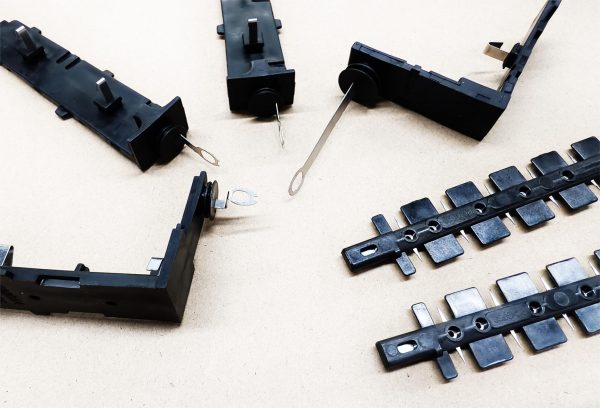
custom plastic injection molding service

As I delve into this topic, jaded by years interacting with various suppliers, I find that traditional solutions often fail to address pivotal user pain points. Manufacturers frequently overlook the importance of selecting appropriate polymers, subsequently leading to defective end products. A case in point is a project I executed back in 2018. I vividly recall a client’s frustration when a poorly chosen resin led to recalls—an avoidable scenario that translated into significant financial loss.

What Lies Beneath?

Unbeknownst to many, an effective custom plastic injection molding process is a synergy of precision, material selection, and design integrity. Partnering with an experienced custom plastic injection molding company fosters an advantageous environment wherein all these facets harmonize seamlessly. The finish product must be aesthetically pleasing, durable, and fit within your project’s specifications—all while being produced efficiently. It’s a tall order, but one that can yield rewarding results in the long haul.

Bridging Past Mistakes to Future Opportunities

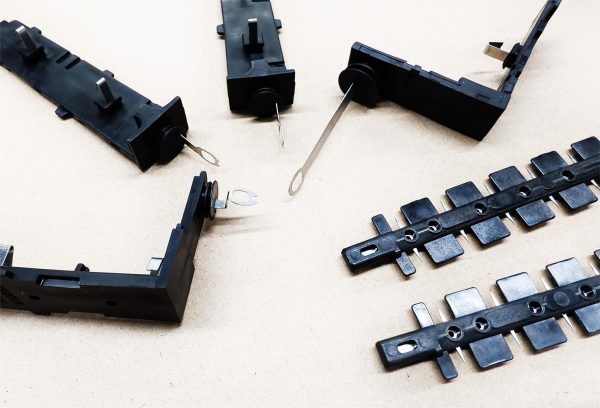
Engaging with seasoned partners can unveil pathways to enhanced efficiency. An apt example involves a recent collaboration with a local automotive company that faced recurrent issues with product consistency. By implementing a novel design approach and refining material choices through our custom plastic injection molding company, we achieved a remarkable 30% reduction in defects. This direct feedback loop between design and manufacturing sparked savings and innovation.

We must assess what this trend signifies for our industry. The landscape is shifting towards greater customization, with clients expecting not just products, but tailored solutions that fit unique specifications—think small batches, rapid prototypes, and a myriad of materials. When reviewing prospective molding partners, consider whether they can accommodate these changing demands. Can they keep pace with your evolving requirements?

custom plastic injection molding service

Real-world Impact

Addressing core issues not only improves your product pipeline but also greatly enhances customer satisfaction. I’ve witnessed firsthand how small adjustments, like integrating advanced simulation software into the design phase, can drastically increase the yield of quality products. Meanwhile, clear communication regarding expectations and timelines is imperative in fostering partnerships built on trust and reliability. Investing time to ensure clarity can mitigate misunderstandings, resulting in swifter project turnarounds.

Summing it Up: Key Takeaways

Reflecting on the intricacies involved in custom plastic injection molding, it’s clear that informed decision-making is paramount. To truly excel, equipping yourself with actionable insights and engaging a proficient partner is essential. Three key evaluation metrics I recommend include examining the supplier’s response time, their ability to address specific material requirements, and the quality assurance mechanisms they have in place. This holistic view will foster the foundation required for success.

In conclusion, the advancement of precision in molding processes is not merely an operational shift but a paradigm shift in customer engagement. As we move forward, leveraging technological innovations and solid partnerships will be indispensable for achieving competitive advantages. Remember, every misstep can often lay the groundwork for future triumphs. It’s a constant learning curve that I, and I believe many others, embrace willingly. For comprehensive services and solutions, I urge you to consider APT-Mold as your trusted ally in navigating this journey.

March 22, 2026 0 comments
0 FacebookTwitterPinterestEmail
Business

Unlocking Rapid Tooling Services: Insights from a Veteran’s Perspective

by Paul March 16, 2026
written by Paul

Introduction: The Evolution of Tooling Solutions

Let me take you back to a time when tooling was slow and cumbersome. In my over 20 years of experience in the industry, I’ve seen how the landscape has changed dramatically. I often wonder, how did we come to rely on china rapid tooling supplier as our go-to source? This transformation wasn’t just about adopting new technology; it was a response to the market demands for quicker product development. When we talk about rapid tooling services, we’re really addressing the urgency of innovation. Think of it this way: speed up production and stay ahead—what more can a business ask for?

The Flaws of Traditional Solutions

In my reflective moments, I often recall the frustrations with traditional tooling methods. The lengthy lead times—sometimes stretching into months—were maddening. I vividly remember some product designs that truly frustrated me, requiring multiple iterations before reaching a market-ready state. These inefficiencies highlighted major pain points. Manufacturers routinely faced delays due to complicated processes, forced design changes, and sometimes the dreaded supply chain hiccups. It became clear that relying solely on legacy solutions often meant sacrificing both creativity and market relevance. The shift to rapid tooling services didn’t just offer faster alternatives; it promised undeniable advantages, particularly in flexibility and cost.

What Makes Rapid Tooling Stand Out?

Rapid tooling embraces technologies such as 3D printing and CNC machining, allowing for prototypes to go from concept to reality at lightning speed. I’ve noted how easily these processes reduce material waste and build time significantly. Such advancements can make all the difference, especially for small- to medium-sized businesses looking to make their mark. You might be asking yourself—what’s the catch? It’s a fair concern. But with a reputable partner like a china rapid tooling supplier, the complexities become manageable. Just isn’t it fascinating how far we’ve come?

Looking Ahead: Future Trends in Rapid Tooling

As I gaze into the future of rapid tooling, I can’t help but feel a sense of optimism. The blend of automation and AI in manufacturing processes is reshaping how we approach design and production. These technologies are opening doors to even more efficient workflows and smarter tools. Interestingly, the growing trend of customization is giving rise to a greater demand for rapid tooling services, which ensures that everything from consumer products to medical devices can be tailored to unique specifications at a much faster rate. So, I pose this to you: how invested are you in the efficiency of your production line?

Real-world Impact of Rapid Tooling

Reflecting on recent advancements, one particular collaboration stands out—our team implemented rapid tooling solutions for a local automotive manufacturer in 2021. The results? Production costs were slashed by 30% while reducing the lead time from 12 weeks to just 4 weeks. That kind of impact is powerful, and it’s a testament to why more businesses are turning towards technological solutions. Investing in a china rapid tooling supplier isn’t merely an operational choice; it’s a strategic move towards future-proofing your organization.

Conclusion: Reflections and Moving Forward

Having navigated through the ups and downs of the tooling industry, I can confidently express that the future lies in embracing innovation, especially with tools designed to speed up and streamline production. I firmly believe these systems are not just tools but are vital in the competitive landscape of today’s market. It’s about finding the right partner—someone who understands the delicate balance between quick delivery and quality. Remember, in this era of advanced technologies, staying stagnant isn’t an option. As I always say, “Adapt and grow or risk getting left behind.” For those looking to harness the power of rapid tooling, I highly recommend checking out Livepoint—your ally in this transformative journey.

March 16, 2026 0 comments
0 FacebookTwitterPinterestEmail

Recent Posts

  • When Sunlight Misbehaves: Rethinking Efficiency for PV Systems
  • Taming Customs & Excise Chaos When Importing Bulk Blast 10K: A Problem-Driven Playbook
  • The Specifier’s Playbook for High-Throughput Cleanroom Overmolding: Practical Scale-Up Stratagems for Wholesale Production
  • Operational Playbook for Global Brand Rollouts: Ensuring Consistency Across Mass-Produced Outdoor LED Screen Suppliers
  • How Purposeful Agriculture Plastic Sheets Improve Seedling Establishment Accuracy

Recent Comments

No comments to show.

Keep in touch

Facebook Twitter Instagram Pinterest Youtube Bloglovin

Recent Posts

  • When Sunlight Misbehaves: Rethinking Efficiency for PV Systems

    July 5, 2026
  • Taming Customs & Excise Chaos When Importing Bulk Blast 10K: A Problem-Driven Playbook

    June 30, 2026
  • The Specifier’s Playbook for High-Throughput Cleanroom Overmolding: Practical Scale-Up Stratagems for Wholesale Production

    June 28, 2026
  • Operational Playbook for Global Brand Rollouts: Ensuring Consistency Across Mass-Produced Outdoor LED Screen Suppliers

    June 28, 2026
  • How Purposeful Agriculture Plastic Sheets Improve Seedling Establishment Accuracy

    June 27, 2026
  • Powering Returns: A Comparative Assessment of Solar Equipment and Storage Suppliers

    June 23, 2026

Categories

  • Business (111)
  • Fashion Stylist (20)
    • Clients (6)
    • Inspirations (7)
    • Magazines (7)
  • Featured (6)
  • Global Trade (120)
  • Industry (97)
  • Market (111)
  • Tech (122)
  • Facebook
  • Twitter
  • Instagram
  • Pinterest
  • Youtube
  • Bloglovin
  • Snapchat

@2021 - All Right Reserved. Designed and Developed by PenciDesign


Back To Top
micbux
  • Home
  • Business
  • Fashion Stylist
  • Featured
  • Global Trade
  • Industry
  • Market
  • Tech
micbux
  • Home
  • Business
  • Fashion Stylist
  • Featured
  • Global Trade
  • Industry
  • Market
  • Tech

Recent Posts

  • When Sunlight Misbehaves: Rethinking Efficiency for PV Systems

    July 5, 2026
  • Taming Customs & Excise Chaos When Importing Bulk Blast 10K: A Problem-Driven Playbook

    June 30, 2026
  • The Specifier’s Playbook for High-Throughput Cleanroom Overmolding: Practical Scale-Up Stratagems for Wholesale Production

    June 28, 2026
  • Operational Playbook for Global Brand Rollouts: Ensuring Consistency Across Mass-Produced Outdoor LED Screen Suppliers

    June 28, 2026
  • How Purposeful Agriculture Plastic Sheets Improve Seedling Establishment Accuracy

    June 27, 2026
@2021 - All Right Reserved. Designed and Developed by PenciDesign