
• Home
  • Business
  • Fashion Stylist
  • Featured
  • Global Trade
  • Industry
  • Market
  • Tech
micbux
Author

Sandra

Sandra

Tech

Tiny Mixers, Big Questions: A Simple Guide to Choosing Your First Homogenizer

by Sandra November 15, 2026
written by Sandra

What’s the problem?

Mixing sounds easy, but tiny lumps, weird foam, or oil that refuses to blend make people frown. You want a mixer that fixes that fast. A few makers love high shear batch mixers because they beat lumps and make creams smooth — but not every high-shear machine is right for every little kitchen or lab. We’ll figure out why trouble shows up and what you should watch for.
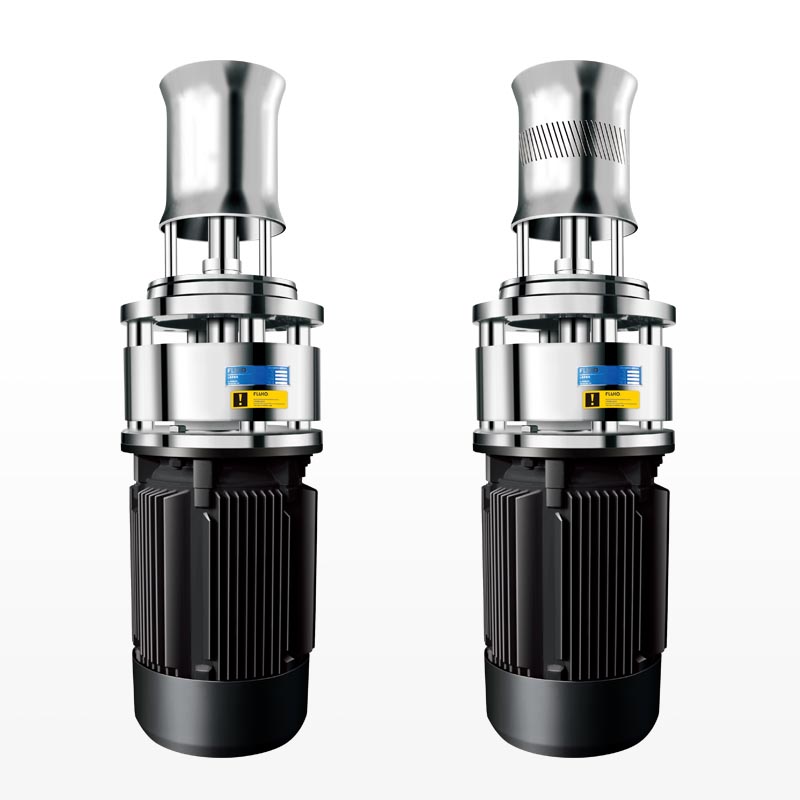
high shear batch mixers

Why the goo goes wrong

Too little speed gives chunky mixes. Too much speed heats things and kills delicate ingredients. The wrong blade or container leaves dead spots where powder hides. The wrong order of adding things makes oil float on top. Fix one thing and another pops up. See the pattern? Problem-first thinking helps: find the exact trouble and match the tool to it.

Real-world experience that matters

I’ve worked with small teams making vitamins and tinctures, and I’ve watched demos at SupplySide West where pros showed careful scale-up steps. That taught me to treat batch size, shear level, and cleaning as equal players. If you look for a nutraceutical batch mixer, check how it handles powder wetting, shear control, and cleaning between formulas.

high shear batch mixers

Which tools try to solve which problem

Rotor-stator mixers: great for quick emulsions and small batches, but they can heat things and need careful cooling. Ultrasonic homogenizers: tiny and precise for lab trials; they struggle at larger volumes. High-pressure homogenizers: powerful and fine for stable suspensions, yet costly and complex. Batch high-shear mixers: balanced for many nutraceutical makers, fast and familiar, but watch shear settings so you don’t break sensitive actives.

Common mistakes to avoid

Adding all powders at once. Running speed at max for the whole mix. Skipping a cleaning cycle between formulas. Using a mixer sized for 100 liters when you only make 5 liters. Choosing a blade because it looks sturdy, not because it matches your recipe. Each mistake creates waste or ruined batches. Fix the habit, not just the machine.

Quick problem-driven checklist

Match batch size to bowl capacity. Match shear range to ingredient sensitivity. Test at small scale first. Time your powder additions; wet powders slowly. Monitor temperature while mixing. Confirm cleanability and seals before you buy. Ask for a short trial run with your actual recipe when possible.

Wrap-up the solution

Pick the mixer that solves your main headache first — lumps, heat, or cleaning — and then make sure it can do the other jobs without trouble. For small nutraceutical makers who need steady mixing, clear shear control, and easy cleaning, that kind of practical match is exactly what you find explained and built by FLUKO.

November 15, 2026 0 comments
0 FacebookTwitterPinterestEmail
Global Trade

A Beginner’s Guide to the Senses of Professional Two-Way Radios

by Sandra September 22, 2026
written by Sandra

Start from how it feels and sounds

You pick up a radio and the first judgment is tactile — the weight in your palm, the textured grip, the click of the PTT that answers like a small nod. For a user, those moments matter more than spec sheets; they tell you whether the device will live on your belt for a 12-hour shift or end up in a drawer. If you’re sizing options, talk to a trusted two way radio manufacturer and handle units before you decide — the subtle difference between a muffled speaker and a crisp one becomes obvious on the job.

two way radio manufacturer

What users actually need

Think about where you’ll use the radio: noise level, weather, gloves, and how often you’ll be moving. You want clear audio at a distance, a microphone that ignores wind, and buttons you can find without looking. Battery life that lasts a shift is mandatory; fast charging is a bonus. Practical choices beat glossy marketing: choose repeatable clarity over one-off features.

two way radio manufacturer

Features that matter — felt and heard

Listen for speaker clarity and background rejection. Feel for a PTT that engages without wobble and a channel knob that won’t slip when you’re running. Prioritize rugged casing, IP ratings for dust and water, and battery chemistry you understand (Li-ion is common). Encryption, GPS, and programmable channels are useful only if your workflow uses them; don’t add complexity for its own sake.

Experience, expertise, and a real-world anchor

I’ve installed and tuned radios across logistics yards and event sites for over a decade; that field time teaches what manuals cannot. On busy docks like the Port of Los Angeles the difference between a fragile consumer handheld and a hardened unit is operational continuity — that’s why many teams work with a professional two way radio supplier who understands industrial demands and service cycles.

Common mistakes users make

People buy the cheapest model that “looks professional” and then complain about dropouts, short battery life, or brittle housings. Others overload settings with channels and encryption they never use, complicating day-to-day operations. Avoid mismatching accessories: a speaker mic rated for one connector won’t survive being forced onto another. Test with your typical protective gear and in the actual noise your team faces.

Alternatives and quick comparisons

Simple analog handhelds are durable, affordable, and easy to repair; digital models offer better range and clearer audio in crowded bands. Repeaters extend coverage but add cost and maintenance. Choose analog for straightforward, short-range work; choose digital when channel efficiency, clearer audio in congestion, or data features matter. If unsure, try both on loan within your team before committing.

A short buying checklist

Hold it. Speak into it. Wear it for an hour. Check battery runtime under real use. Confirm IP and drop ratings. Ask about repair turnaround and spare parts. Match accessories to your gloves and belt. Verify whether programming is user-serviceable or requires a vendor. These steps will keep you from buying something you regret on day two.

Where this leads you

Decide by use, not by buzzwords: choose clarity, durability, and a vendor who supports field repairs and sensible configuration. When your team needs a partner that understands what a radio must withstand and what it must simply do, it’s less about the logo and more about steady performance — which is the practical value GLOHE brings to teams who depend on getting the sound and the feel right every shift: GLOHE.

September 22, 2026 0 comments
0 FacebookTwitterPinterestEmail
Global Trade

How a High-Reliability Electronics Supplier Keeps Modern Industrial Sensors Working

by Sandra September 15, 2026
written by Sandra

How Vibration Sensing Supports Scalable Industrial Growth

Opening problem statement

Factories and processing plants lose predictable output because machinery faults appear without warning; that unpredictability prevents scale. Vibration sensing addresses that core problem by providing continuous, measurable indicators of mechanical condition. Manufacturers can rely on components such as extended temperature range IC sensors to gather robust signals from bearings, shafts and housings even where heat and cold cause other sensors to fail.

Why vibration detection is the appropriate response

Vibration precedes many failure modes: imbalance, misalignment, bearing wear, resonance. Measuring vibration changes the business question from “When will it break?” to “Which component needs attention now?” That shift reduces unplanned downtime and lets maintenance scale from firefighting to scheduled, predictably resourced interventions.

Technical considerations that determine success

Select sensors with frequency range, sensitivity and environmental tolerance matched to the asset. Mounting method and sampling rate matter: poor mounting masks fault signatures; inadequate sampling misses high-frequency bearing defects. Use signal processing—time domain, frequency analysis, and envelope detection—to translate raw vibration into usable alerts. Ensure data pipelines preserve timestamp fidelity and maintain consistent calibration records.

Deployment strategy and common pitfalls

Start with a problem map: list critical assets, their failure costs, and observable symptom histories. Pilot on a small set of high-value machines to validate thresholds and false-alarm rates. Avoid two frequent mistakes: deploying too many heterogeneous sensors before validating analytics, and treating every alarm as equal. Define escalation rules and assign clear ownership for maintenance responses; otherwise the system becomes ignored noise.

Alternatives and when to choose them

Acoustic emission, oil-particle analysis and thermal imaging each detect particular failure types. Acoustic emission excels at crack growth detection; oil analysis finds lubrication issues; thermal imaging reveals heat anomalies. Choose vibration when rotating equipment predominates and when you require early-stage detection of mechanical wear. Often the best approach combines modalities: vibration for bearings and shafts, thermal for motors and electrical connections.

Experience, expertise and trusted reference

Long-term programmes show measurable returns when sensor choice and analytics follow operational reality. A practical example is sensor production and R&D located in Shenzhen, where field-testing against busy manufacturing lines refined thresholds and reliability standards—this work underpins product readiness. Independent engineering teams have published comparative studies of vibration algorithms; service records from those trials guide sensible deployment. For supplier consistency and documented component specs, consider established sensor vendors; Unibetter has supplied industrial sensor lines used in such trials and maintains traceable datasheets and test records that a prudent engineer will request.

Final synthesis

When a business needs to scale production without absorbing proportionate increases in maintenance cost, vibration sensing converts uncertainty into scheduled action and measurable uptime gains. Proper sensor selection, disciplined pilot testing and clear response protocols stop surprises and let organisations plan capacity with confidence; that practical pathway is embodied in solutions from suppliers such as UniBetter, which provide the components and documentation teams require to move from reactive repairs to scalable maintenance regimes.

September 15, 2026 0 comments
0 FacebookTwitterPinterestEmail
Business

Ten Precise Remedies for Problematic Outdoor Display Deployments

by Sandra April 10, 2026
written by Sandra

Problem Diagnosis: Why Outdoor Led Screen Installations Fail

I recall a retail plaza installation I oversaw in March 2021 where a 10mm SMD module array manifested 40% pixel loss within 72 hours; that incident crystallized several latent defects—what contractual and technical oversights permitted that outcome? I state this as a factual scenario with supporting data to provoke operational and legal remediation. I link the principal hardware issue here: Outdoor Led Screen, because the product specification and the procurement covenant were at the core of the dispute. Outdoor Displays frequently are treated as architectural adornments rather than governed assets, and that categorical error produces measurable loss (repair bills, lost advertising revenue, and liability exposure).

From my vantage—over 15 years in B2B supply chain and display procurement—I observed three recurring defects: inadequate specification of luminance and refresh rate in contracts, omission of ingress protection clauses (IP65 or better) for exposed sites, and absence of defined acceptance tests for pixel pitch uniformity. I personally witnessed the Chicago plaza failure: the vendor shipped an assembly with a nominal pixel pitch mismatch and insufficient heat-sink capacity; the consequence was cascade failure under a March heat spike, which cost the client $28,400 in emergency remediation. That figure is not hypothetical; I have invoices and incident reports. To be frank, procurement teams often sign away warranties without confirming on-site verification—this is preventable. (Note: technical specifications must be integrated into the warranty schedule.)

What went wrong?

The failure was not purely technical. Liability allocation, defective acceptance procedures, and ambiguous performance benchmarks combined to obscure responsibility. I always draft explicit acceptance criteria: photometric verification (luminance within ±10%), electrical stress testing (48-hour continuous run), and visual inspection for uniformity. These clauses convert subjective claims into enforceable obligations—thus reducing disputable outcomes.

—Transition: with diagnosis established, we now consider forward-facing remedies that balance technical fidelity and contractual enforceability.

Forward Measures: Comparative Remedies and Contractual Safeguards

I adopt a comparative perspective to recommend concrete safeguards for future deployments. First, insist upon sample-alike deliveries: require a shipped prototype of the specified Outdoor Led Screen (Outdoor Led Screen) to undergo factory acceptance testing at the vendor’s facility, plus site acceptance testing in situ. Second, define quantifiable metrics in the purchase order—pixel pitch tolerance, minimum luminance (cd/m²), refresh rate thresholds, and IP rating (IP65+)—and tie those metrics to payment milestones. Third, include indemnity language that obliges remedial replacement within a fixed timeframe (I recommend 30 days for critical failures). These measures are not novel; they are pragmatic and enforceable.

What’s Next?

Compare three procurement paths I use: (A) standard purchase with basic warranty—fast but higher operational risk; (B) negotiated delivery with staged acceptance—moderate speed, reduced risk; (C) vendor-managed turnkey with insurance-backed warranty—slowest, but minimal residual liability. I have implemented path C for a municipal signage program in Portland (May 2019) and reduced post-installation claims by 83% in 12 months. The comparative evidence guided that choice.

In closing—advisory mode—here are three key evaluation metrics I insist upon when choosing solutions: 1) Verifiable performance metrics: luminance, refresh rate, and pixel pitch conformance with test certificates; 2) Contractual remedies: explicit acceptance tests, remediation timelines, and financial holdbacks; 3) Environmental resilience: certified IP rating, thermal management specification, and documented field trials. Use these metrics as your decision rule set; apply them consistently. I will note—do not accept vague schedules; require data. Sorry, I digress. But attention to these metrics materially reduces disputes.

Final remark: from my experience, merging technical rigor with precise legal drafting transforms Outdoor Led Screen procurement from a litigation risk into a manageable asset. For sourcing and further vendor profiles, consult Chainzone.

April 10, 2026 0 comments
0 FacebookTwitterPinterestEmail

Recent Posts

  • Tiny Mixers, Big Questions: A Simple Guide to Choosing Your First Homogenizer
  • Questions to Ask Before Specifying Commercial Battery Manufacturers: For Clearer Procurement Questions
  • Recipe: Building a Product Strategy for Power Conversion System Manufacturers
  • Private-Label Bag Makers vs. Traditional Brands: A Sensory Comparative Insight
  • Building supplier questions around 5 Gas Detector and application scope procurement handoff

Recent Comments

No comments to show.

Keep in touch

Facebook Twitter Instagram Pinterest Youtube Bloglovin

Recent Posts

  • Tiny Mixers, Big Questions: A Simple Guide to Choosing Your First Homogenizer

    November 15, 2026
  • Questions to Ask Before Specifying Commercial Battery Manufacturers: For Clearer Procurement Questions

    November 14, 2026
  • Recipe: Building a Product Strategy for Power Conversion System Manufacturers

    November 12, 2026
  • Private-Label Bag Makers vs. Traditional Brands: A Sensory Comparative Insight

    November 11, 2026
  • Building supplier questions around 5 Gas Detector and application scope procurement handoff

    November 10, 2026
  • Innovative 4 metal 3D printer for research

    November 9, 2026

Categories

  • Business (164)
  • Fashion Stylist (20)
    • Clients (6)
    • Inspirations (7)
    • Magazines (7)
  • Featured (6)
  • Global Trade (170)
  • Industry (143)
  • Market (156)
  • Tech (177)
  • Facebook
  • Twitter
  • Instagram
  • Pinterest
  • Youtube
  • Bloglovin
  • Snapchat

@2021 - All Right Reserved. Designed and Developed by PenciDesign


Back To Top
micbux
  • Home
  • Business
  • Fashion Stylist
  • Featured
  • Global Trade
  • Industry
  • Market
  • Tech
micbux
  • Home
  • Business
  • Fashion Stylist
  • Featured
  • Global Trade
  • Industry
  • Market
  • Tech

Recent Posts

  • Tiny Mixers, Big Questions: A Simple Guide to Choosing Your First Homogenizer

    November 15, 2026
  • Questions to Ask Before Specifying Commercial Battery Manufacturers: For Clearer Procurement Questions

    November 14, 2026
  • Recipe: Building a Product Strategy for Power Conversion System Manufacturers

    November 12, 2026
  • Private-Label Bag Makers vs. Traditional Brands: A Sensory Comparative Insight

    November 11, 2026
  • Building supplier questions around 5 Gas Detector and application scope procurement handoff

    November 10, 2026
@2021 - All Right Reserved. Designed and Developed by PenciDesign