Introduction — a rooftop morning, numbers on a clipboard, and a stubborn question
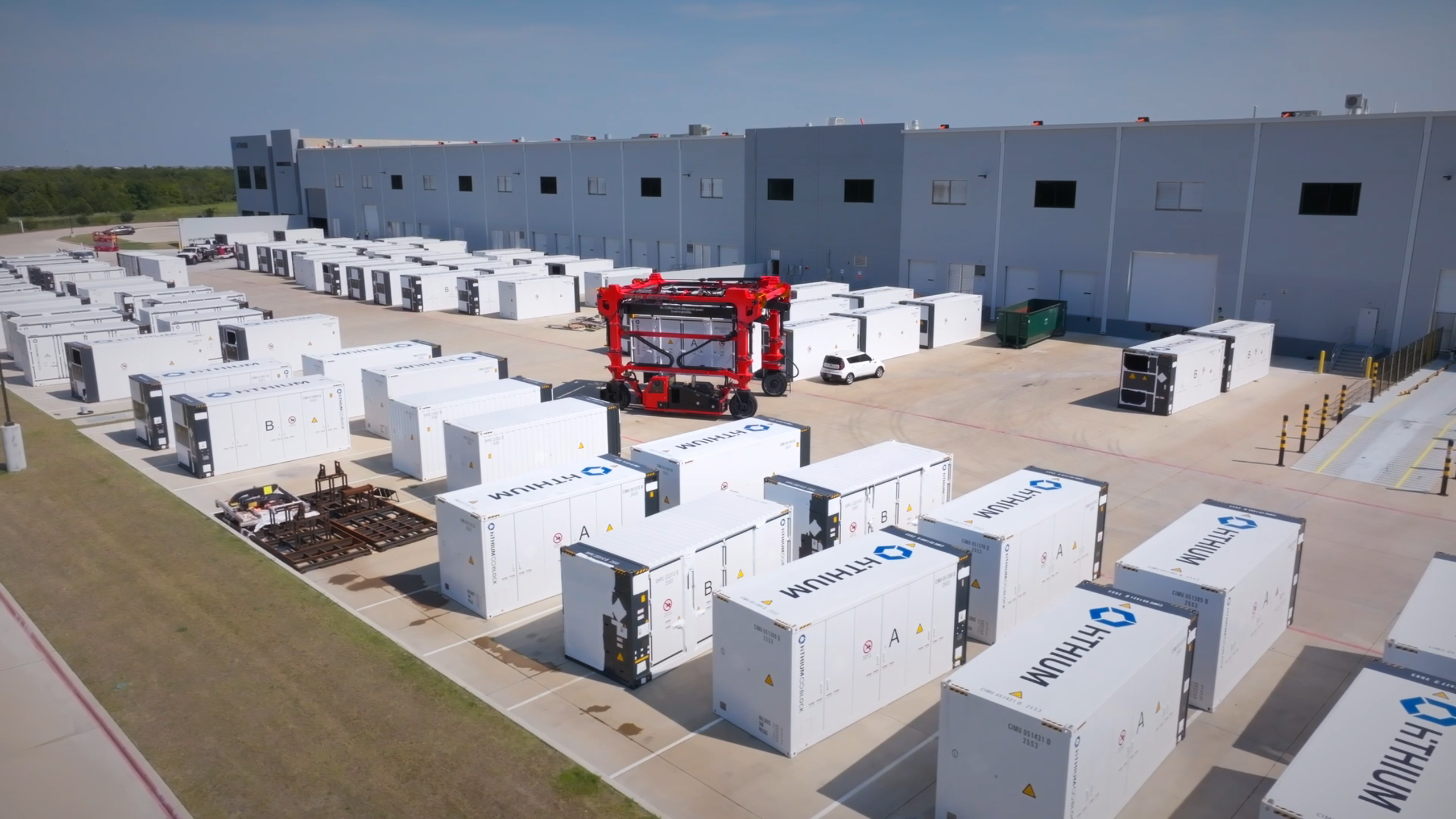
I remember a damp Saturday in Shenzhen in 2018, standing on a warehouse roof while a technician tightened a busbar and I watched the first battery string come online. In that moment I thought about hithium energy storage the way a mechanic thinks about an engine: not as marketing copy, but as a system that either pays the bills or it doesn’t. (I kept the original sticker from that 480 kWh LFP pack.)

Data matter: that first installation used 480 kWh of lithium iron phosphate battery modules, a 250 kW inverter and a standard BMS, and within six months the customer’s peak demand charges fell by 18%. So why do so many buyers still accept projects that deliver half that result? I’ve spent over 20 years in commercial energy storage distribution and installation, and I ask that because I’ve seen the same avoidable mistakes three times over. Here’s where I start—by naming the problem and by sharing what I learned on those roofs, in control rooms, and at the negotiation table.
Transitioning now to what usually goes wrong—and why the cheapest-looking quote often becomes the most expensive decision.
Where traditional solutions fall short: the deeper flaws I keep seeing
When I review proposals from energy storage system companies, I look first for how they size the stack: battery modules, inverter capacity, and the power converters. Too often, firms focus only on nominal kWh and overlook real-world constraints—thermal management, inverter clipping, and BMS software limits. That’s a technical oversight with commercial consequences. I once rejected a project bid in Guangzhou because the quoted inverter would hit the DC bus ceiling under solar surge and throttle the site during the very hours it needed to shave peaks. I still write that down—details matter.
There are two consistent flaws I see: poor operational modeling and weak integration testing. Operational modeling errors happen when companies assume perfect state-of-charge behavior and ignore degradation curves; a pack that looks fine on paper at year zero often yields 10–15% less usable energy by year two if the chemistry and charge protocol aren’t aligned. Integration testing failures show up as unexpected trips—faults on the BMS, communication dropouts between the inverter and SCADA, or misconfigured charge controllers. The result? Downtime, warranty disputes, and a client who feels misled. I prefer to call this what it is: sloppy systems thinking. And yes—once, a mid-size retail client in Shenzhen lost three full days of microgrid service because the serial protocol between the inverter and BMS was set to the wrong baud rate. That cost us real money; it taught me to require end-to-end FATs (Factory Acceptance Tests) with live cycling.
Why does this keep happening?
Short answer: procurement squeezes, unclear roles, and unrealistic performance guarantees. Longer answer: the project team often separates equipment buying from system commissioning. Look, I know budgets matter. But I also know the true cost of a firefight at commissioning—both in cash and in trust. That casual handoff is a recurring root cause.
New technology principles that change the game — practical, forward-looking moves
I’ve shifted, in recent projects, from accepting vendor promises to insisting on three engineering principles: adaptive charge profiles, modular BMS architecture, and layered safety protocols. Adaptive charge profiles mean we don’t force a one-size-fits-all charge current; instead, we tune based on cell impedance and ambient temperature. Modular BMS architecture lets us replace or upgrade a control board without ripping the entire pack apart—valuable in large sites where downtime costs north of $2,000 per hour. Layered safety protocols combine hardware fuses, software limits, and thermal monitoring so that a single fault doesn’t cascade.
To be concrete: in Austin in July 2021 I led deployment of a 1 MWh ESS built from LFP cells with a distributed BMS and redundant communication paths. We specified a DERMS-ready inverter and installed edge computing nodes to run local optimization routines. The result was a predictable dispatch performance during summer peaks and a measured 22% drop in monthly demand charges in the first billing cycle. These are the kinds of outcomes I push for because they are verifiable, not aspirational—measured savings, measurable uptime. —oddly enough, clients respond to proof more than promises.
What’s Next: how to evaluate proposals and vendors
When you compare vendors—especially among energy storage system companies—here are three concrete metrics I use to decide. First: validated round-trip efficiency under site conditions (not just at 25°C in a lab). Second: documented degradation curve for the chemistry and charge regime proposed, with a guaranteed replacement threshold. Third: commissioning and FAT scope—does it include grid-tied stress tests and communications failover checks? If a vendor can’t deliver those documents, I walk.
Finally, practical advice from the trenches: get statements of work that list who is accountable for each failure mode; insist on field swap kits for common parts (inverter gate drivers, BMS boards); and require a training day for onsite technicians. That last piece—training—saves you a service call every year. Remember the rooftop in 2018? I still use that checklist when I review a proposal.
Closing evaluation — three quick metrics to judge a system (and a vendor)
1) Delivered financial impact within six months: did the system reduce peak demand charges by at least the percentage promised? Quantify that. I’ve seen 18–22% in realistic projects; anything under 8% deserves scrutiny. 2) Measured availability over the first year: target 98%+ for operations where backup is contractual. 3) Replacement and repair lead time: can the supplier ship a critical BMS board within 72 hours to your region? If not, plan for longer outages.
I’ve spent over 20 years buying, specifying, installing, and fixing ESS gear for retailers, small industrial parks, and municipal sites. I prefer solutions that prove their worth with data, not slogans. We can parse spec sheets together; I will point out the real risks. For hands-on teams, bring the test results, the wiring diagrams, and the date-stamped log files. That’s how we separate real value from nice-sounding proposals. HiTHIUM