Why this matters to you
If you run a lab or integrate OEM modules, getting beam delivery and galvanometer (galvo) calibration right saves time, cuts waste, and stops costly rework. Start by matching your system needs to the laser head — whether that’s a compact DPSS or a mode-locked femtosecond oscillator — and consider the real-world behaviour of that dpss laser under load. Users want repeatable spot placement, stable pulse timing, and minimum beam wander; when those aren’t met, production yields and experimental repeatability suffer alike.
Quick primer on the subsystems
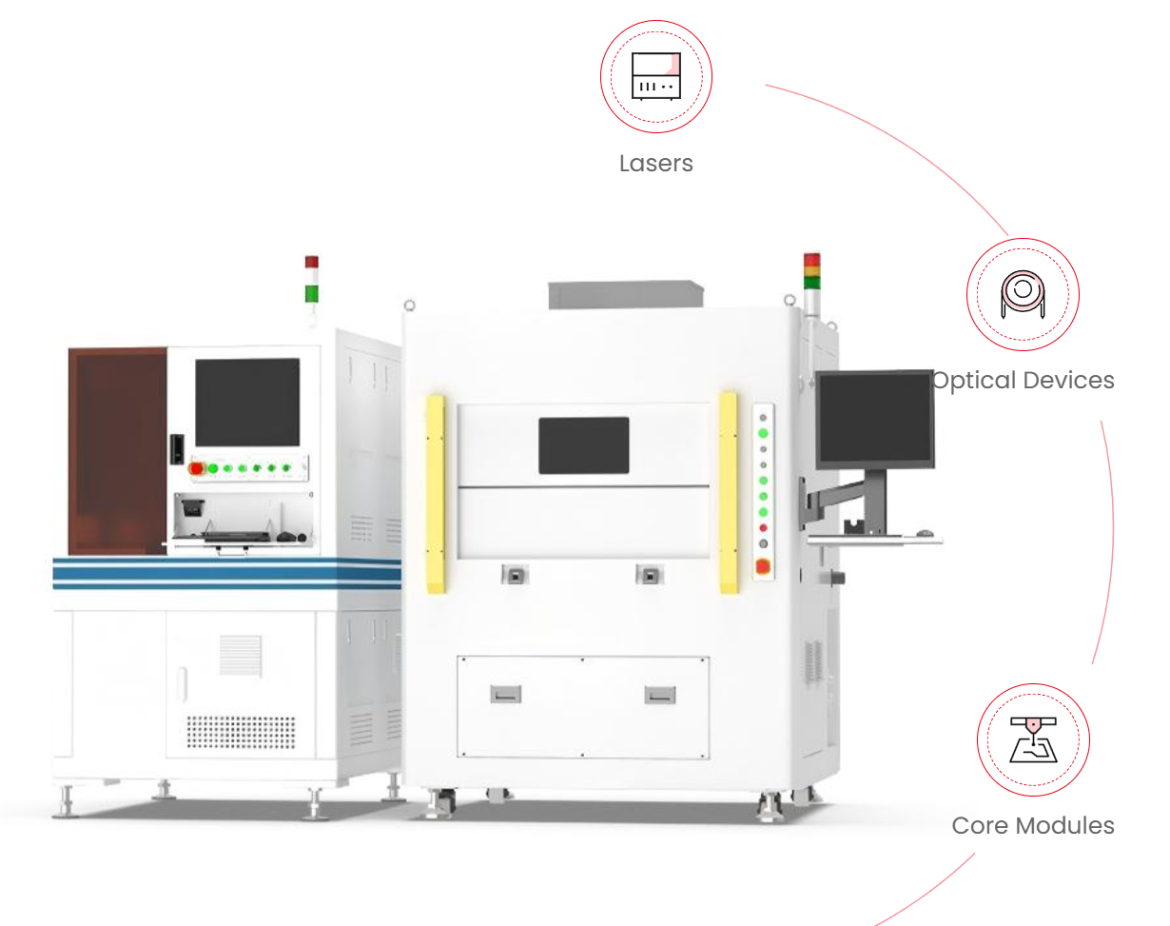
Key elements are the laser source, beam delivery optics, the galvanometer scanner, and the downstream optical bench. Industry terms worth keeping front of mind: beam profile, wavelength, alignment, and beam delivery. The galvo governs angular deflection and scan linearity; the delivery optics set the beam waist and spot quality at the workplane. Knowing each role makes troubleshooting much clearer.
User-centric calibration workflow
Follow a simple, repeatable sequence — that’s the point. 1) Stabilise the source (warm-up, power and pulse checks). 2) Verify basic alignment with low power and an alignment target. 3) Establish galvo zero and check linearity across the scan field using a calibrated grid. 4) Optimise focus and beam waist at the target plane. 5) Run a closed-loop check with the actual process parameters (scan speed, repetition rate). Use a calibrated camera or beam profiler for spot tests — and log every setting so you can reproduce them later.
Common mistakes and practical fixes
People often skip the warm-up, assume the galvo maps linearly, or trust the factory alignment forever. Don’t. Warm-up prevents drift in pulse duration and output coupling. Always run a grid pattern to reveal non-linearities — then apply software corrections or tweak the galvo amplifier gain. If you see edge distortion, check scan lens placement and beam fill; underfilling causes astigmatism, overfilling wastes aperture and raises aberrations. And watch for thermal effects on the optical bench during long runs — they sneak up on you.
Tools, measurements and small details that matter
Good tools speed the job: a beam profiler, an autocollimator for mirror alignment, and a calibrated CCD for spot uniformity. Keep an eye on pulse timing and jitter when you change scan speeds — synchronisation between galvo drive and pulse train matters for consistent energy per pulse on target. For many commercial setups the simple addition of a fiducial-check routine reduces drift complaints by half — proper QA goes a long way.
Real-world anchor: why it’s proven in the field
Take large interferometer projects like LIGO: precision alignment and beam stability are non-negotiable at scale. They teach the same lesson for femtosecond subsystems — minute misalignment or timing errors become glaring problems once you scale up. In commercial manufacturing, similar discipline wins reliability and uptime, and that’s exactly what end-users expect.
Common integration pitfalls — and how to dodge them
Don’t assume existing optics are compatible with your beam profile — run a compatibility check early. Forgetting to specify correct wavelength coatings or neglecting thermal lensing in the design stage are classic traps. Also, if you’re converting a research table design into an industrial module, add mechanical bracing and vibration damping — otherwise alignment drifts during transport and day-to-day use. —
Three golden rules for evaluation (your quick checklist)
1) Measure reproducibility: expect positional repeatability within the spec for your process — log results over temperature cycles. 2) Validate synchronisation: ensure galvo drive timing and pulse repetition rate preserve energy-per-pulse at all speeds. 3) Demand maintainability: verify easy access to adjust alignment, replace optics, and update galvo firmware without a full teardown.
Follow those rules and you’ll cut downtime, improve yield, and make life easier for operators — which is what matters in the long run. JPT. –