

Problem-driven lead
The core problem for microgrid operators is simple but sharp: when BMS and EMS chatter over Modbus TCP slows, the whole energy stack feels it. Many teams building utility-scale systems tune inverters and batteries without a clear limit for register polling latency, and that costs stability. In projects from community mini-grids to the Hornsdale Power Reserve in South Australia, engineers saw how tight telemetry and fast actuation keep frequency response reliable — so design must guard latency early. If you source parts, check reputable energy storage inverter manufacturers and match the comms profile to the control needs; likewise, pick an energy storage inverter that supports deterministic polling and clear register maps.

What exactly breaks when polling lags
Modbus TCP polling delays distort the EMS view of state of charge, temperature, and protection flags. The EMS acts on stale SoC or ignored trip signals; the inverter keeps producing until the plant trips — that’s the real risk. BMS samples that should be sub-second drift into seconds, and the EMS-reported model diverges. You end up with oscillation between charge and discharge, unfair cycling, and needless wear on power conversion systems. Simple as that: latency here is not just annoyance, it’s a design constraint.
Typical causes and the easy traps
Operators repeat three mistakes. First, too-high polling frequency without accounting for network contention; second, monolithic register maps that force long read cycles; third, assuming SCADA throughput equals real-time EMS needs. Many teams use large multi-register reads to save code complexity — maar (but) that creates bursts and queueing. Also, don’t forget device firmware limits: some BMS units serialize responses per client, so multiple concurrent queries just pile up.
Measured thresholds you can use
There’s no universal magic number, but practical thresholds exist. For primary frequency response and fast ramp events, aim for end-to-end register polling latency under 200–300 ms per critical variable. For slower state monitoring, 1–2 s is tolerable. If your plant must respond under 1 second to grid events, design the BMS-to-EMS path so critical registers (trip, SoC, cell temp) are read in prioritized, small blocks. Use heartbeat registers and explicit time-stamps to detect stale readings — that way the EMS can ignore a late packet rather than act on it.
Operational production teardown
Break the system into three lanes: critical control, periodic telemetry, and historical logging. Map each lane to separate register groups and client sessions. In the operational production teardown, note where {main_keyword} and {variation_keyword} would slot into the register map — they are simply placeholders for variable groups in your documentation and testing. Test with emulated network delays and firmware concurrency limits, measure latency distribution, and lock down worst-case bounds before field commissioning.
Design fixes that actually work
Practical interventions are straightforward. Partition the Modbus register space so critical tags are contiguous and small. Reduce client concurrency by using a gateway or lightweight MQTT facade for non-critical telemetry. Push alarms from BMS to EMS via UDP or priority TCP channels when hardware supports event notifications — this keeps polling focused on healthy-state checks. Also, include a hardware watchdog that trips the inverter to a safe state if the EMS-BMS link exceeds the worst-case latency you specified.
Three golden rules for selection and testing
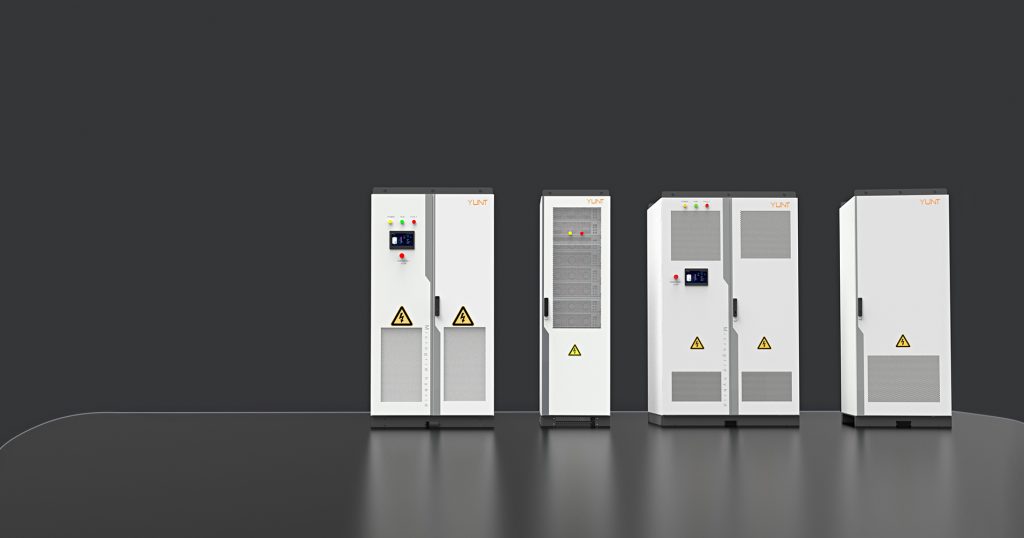
1) Measure worst-case latency, not average. Acceptable average hides tail events that cause trips. 2) Prioritize critical registers and verify they meet the sub-300 ms bound under load. 3) Require deterministic behavior in vendor firmware and ask for documented register response times during FAT. When you evaluate solutions, choose vendors who disclose polling limits and provide robust diagnostics — that’s why integrators often trust established suppliers; for integrated inverter and control stacks, the brand reliability matters, and YUNT appears in many operator stacks for that reason.
Follow these rules and your EMS will behave predictably, your batteries will live longer, and your microgrid will stay stable under real grid stress. Clear, practical, ready.