
What keeps fleet managers up at night
Accidents, mystery claims, and drivers who drift into risky habits — those are the headaches that cost time and money. A sensible first move is seeing what actually happens on the road, and that’s where an AI dashcam changes the conversation. I’ve watched fleets cut claim disputes by showing clear footage during incident review; that kind of proof matters more than promises.
The core problems and direct fixes
Problem-driven thinking: list the real pains, then match with concrete fixes. No fluff.
– Accident attribution — video plus AI identifies who moved where, when. – Late incident reporting — automated uploads reduce lost evidence. – Unsafe driving patterns — alerts flag repeated behaviours before they become accidents. – Compliance gaps — time-stamped footage supports regulatory checks. – Driver coaching — replay and targeted coaching reduce repeat faults.
How truck AI dashcams actually work on the road
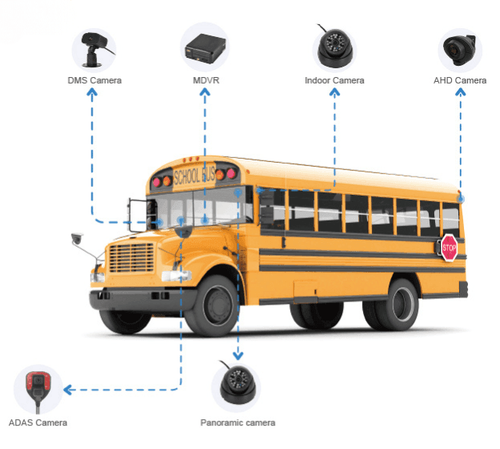
These systems pair smart cameras with on-device models. Cameras capture forward, inward or side views. AI detects events — harsh braking, tailgating, lane departure — and creates short, prioritized clips. Clips are encrypted and sent to a cloud portal only when needed, so operations teams can review high-risk events quickly without wading through hours of footage. The tech fits into existing telematics platforms or runs standalone where simplicity is preferred.
Real-world anchor: where this matters most
Busy truck flows at places like the Port of Los Angeles show why visual proof matters: tight turns, heavy loads, multiple gate reviews. Operators at major ports use footage to speed investigations, improve gate control and reduce liabilities tied to blind-spot incidents.
What to expect from installation and rollout
Expect a few practical snags. Budget for professional mounting to prevent blind spots. Set clear retention policies so storage doesn’t balloon. Train drivers on how footage is used — transparency reduces resistance. I recommend pilot on 10–20 vehicles first, then scale with telemetry integration once you confirm event thresholds and upload schedules.
Common pitfalls and how to avoid them
– Over-collecting footage: burns bandwidth and staff time. Configure event-only uploads. – Ignoring privacy: have a simple, written driver policy to explain purpose and access. – Poor camera placement: check driver sightlines in real traffic, not just the yard. – Skipping firmware updates: AI models improve; delayed updates reduce accuracy.
Choosing features that matter
Prioritise these practical features: multi-angle cameras, on-device event scoring, encrypted storage, simple admin portal, and robust mounting hardware. Extra bells like live-streaming can help high-risk runs, but they also increase data use. Match features to your operational problems, not vendor gloss.
Alternatives and quick comparison
There are basic dashcams, full telematics suites, and hybrid AI units. Basic cams record but don’t triage. Telematics track vehicle data but offer limited visual proof. Hybrid AI units bridge both: they trigger on driving events and attach the video. For many fleets the hybrid delivers the best balance of proof, insight, and cost.
How I evaluate vendor claims
I test units across urban and highway runs, check event accuracy against human review, and confirm upload reliability in weak-signal areas. Ask vendors for a short trial and real deployment references. Vendor PR is easy; operational logs and incident-case samples tell the truth.
Quick checklist before you buy
– Can it detect and tag events automatically? – Are clips encrypted and access-controlled? – Is installation service available? – Does it integrate with your current fleet portal? – Is firmware and model update included?
Wrap-up that matters
Start with the problem you need to solve, run a small pilot, and insist on clear driver policies and practical support. When deployed right, a truck AI dashcam turns unknown incidents into verifiable evidence and creates repeatable improvements in driver behaviour and claims handling. For fleets that want straightforward proof and steady operational gains, BSJ fits into the solution without overpromising.