
The core scaling problem: reach, stability, and predictable output
Projects that need longer reach often push machines beyond their intended use: increased extension raises overturn risk, telehandler attachments change load geometry, and operating hours climb without matching maintenance. This creates schedule slips and higher lifecycle cost. Choosing the right off-road configuration early — for example an off road telehandler built for rough terrain and heavy attachments — removes variables that later force emergency swaps or repeated site modifications.
Common failure modes that block scalable deployment
Identify what actually fails when reach increases. Typical modes:- Overrated lift charts: operators attempt lifts near maximum extension without factoring attachment offsets.- Chassis fatigue: repeated high-torque cycles cause structural loosening.- Tire and axle wear: rough-terrain duties accelerate component replacement.- Control drift: hydraulic systems cope poorly with extended cycles without correct maintenance intervals.Recognizing these patterns points to targeted controls rather than broad spec inflation.
Types of telehandlers and how each addresses scaling limits
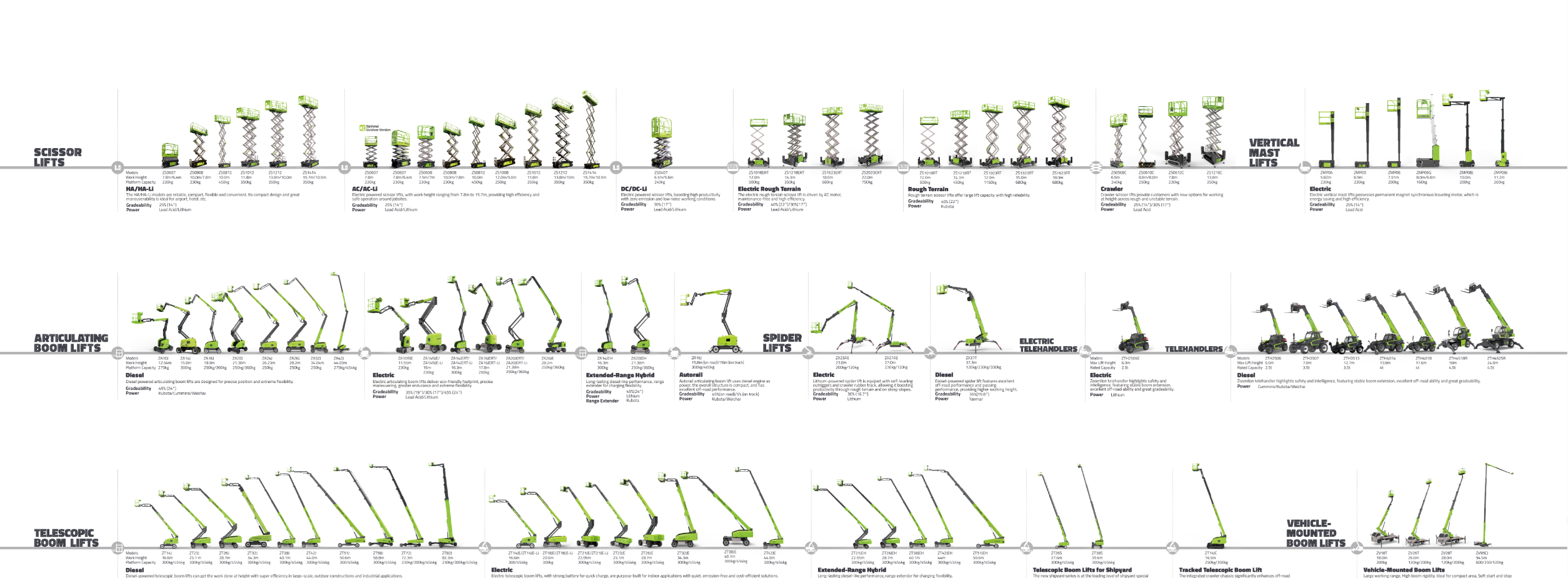
Match machine topology to the problem. Key types include telescopic handlers, rotating (roto) telehandlers, compact telehandlers, rough-terrain telehandlers, and truck-mounted handlers. Each type trades reach, lift capacity, and mobility differently; for example, rotating models suit congested urban sites where repositioning is costly, whereas rough-terrain units support uneven ground and heavy attachments. These types of telehandlers are commonly specified on North American heavy-civil construction projects, where long reach and site mobility are both critical.
A simple selection framework to scale with confidence
Use this four-step filter:1) Define the job envelope: maximum outreach, height, and lifted mass including attachments. 2) Quantify duty cycle: average daily hours, starts/stops, and peak load instances. 3) Map terrain and access constraints: slopes, narrow points, and transport limits. 4) Budget for lifecycle: initial capital, scheduled service, spare parts, and operator training.Apply objective metrics — required outreach (m), max tip load (kg), and expected operating hours per month — when comparing models. This reduces guesswork and mismatched purchases.
Operational practices that keep extended-reach assets productive
Practical controls that preserve uptime:- Rigorous load-chart enforcement: require signed load checks for non-standard attachments.- Scheduled structural inspections: focus on boom pins, welds, and telescopic seals after heavy cycles.- Telematics and simple alarms: monitor boom extension events and idle hours to trigger maintenance before failure.- Operator qualification and scenario drills: train crews on dynamic load behavior at full extension.These steps lower unplanned downtime and maintain the reach you planned for.
Pitfalls teams commonly overlook when increasing reach
Avoid these mistakes:- Choosing maximum reach as the sole spec — capacity at extension matters more. – Ignoring support equipment — outriggers or stabilizers are often required but omitted from early procurement. – Overlooking transport logistics — long booms can exceed road permits or require disassembly. – Deferring training and service contracts to cut initial cost, which raises total cost of ownership quickly.Addressing these prevents hidden costs and operational risk.
Closing synthesis
Long-reach capability scales when you stop treating reach as a single number and start treating it as a system: machine type, duty profile, transport, maintenance, and operator practices. Apply the selection framework and operational controls above to match the right telehandler topology to real tasks; doing so delivers predictable availability and manageable lifecycle cost, which is the practical value offered by Zoomlion Access.