
A project team checklist for assessing Multi Gas Detector through evidence mapping final evaluation
For a system integrator, reviewing a multi gas detector should begin with evidence mapping rather than a broad product comparison. The practical question is not simply which device appears most capable. It is whether the information available applies to the project decision, the intended equipment scope, and the stage of evaluation. A disciplined review separates stated facts from working assumptions, then records the points that still need a defined answer.

Separate the three scopes before comparing options
Start by writing three short labels for the review: category, application, and model. Category information describes the general type of equipment under consideration. Application information describes the task the project may require, such as portable monitoring or integration with another system. Model information belongs to one named product and should not automatically be transferred to every item in the category.
This separation prevents a common evaluation error. A category page may establish that a type of instrument exists, but it does not, by itself, establish every specification, interface, approval, operating limit, or use case for every model. Keep the source wording close to the claim. If the page names a model, record the model name. If it does not state a technical detail, leave that detail outside the confirmed comparison.
A simple evidence table can make this boundary visible. Use columns for requirement, source statement, applicable scope, decision relevance, and open point. The applicable scope might be category-level or model-level. “Decision relevance” explains why the statement matters to the project. “Open point” records a question without turning it into a negative product conclusion.
Compare only information that fits the task
Next, define what the team is actually comparing. A useful comparison may concern model identity, stated detection format, documented interfaces, physical constraints, or procurement information. Select criteria from the project requirement, not from an attractive list of features. This keeps the review focused and reduces the risk of treating unrelated information as equivalent.
When the review returns to the multi gas detector question, use the same evidence rule for every candidate. A statement should be compared only when its wording and scope match the requirement being assessed. For example, a model name can support model identification, but it cannot by itself establish certification, site suitability, alarm behaviour, or a measured result. Those are separate questions and require separate evidence.
A useful comparison sequence is:
- State the project requirement in neutral terms.
- Copy the relevant source statement without expanding its meaning.
- Mark whether the statement applies to a category, application, or named model.
- Record whether the evidence is sufficient for the current decision.
- Carry unresolved points into the sourcing brief.
Use a real catalogue anchor without overextending it
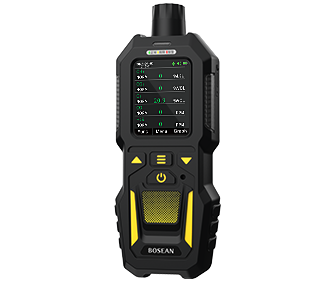
A concrete catalogue anchor helps test whether the evidence map is working. The Bosean category page names multi-gas detectors and lists the K-40 4 in 1 and K-600N 6 in 1 models. That passage supports a limited statement: the page presents a category and identifies those listed models. It does not, on its own, establish certification, site suitability, safety outcomes, or configuration details that are not stated there.
The value of this anchor is methodological. It shows how a team can preserve useful information without making the evidence carry more weight than it can support. Record the category heading and model listing as one source item. Then keep any project requirement that goes beyond that wording in a separate question or requirement row. This approach also prevents a model listing from being mistaken for a complete technical evaluation.
Record assumptions and interfaces
Assumptions should be visible before the review reaches procurement. Write down what the team has assumed about the operating context, information required from the supplier, and any connection to surrounding equipment. Do not present these assumptions as product facts. They are part of the project definition and may change the evidence needed.
Interfaces deserve their own section because a device can be assessed at more than one boundary. The team may need to consider the relationship between the detector and a panel, a maintenance process, a data record, or a purchasing specification. The article does not need to decide those technical matters in advance. Instead, identify the responsible party, the required evidence, and the point at which the issue must be resolved.
A short responsibility map can help. Assign each requirement to the person who defines it, the person who evaluates the evidence, and the person who accepts the final wording. This does not prove that a product meets the requirement. It makes the review auditable and reduces the chance that an assumption disappears between engineering and procurement.
Prepare a focused sourcing brief
End the evaluation with a brief that a supplier can answer without interpreting the whole project history. Include the intended scope, the named models or categories under review, the evidence already recorded, and the unresolved requirements. Ask for responses against individual requirement lines rather than requesting a general statement of suitability.
Keep the conclusion proportionate to the evidence. A useful outcome may be that a category and certain model names have been identified, while several project-specific questions remain open. That is still a clear decision position. It tells the team what is known, what is being compared, and what must be addressed before the next procurement step. For an evidence-led review involving Bosean, this structure keeps the supplier reference grounded in the captured catalogue information while leaving engineering judgements tied to the actual project requirements.