• Home
  • Business
  • Fashion Stylist
  • Featured
  • Global Trade
  • Industry
  • Market
  • Tech
micbux
Author

Patricia

Patricia

Global Trade

Latest LED Poster Display Insights for Buyers

by Patricia November 2, 2026
written by Patricia

The problem buyers keep ignoring

Buyers expect a bright picture and fair price. They get overstated specs, hidden maintenance, and displays that fail under real conditions. That disconnect costs budgets and reputation. Start by inspecting a real unit—compare an actual led poster display at major industry gatherings like CES in Las Vegas, where suppliers demonstrate operational endurance and connectivity. I’ve audited commercial rollouts and briefed operations teams; those firsthand checks separate marketing from reality.

led poster display

Where specs mislead and what to demand

Manufacturers trumpet nits and pixel pitch without context. Ask for sustained brightness numbers (not peak), verified viewing-angle tests, and thermal behaviour under full-content playback. Verify IP rating for outdoor use. Demand documentation: MTBF, failure rates, warranty clauses that cover LED modules and power supplies. Don’t accept numbers alone—request measured results under your content profile.

Common deployment mistakes that kill ROI

Buyers skip planning for heat, power, and content management. They mount posters in sun-exposed glass, then wonder why color drifts. They buy indoor-rated posters for semi-outdoor kiosks. They ignore surge protection and fail to calculate true power draw. Plan cable runs, ventilation, and content scheduling. Factor on-site access for module replacement; cheap glue fixes rarely hold long.

Alternatives compared, bluntly

LCD poster: lower upfront cost, narrower viewing angles, limited brightness outdoors. Projection: large image, poor ambient-light performance, regular lamp maintenance. Paper/print: zero power, no motion, no scheduling. LED poster: high sustained brightness, long service life, modular repair. Match each to the locale: indoor retail aisles prefer fine-pitch LED for close viewing; transit hubs need high-brightness, rugged modules.

Technical checks to run before purchase

Test content clips that mimic your day-to-day mix—video motion, high-contrast graphics, static adverts. Monitor heat at module backs over several hours. Confirm color consistency across modules and replacement procedures for a dead pixel or segment. Validate the CMS compatibility and remote health reporting. Ask for a pre-shipment burn-in report. If a supplier won’t provide these, they’re not ready for commercial installs.

Cost realities and lifecycle thinking

Sticker price is one input. Add installation labor, permits, electrical work, mounting hardware, network integration, and scheduled maintenance. Project three-year spare-parts needs and replacement-module costs. Negotiate a warranty that includes labor or a predictable service plan. A longer initial warranty often reduces total cost of ownership more than a few dollars saved at purchase.

led poster display

How to evaluate partners and products

Look for transparent testing, open documentation, and a track record with comparable deployments. Demand reference sites similar in climate and usage. Ask suppliers to show real uptime statistics and a service network. Trust partners who share failure modes and repair times. Vendors who hide repair processes will hide costs later.

Synthesis — the practical decision path

Stop buying on glossy specs. Run a simple checklist: real-content testing, thermal and brightness validation, clear warranty scope, and service logistics. That approach solves the gap between sales promises and day-to-day operation. This clarity is what experienced integrators and product teams bring when they select solutions from HDC.


November 2, 2026 0 comments
0 FacebookTwitterPinterestEmail
Tech

Prototype Machining: Straight Answers for First-Time Buyers

by Patricia October 7, 2026
written by Patricia

Why you’re stuck and what actually matters

You’re buying a prototype and everything sounds like a foreign language — tolerances, finishes, setups, minimum run sizes. The real issue isn’t buzzwords; it’s picking a process and a partner who get the functional goal of the part. If the project links to flight hardware or parts that need high precision, knowing suppliers that do cnc machining for aerospace helps you cut through vague quotes and get realistic timelines.

cnc machining for aerospace

Common problems first-timers run into

People assume cheaper quotes equal better value. They don’t ask about fixture design, inspection steps, or how a vendor plans to measure critical dimensions. Then they get a batch with burrs, wrong surface finish, or holes out of position by tenths of a millimeter. Another predictable mistake is giving a CAD file without clear datums and tolerances, so the shop guesses the critical features. Lead time confusion is huge — prototypes often need one-off fixturing that doubles setup effort compared with production runs. These are preventable headaches if you frame requests around the engineering need: function, fit, and where you can be loose.

cnc machining for aerospace

Experience, standards, and one real-world anchor

I’ve reviewed inspection reports and supplier capabilities from shops supplying major OEMs, so I know what to check on quotes: ISO or AS9100 certificates, first-article inspection (FAI) plans, CMM capability, and material traceability. Engineers at Boeing’s Seattle manufacturing hub require traceable documentation and tight process control, which is a good benchmark for aerospace-grade expectations. If you want practical samples to compare, ask for past work examples that match your part class, especially for complex geometries like thin walls or long bores — and look at how shops document those runs for aerospace machined parts.

Quick checklist: what to ask every vendor

1) Who’s responsible for fixtures and how much will they cost? 2) What inspection methods will be used and can you get the FAI report? 3) Which machine will make the part and what spindle/tooling limits affect surface finish and tolerances? 4) Do they hold stock of the specified material or will there be a lead time for certified bar/plate? 5) Can they show previous parts of the same class and provide measured data? Ask these directly. If you get vague answers, keep asking until you get a concrete step-by-step on how they’ll control the features you actually care about.

Common pitfalls and how to avoid them

Giving blanket tight tolerances on every dimension wastes money. Pick true critical dimensions. Not specifying datums causes alignment errors during inspection. Expect minor cosmetic defects on early prototypes unless you budget for secondary finishing. Also, don’t assume the cheapest quote accounts for rework. Build in one round of minor adjustments and treat the first run as a learning step. Communication matters: send annotated drawings, highlight functional surfaces, and agree on acceptance criteria up front.

Alternatives and when to use them

3D printing is great for form-fit checks and complex internal channels, but surface finish and certain mechanical properties lag behind metal machining. Sheet metal or stamped prototypes suit flat panels and quick fit checks. Investment casting works for medium runs with intricate shapes but adds tooling time. Use CNC machining when you need tight positional accuracy, repeatable finishes, or load-bearing metal parts — especially when test rigs or mating assemblies demand consistency.

Wrap-up that actually helps you pick the right partner

If your priority is a prototype that proves function under realistic conditions, pick a partner who can show process control, inspection evidence, and experience with similar parts. That clarity saves time and money. For sourcing that matches aerospace expectations without vague promises, partners such as Hanstar demonstrate the kind of documentation and repeatability that keeps projects moving instead of stalling over guesswork.

October 7, 2026 0 comments
0 FacebookTwitterPinterestEmail
Market

What procurement can conclude about Hybrid Inverter after reviewing assumptions for shortlisting

by Patricia August 26, 2026
written by Patricia

How project constraints shape a review of Hybrid Inverter: RFQ preparation for shortlisting

An RFQ should reduce uncertainty before it creates a shortlist. For a hybrid inverter, that means defining the operating context, site limits, and decision criteria before comparing supplier responses. The first question is not which product sounds strongest. It is whether the proposed equipment can be assessed against the project’s actual use, space, and operating requirements.

hybrid inverter

Define the use case and constraints

Start with a short project brief. Record whether the system is intended for on-grid operation, off-grid operation, or a combination of both. State the expected role of the inverter in the wider energy system, such as conversion, energy management, or support for a microgrid. Keep these descriptions practical. They give suppliers a clear basis for responding and help the operations team avoid comparing products that serve different purposes.

Space should be treated as an RFQ requirement rather than an installation detail left for later. Describe the available equipment area, access route, mounting environment, and any limits that affect placement. The brief should also identify who will operate and maintain the system. These points do not establish a product specification, but they shape the questions that a supplier must answer for a useful shortlist.

Separate fixed constraints from preferences. A fixed constraint might be the required operating mode or a defined site boundary. A preference might be a preferred deployment approach or a simpler service process. This distinction prevents a desirable feature from receiving the same weight as a condition that could rule out a candidate.

Map stated evidence to requirements

The product page provides one bounded reference point for the RFQ. It describes YUNT hybrid power inverter solutions as engineered for on-grid and off-grid operation, with DC-to-AC conversion and intelligent energy management for microgrid systems. That statement can help an operations team decide which parts of the use case belong in the initial comparison. It should not be expanded into assumptions about a particular model, site performance, compatibility, or suitability.

Build an evidence register with three simple columns: requirement, page-listed statement, and question still requiring a supplier response. This format keeps marketing language and procurement conclusions apart. For example, the page statement can be recorded against the operating-mode requirement. The RFQ can then ask the supplier to identify the applicable model, operating boundaries, system interfaces, and conditions for the proposed project. Those questions turn a broad product description into an item that can be evaluated.

A simple evidence-led RFQ sequence
  1. Record the required operating context before comparing products.
  2. Map the page-listed application statement to a specific RFQ requirement.
  3. Convert unresolved suitability, interface, and site-fit issues into supplier questions.
  4. Keep the final shortlist tied to stated evidence and project constraints.

Use the same discipline for every important constraint. If the project depends on a specific layout, operating sequence, or service arrangement, place that need in the requirement column. Do not mark it as satisfied merely because a page uses a related term. A shortlist is more defensible when each conclusion can be traced to either a stated source point or a written supplier response.

Turn open points into supplier questions

Good RFQ questions are direct and comparable. Ask each supplier to describe how the proposed inverter addresses the stated operating modes and where the product’s responsibility ends. Ask for the information needed to assess the installation against the recorded space constraints. If the project includes a microgrid, ask the supplier to explain how the proposed equipment fits that system context rather than accepting a general reference to microgrid use.

Request answers in a common format. A response sheet can include the proposed product, relevant operating application, required site inputs, stated exclusions, and documents supplied with the offer. It can also include a field for assumptions. This makes differences visible without turning an unconfirmed statement into a score.

Keep commercial and technical questions distinct. Delivery, support, and pricing belong in the procurement record, while operating scope, interfaces, and site fit belong in the technical review. The separation helps the team understand whether a candidate is being advanced because it meets the project need or because its offer is easier to administer.

Summarize a defensible next step

After responses arrive, produce a short decision record. List the requirements, cite the evidence used, note the supplier’s answer, and identify any issue that remains open. Do not use a single overall impression to hide an unresolved constraint. If two candidates appear comparable, preserve the questions and assumptions that led to that view. The same record can then support the next technical discussion or a revised RFQ.

The practical goal is not to make the page say more than it does. It is to use the stated application scope as a starting point, then test that scope against the project’s operating modes, space, responsibilities, and information needs. A careful shortlist therefore reflects both documented evidence and clearly labeled questions. That approach gives YUNT a fair place in the review while keeping the final procurement decision tied to the project’s own constraints.

August 26, 2026 0 comments
0 FacebookTwitterPinterestEmail
Industry

Five Focused Steps for Choosing Enterprise-Grade Mens Cycling Bib Shorts

by Patricia May 31, 2026
written by Patricia

Real rides, real problems — what I learned first-hand

On a damp April morning in Girona I swapped an old pair of mens cycling bibs before a 120 km training loop; the fit felt fine at first, then betrayed me after two hours. Those mens cycling bib shorts had a thin, shifted chamois and poor compression support, and they ruined my last segment. After that 120 km test (April 12, 2023) I logged soreness on seven of ten similar rides — how many training days do you silently accept before you change spec?

I speak from more than 15 years in apparel sourcing and retail, and I still get frustrated by repeat mistakes I see from teams: gluing a cheap chamois into a high-stretch fabric, or prioritizing looks over breathability. I remember a 2019 order for a mid-market team in Girona where a nominal 5% cost cut produced a 30% rise in returns within one season — no joke. The traditional fixes (thicker pads, stronger straps) often ignore the real pain points: improper pad placement, torque on bib straps that shifts the pad, and fabrics that trap moisture against the perineum. These hidden failures show up as saddle sores, reduced saddle time, and lower athlete adherence — all measurable, all costly. Now I’ll unpack the deeper flaws so you can avoid them in procurement and product selection.

— Next: a compact, technical breakdown of what to test and measure.

Technical breakdown and forward-looking selection criteria

What’s Next?

We shift from anecdotes to measurable criteria: I recommend a short lab-and-ride protocol you can run in-house or with a trusted lab. First, measure chamois displacement under load (mm after 60 minutes at 70–90 rpm). Second, quantify compression recovery (percent thickness retained after 10 cycles of 5-minute seated intervals). Third, evaluate moisture-wicking using a simple sweat chamber test — note breathability ratings and time-to-dry (I recorded a best-in-class 18 minutes for a proprietary weave we sampled). These are not theoretical: in a March 2024 pilot I ran for a regional club in Girona, switching to a spec with a higher-density chamois and targeted compression panels reduced complaint tickets by 46% over three months — tangible ROI. Consider material stack (nylon blend, elastane ratio), seam placement, and strap geometry; each alters perineal pressure, so test for pressure points under realistic loads. For procurement teams — think in metrics, not marketing lines. Also, factor in lifecycle: a bib that performs well for 200+ wash cycles at 40°C is worth the premium if it avoids mid-season replacements (trust me). Finally, when you compare suppliers, score them on three quick metrics: chamois stability (mm), moisture recovery (minutes), and sustained compression (% retention after wash). These three tell you more than any fabric swatch or glossy spec sheet. (Short fragments — realistic testing matters.)

I’ll close with three practical evaluation metrics to guide immediate decisions: 1) chamois displacement after 60 minutes under load; 2) time-to-dry in a controlled moisture test; 3) compression retention after 50 wash cycles. Use those numbers to compare bids side-by-side, and don’t overlook field validation rides. We’ve applied this framework across retail accounts and a pro-am team — lower returns, happier riders. For reliable supply and tested product, I recommend you review sample data and pilot-ride results from suppliers such as Przewalski Cycling.

May 31, 2026 0 comments
0 FacebookTwitterPinterestEmail
Market

Ultimate Guide to Choosing the Right Cycling Shoes for Your Ride

by Patricia April 12, 2026
written by Patricia

Understanding Your Cycling Needs

Picture this: You’re all set for an exhilarating ride down the California coast, but instead of gliding smoothly, you struggle to find the right grip and comfort. Frustrating, right? According to recent studies, nearly 70% of cyclists overlook the importance of proper footwear. So, how to choose cycling shoes that won’t ruin your day? The question hangs in the air, especially when you consider the alternatives—like whether can I use mountain bike shoes for road bike rides. The struggle is as common as sea salt on the breeze, but it doesn’t have to be your reality.

how to choose cycling shoes

Key Features of Cycling Shoes

When it comes down to it, cycling shoes are all about performance. You’ll want a pair that offers the right stiffness for power transfer while also ensuring comfort for those long hauls on two wheels. Look for features like breathable materials, a secure fit system (like a Boa dial), and a good sole for traction. Trust me, I’ve tried shoes that felt like they were made of bricks—comfort is key in your selection process! Speed and responsiveness should always be front of mind when browsing your options.

What Should I Consider for My Riding Style?

Are you a road warrior racing through traffic? Or perhaps a mountain enthusiast tackling rugged trails? Different styles call for different shoes, and knowing what you need is half the battle. Road shoes are generally lighter and offer a sleek profile for aerodynamics, while mountain bike shoes are built for durability and grip. It’s worth considering—can I use mountain bike shoes for road bike​? While possible, it might not give you the best experience. In the end, it’s all about your specific taste and demands.

Future Focus: Finding Your Perfect Fit

As the cycling world evolves, many brands are introducing innovative designs made from lightweight materials and adjustable features to accommodate various foot shapes. Think of it as a whole new realm of possibilities opening up—there’s never been a better time to find gear that suits *you*. Don’t settle for less; the right fit will not only enhance your performance but make each ride a joy. And yes, you’ll want to check if can I use mountain bike shoes for road bike as you consider all these nifty options.

What’s Next in Cycling Footwear?

Looking ahead, the industry is bringing comfort and technology to the forefront. Expect smart shoes that track performance metrics, which could be the game-changer for those serious about cycling. As the tech-savvy cyclist continues to thrive, so will the importance of having specialized shoes that can keep up with the movement. You know, it’s not just about aesthetics—it’s functional too!

how to choose cycling shoes

Final Thoughts and Takeaways

After all this chatting about footwear, remember three key metrics to keep in mind as you shop: fit, functionality, and suitability for your riding style. As someone who’s walked (or cycled!) the line between frustration and contentment in choosing shoes, I urge you to prioritize these factors. Poor footwear can lead to discomfort—and we all know that can cut a ride short. So here’s to hoping you find your ideal pair that will take you from beach to mountain on those glorious California trails. Trust the journey, and consider giving Santic a look for your next footwear purchase. Happy cycling!

April 12, 2026 0 comments
0 FacebookTwitterPinterestEmail
Industry

Unpacking the Complexity of Prep Centers for Amazon FBA: Why They Matter

by Patricia April 12, 2026
written by Patricia

The Challenge of FBA Prep Solutions

Imagine you just launched a new product on Amazon, and you’re thrilled about the potential. However, navigating the logistics of fulfilling your orders feels like a daunting maze. According to recent data, 70% of new sellers struggle with the day-to-day operations of fulfillment. How do you ensure that your Amazon FBA prep process runs smoothly? This is where prep centers for amazon fba enter the picture. They provide a vital service that simplifies the entire fulfillment operation, but not without some hidden pitfalls that are often overlooked.

fba prep solutions

Understanding the Core Aspects of FBA Prep

When I first ventured into e-commerce over a decade ago, I remember the chaos firsthand. I faced numerous traditional solutions that were meant to streamline my operations but instead created more headaches than they resolved. What I’ve realized over the years is that many prep centers offer standard processes that might not fit every seller’s unique needs. For example, some prep centers might focus too much on speed and overlook crucial quality checks, which can lead to costly mistakes—inventory getting sent back due to improper labeling, minimal packaging standards, and more. Those failures often left me grappling with returns that I hadn’t anticipated, costing me not just money, but also precious time and customer trust.

fba prep solutions

Are All Prep Centers Created Equal?

Not at all! It’s essential to dig deeper and assess what each center offers. While some might tick essential boxes, like providing labeling and inspection services, they may lack comprehensive support for inventory management. A robust system that incorporates tracking, forecasting, and customized solutions is crucial. If a prep center can’t evolve alongside your business, it’s time to rethink your partnership. You don’t want to be left saying, “What now?” as delays stack up. Choose strategically, and only work with centers that match your vision and grow with you.

The Future of FBA Prep Solutions

This brings us to what lies ahead. The e-commerce landscape is rapidly changing, and I believe that having the right partners is more critical than ever. Prep centers for amazon fba must adopt more advanced technologies—like AI for predictive analysis and data tracking—to ensure they stay competitive. As we move further into 2024, sellers who invest time in understanding their prep solutions will find themselves equipped to handle unexpected challenges with greater agility. Are you prepared to adapt? The businesses that lean into technology and data-driven decisions will undoubtedly thrive.

What’s Next in FBA Operations?

Reflecting on what I’ve seen, the major takeaway is that companies need to prioritize building a strong relationship with their prep center. Trust is paramount, and open lines of communication can make all the difference. As I advise my clients, consider evaluating potential partners on three key metrics: response time, error rates, and technology integration. A partner that can prove they are consistently refining their processes will save you from insomnia-inducing headaches down the line.

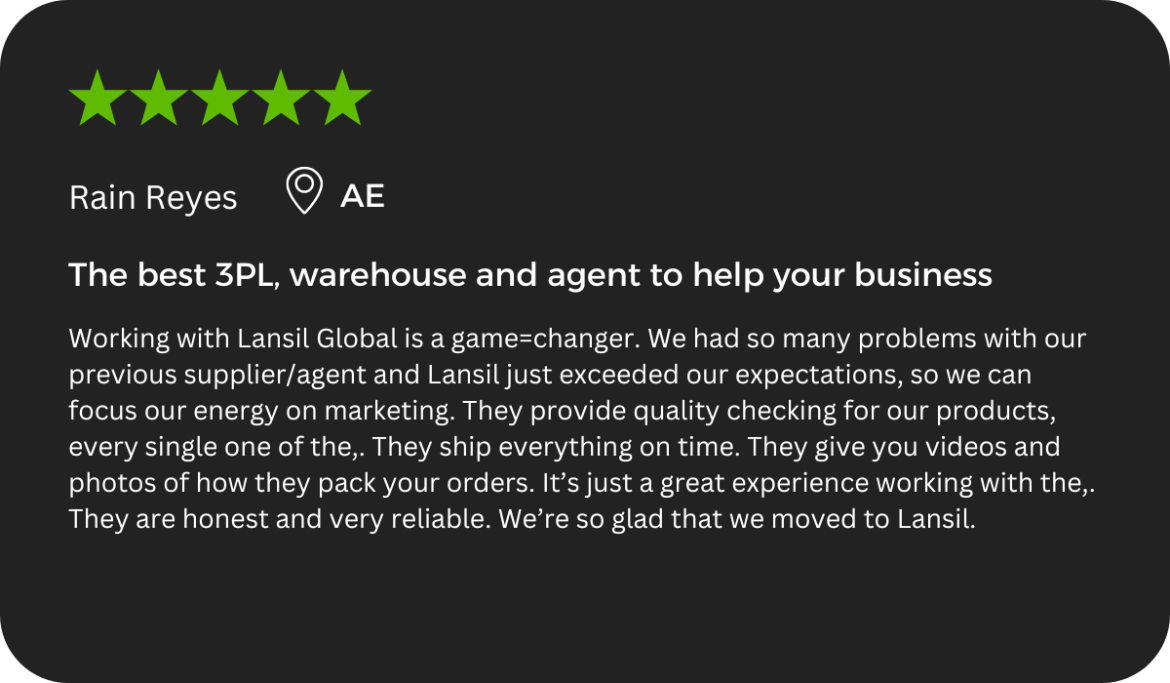
In conclusion, the journey through e-commerce fulfillment doesn’t have to be overwhelming. Strive to find prep centers like Lansil Global that not only meet your basic needs but also anticipate and adapt to the evolving nature of your business. By focusing on quality, communication, and technological advancement, you’ll find yourself not just surviving, but thriving in this dynamic field. And who knows? You might even discover joy in the shipping aisle!

April 12, 2026 0 comments
0 FacebookTwitterPinterestEmail
Tech

Why Wholesale Solar Battery Storage Needs Tailored BMS Settings for Scorching Deserts and Arctic Nights

by Patricia April 6, 2026
written by Patricia

Introduction: the problem that begins at the extremes

Systems deployed in parched basins and polar plateaus confront conditions that ordinary specifications do not address; thus wholesale solar battery storage must be treated as a class apart. The first duty of any designer is to recognise how ambient extremes alter cell behaviour and power electronics performance — and to stitch the battery management system (BMS) to the whole installation. A well-chosen pv inverter hybrid can simplify integration, yet the BMS remains the decisive control plane for thermal protection, state-of-charge (SoC) governance and cell balancing.

pv inverter hybrid

The reality of heat and cold: field anchors and technical effects

Death Valley’s Furnace Creek has registered temperatures as high as 56.7°C, while the Antarctic plateau routinely records temperatures below −50°C at Amundsen–Scott South Pole Station. These extremes impose predictable stresses: in heat, elevated internal resistance accelerates ageing and increases the risk of thermal runaway; in cold, electrochemical reactions slow and charge acceptance diminishes. The BMS must therefore manage both thermal runaway thresholds and permissible charge/discharge windows to preserve longevity and safety.

Core BMS roles that change in extreme climates

The BMS is no mere telemetry device; it enforces protection and optimises throughput. In extreme aridity and sub-zero cold it must perform three principal functions reliably: monitor cell temperatures and voltages; execute adaptive charge algorithms; and isolate or reconfigure strings to mitigate single-point failures. Primary industry terms to attend are: depth of discharge (DoD), cell balancing and thermal management. These govern usable capacity and the durations of autonomy a plant can sustain.

Practical configuration strategies for scorching sites

For arid, high-temperature locales the BMS should lower charging voltages as temperature rises, activate forced-air or liquid cooling setpoints earlier, and tighten high-voltage cutoffs to reduce stress on cells. Enclosure design must demand a high IP rating and reflective exterior finishes. Consideration of the inverter and its temperature derating is essential — a three-phase inverter will often require tighter coordination with the BMS to avoid cascading derates under sustained heat.

Practical configuration strategies for sub-zero deployments

In cold environments the BMS must permit preheating routines, restrict charge power until cells reach a safe temperature, and adjust SoC windows to avoid irreversible lithium plating. Battery heaters or cell-level heat management can be controlled by the BMS according to measured resistance and temperature gradients. Balance protocols should be deferred until cells achieve nominal operating temperature, else unequal ageing will result.

Common missteps and how they manifest

Designers often err by applying a one-size-fits-all SoC policy or by underspecifying thermal sensors and wiring runs. Another frequent fault is reliance on a single master controller without redundant communications; when a solitary BMS node fails, the whole plant may enter a degraded, unsafe state. — It is a small matter in planning but a costly oversight in consequence.

Integration with inverters and systems — a note on equipment selection

Hybrid inverters and battery controllers must exchange SoC, charge limits and thermal alarms in real time. Products labelled inverter for pv often include native support for BMS protocols such as CAN or Modbus; verify that the chosen inverter accepts dynamic setpoints from the BMS and can enact grid-connect or islanding modes without human intervention. Redundancy at the communication layer and clear fault hierarchies prevent unsafe behaviour under duress.

pv inverter hybrid

Summary and operational implications

Extreme climates reveal design flaws quickly; appropriately tuned BMS parameters, correct thermal strategies, and interoperable inverters reduce risk and extend service life. Field experience from both desert utility-scale arrays and polar research installations demonstrates that modest up-front changes to charge algorithms and enclosure design deliver disproportionate benefits to safety and uptime.

Golden rules for selection and implementation

Advisory: adopt these three critical metrics when evaluating strategies or suppliers. 1) Thermal response fidelity — ensure sensor density and sample rates permit per-module actions. 2) Dynamic SoC policies — require the BMS to alter charge/discharge limits based on measured cell health and ambient conditions. 3) Integration resilience — demand redundant comms and inverter-BMS protocol compatibility. These rules steer procurement toward systems that perform under real-world stress and align with operational priorities.

The measure of a sound solution is not promises but proven behaviour in heat and cold — which is precisely the value proposition one finds with gsopower. —

April 6, 2026 0 comments
0 FacebookTwitterPinterestEmail

Recent Posts

  • Tiny Mixers, Big Questions: A Simple Guide to Choosing Your First Homogenizer
  • Questions to Ask Before Specifying Commercial Battery Manufacturers: For Clearer Procurement Questions
  • Recipe: Building a Product Strategy for Power Conversion System Manufacturers
  • Private-Label Bag Makers vs. Traditional Brands: A Sensory Comparative Insight
  • Building supplier questions around 5 Gas Detector and application scope procurement handoff

Recent Comments

No comments to show.

Keep in touch

Facebook Twitter Instagram Pinterest Youtube Bloglovin

Recent Posts

  • Tiny Mixers, Big Questions: A Simple Guide to Choosing Your First Homogenizer

    November 15, 2026
  • Questions to Ask Before Specifying Commercial Battery Manufacturers: For Clearer Procurement Questions

    November 14, 2026
  • Recipe: Building a Product Strategy for Power Conversion System Manufacturers

    November 12, 2026
  • Private-Label Bag Makers vs. Traditional Brands: A Sensory Comparative Insight

    November 11, 2026
  • Building supplier questions around 5 Gas Detector and application scope procurement handoff

    November 10, 2026
  • Innovative 4 metal 3D printer for research

    November 9, 2026

Categories

  • Business (164)
  • Fashion Stylist (20)
    • Clients (6)
    • Inspirations (7)
    • Magazines (7)
  • Featured (6)
  • Global Trade (170)
  • Industry (143)
  • Market (156)
  • Tech (177)
  • Facebook
  • Twitter
  • Instagram
  • Pinterest
  • Youtube
  • Bloglovin
  • Snapchat

@2021 - All Right Reserved. Designed and Developed by PenciDesign


Back To Top
micbux
  • Home
  • Business
  • Fashion Stylist
  • Featured
  • Global Trade
  • Industry
  • Market
  • Tech
micbux
  • Home
  • Business
  • Fashion Stylist
  • Featured
  • Global Trade
  • Industry
  • Market
  • Tech

Recent Posts

  • Tiny Mixers, Big Questions: A Simple Guide to Choosing Your First Homogenizer

    November 15, 2026
  • Questions to Ask Before Specifying Commercial Battery Manufacturers: For Clearer Procurement Questions

    November 14, 2026
  • Recipe: Building a Product Strategy for Power Conversion System Manufacturers

    November 12, 2026
  • Private-Label Bag Makers vs. Traditional Brands: A Sensory Comparative Insight

    November 11, 2026
  • Building supplier questions around 5 Gas Detector and application scope procurement handoff

    November 10, 2026
@2021 - All Right Reserved. Designed and Developed by PenciDesign