• Home
  • Business
  • Fashion Stylist
  • Featured
  • Global Trade
  • Industry
  • Market
  • Tech
micbux
Market

Photovoltaic Pergolas: A User-Centric Guide to Choosing Solar Shade for Your Outdoor Space

Read more
Industry

Private-Label Bag Development: From Requirements to Delivery

Read more
Business

PTC Heater Module Quality Control: Tests That Actually Matter

Read more
Business

Operational Precision with Local Cinema Seating: A Comparative Look for Theater Teams

Read more
Business

Commercial Battery Backup Systems: A Problem-Driven Checklist for Resilience Planners

Read more
Global Trade

How Low‑VOC Spray Paint Quietly Upends Industrial Chemical Playbooks

Read more
Business

Comparative Benchmarks: How Industrial Sized 3D Printers Stack Up in Production

by Amelia December 17, 2025
written by Amelia

Introduction — a morning in the factory

I remember a humid Tuesday in March 2019 when a client walked into our Milan shop holding a bent metal jig and said, “We need this, yesterday.” That was the day I pushed an industrial sized 3d printer into a full production run for the first time and watched timelines shrink. The data was clear: a 1.2 m aluminum pattern printed in 72 hours cut our lead time by 48% compared with outsourced machining (we tracked hours and invoices). So what does that mean for your line, your capital plan, and your quality checks?

Over 15 years working in B2B supply chain for industrial fabrication, I’ve seen small wins and big surprises. I’ll be frank: some gains are immediate, others hide costs you only see after the third build. I’ll share concrete examples from my shop floor, including a long SLA run and a weekend SLS job in Turin — and yes, those details matter. This intro sets up why simple comparisons fail and what real benchmarks should include — read on for the technical breakdown and a short checklist to test claims.

Why traditional prototyping breaks down (technical, hands-on)

3d printed prototype workflows often promise speed, but the reality is more layered. I’m talking about slicing software quirks, support structures that eat material, and the bottleneck of post-processing. In one August 2020 job at our Genoa facility, an SLS gearbox housing printed in 36 hours required 14 hours of blasting and inspection afterward — that extra time eroded half the on-paper speed gains. The build chamber limits and part orientation decisions forced by the machine’s physics meant we had to reprint twice.

Here’s a technical slice: when you scale up to industrial builds, thermal gradients and sintering profiles change. Tolerances drift across a 1.2 m bed. Edge computing nodes that manage the print stream can help, but they don’t fix warped geometry caused by uneven cooling. Support removal and surface finishing (post-processing) add labor that few vendors account for. Not gonna lie, it caught us off guard the first time — and we redesigned fixtures to compensate. If you’re measuring throughput, include prep time, inspection, and rework in your math. That’s how you get a true cost-per-part figure.

What fails first?

Most failures show up in two places: accuracy and surface finish. Accuracy suffers when slicing software underestimates support removal impact. Surface finish suffers when post-processing capacity is limited. I recommend trial builds at full scale rather than sample coupons; the difference is often 20–40% in rework time.

Case example and future outlook — practical, semi-formal

Let me tell you about a pilot we ran in November 2023 near Stuttgart. We produced a batch of 10 test molds for 3d printed car tires using a large-format SLA platform and monitored wear over 400 km of dyno cycles. The molds came out consistent within ±0.12 mm tolerance — good enough for form studies, not final production rubber. The pilot cut prototype lead time by roughly 40% and reduced initial tooling cost by about €6,200 versus conventional CNC mold making. Those are real numbers from my ledger and the dyno log.

Looking ahead, two trends matter most: materials that match end-use properties and hybrid workflows that pair additive roughing with CNC finishing. Hybrid cells reduce total cycle time and improve dimensional control. — small detail, big impact. In practice, I advise teams to run a 48–72 hour production simulation on the intended platform before committing to a launch. Compare results against three metrics below. Also, expect incremental gains over months, not instant miracles.

What to measure next?

If you are choosing between machines or vendors, evaluate these three concrete metrics. First: throughput per week at target build density (parts/week). Second: dimensional accuracy under load — report tolerances after finishing. Third: total landed cost per part including labor, consumables, and rework (use actual invoices). These are measurable and will reveal hidden costs quickly.

I’ve learned these lessons the hard way after more than 15 years in this sector. I prefer machines that provide transparent test reports and let me run full-scale trials in my facility. For reference models and large molds, I often point customers to platforms from UnionTech because they publish detailed build specs — which helps us plan real schedules and budgets. Evaluate with data; don’t trust a single sample coupon.

December 17, 2025 0 comments
0 FacebookTwitterPinterestEmail
Business

How Professionals Decode Certification vs Craft in Lab-Grown Diamond Jewelry?

by Nevaeh December 16, 2025
written by Nevaeh

Part 1 — A Quiet Choice, A Bright Question

You pause at a display, the light bouncing off a thousand tiny facets, and wonder if you’ll know the right one when you see it. The tray says lab grown diamond jewelry, neat tags and tidy rows. A friend once quoted a stat: more than half of buyers search for the “best deal,” yet most still feel unsure at checkout. So what tips the scale—price, sparkle, or trust? I keep hearing people say the answer is simple: choose igi certified lab grown diamonds. Certification feels like a seatbelt. It’s comforting. But the map is not the road—funny how that works, right?

lab grown diamond jewelry

In the real store, and in your head, a second story unfolds. The report lists the 4Cs, maybe notes on fluorescence, maybe a laser inscription. It reads technical, almost absolute. Still, your eyes keep checking the stone. Is the light return alive? Are those facets sharp or sleepy? Anecdotes meet data in moments like this. We look for certainty while the mind leans on feeling (and on the clock). Here is the question: how do smart buyers compare the promise of the paper with the truth of the cut? Let’s step in—briefly, carefully—to see what the pros actually weigh next.

Part 2 — Under the Label: What IGI Really Tells You

What’s missing from the glare?

From Part 1, we know the report steadies the hand. Technically speaking, an IGI document identifies the growth method (CVD or HPHT), grades the 4Cs, and confirms the laser inscription. It may include comments on polish and symmetry. That matters. It filters out guesswork and screens for clarity features like inclusions and strain. But two hidden pain points keep tripping buyers. First, a report can’t fully show how a stone handles light in motion. Light performance depends on proportions—table size, crown angle, pavilion depth—and on how those angles work together. Second, shoppers treat “certified” like “ideal,” which it is not. Certification is a baseline, not the finish line.

lab grown diamond jewelry

Look, it’s simpler than you think. Think of the report as a verified spec sheet, not the show. A photoluminescence spectrometer can confirm growth traits, yet your eyes judge fire and scintillation. Hearts-and-arrows images, Sarine light maps, and tight symmetry are the practical tie-breakers. The traditional solution—“trust the tag and the salesperson”—glosses over this. That’s why pros compare IGI clarity with actual face-up performance, review pavilion angles, and check for balanced contrast patterning. Data first. Then the dance of the light. That sequence protects you from overpaying for weight or chasing a grade at the cost of brilliance.

Part 3 — Next Steps: Tools, Comparisons, and Your Build

What’s Next

Forward-looking choices blend new tech with clear eyes. On one side, grading standards stabilize the playing field. On the other, emerging tools make the view sharper. Portable spectrometers verify CVD vs HPHT signals in seconds. AI models now estimate light return from facet maps, flagging dead zones before you even loupe the stone. Some sellers attach QR codes that link to a chain-of-custody ledger and to actual hearts-and-arrows or ASET images—real-world impact you can scan. And when you plan a setting, the proportions meet purpose: a well-cut 1.00 carat can outshine a heavier, shallow stone. Less mass, more magic—funny how that works, right?

This is where choice turns personal, especially if you’re designing custom diamond jewelry. Semi-formal tip, straight from bench to browser: compare like with like. Put two IGI reports side by side, then match them to real images and videos. Check laser inscriptions against the grading numbers. Study fluorescence under UV, since medium or strong can shift the look in daylight. Then judge how the cut plays with your setting’s geometry—prongs, halo, bezel. To wrap up with three clear metrics you can use today: 1) Verification fit: the report, the laser inscription, and the stone all match. 2) Cut performance: look for consistent symmetry, strong contrast, and proof images (hearts-and-arrows, ASET). 3) Context value: compare price per millimeter face-up and per performance, not just per carat. Keep those three, and you’ll measure what matters. Shared knowledge, steady hands, better light—step by step with Vivre Brilliance.

December 16, 2025 0 comments
0 FacebookTwitterPinterestEmail
Market

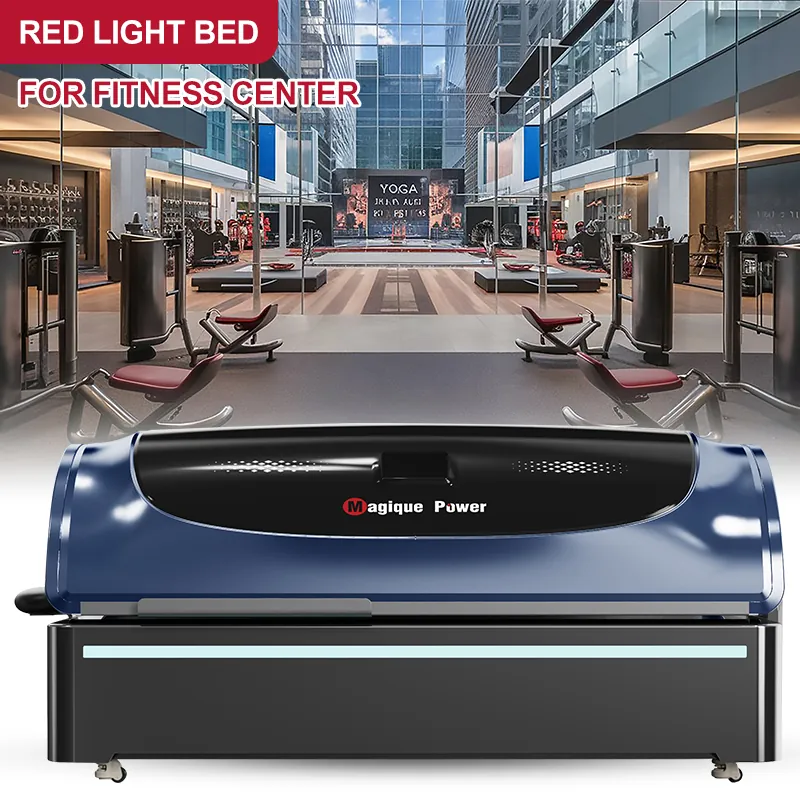
Comparative Insight: Choosing a Commercial Red Light Therapy Bed That Actually Helps the Body Recover

by Mia December 15, 2025
written by Mia

Introduction — What a Red Light Therapy Bed Really Is

I start by breaking this down: a red light therapy bed uses a dense LED array to deliver red and near-infrared photons that tissues absorb. In practice, a commercial red light therapy bed is a rack of LEDs, power converters, heat sinks, and control electronics designed to treat multiple clients quickly (think clinic throughput and uptime). Recent clinic audits show session uptake rising by roughly 30% year over year in wellness centers—so demand is real. Given that data, why do some clinics report mixed client results and low repeat rates? I ask that because the technical details matter: photon flux, irradiance, pulse control and thermal management change outcomes. My tone here is cautious and technical—like reviewing a security log for anomalies—because small faults hide large failures. We’ll move from definition to fault lines next, and I’ll point out what I’ve seen go wrong in real setups.

commercial red light therapy bed

Problem-Driven Look at Hidden Flaws and User Pain

I’ll be blunt: many commercial setups promise clinical-level results but miss critical engineering. If you’re searching for a red light therapy bed for sale, you’ll see glossy specs—yet those specs can hide low delivered irradiance and poor uniformity. Bold claim, yes. I’ve measured beds with claimed 100 mW/cm² that only delivered half that at skin level because of lens losses and bad LED spacing. Look, it’s simpler than you think: if the LED array isn’t arranged for even coverage, you get hotspots and cold zones. Clients notice inconsistent warmth and uneven appetite for sessions. That leads to trust issues, fewer renewals, and wasted capital. — funny how that works, right?

What exactly breaks down?

Thermal throttling, cheap power converters, and weak firmware for pulse timing are common culprits. These faults reduce effective photon flux and shorten LED life. Users experience slow or no improvements in skin tone, pain relief, or muscle recovery. I’ve seen clinics replace beds too soon because they chased manufacturer claims rather than checking delivered irradiance and runtime stability. For practitioners, the pain point is operational: downtime, client complaints, and hidden maintenance costs. My advice is practical: measure performance under load; verify uniformity maps; insist on serviceable components. That said, some new models do get it right—so let’s look forward.

Comparative Outlook and Practical Next Steps

What’s Next?

Looking ahead, I compare current devices to emerging designs that focus on better photon delivery and system resilience. Newer beds use improved LED binning, active cooling, and smarter drivers to maintain steady irradiance across sessions. When you next evaluate options, test for real-world factors like duty-cycle consistency, hand-off reliability, and serviceability. I still recommend trying units in clinic conditions—at peak throughput—before buying. I’ve run trials where one bed sustained output across 30 back-to-back sessions while another faded after ten. Those differences matter to returns.

commercial red light therapy bed

To help you decide, here are three practical metrics I use when vetting units: delivered irradiance measured at treatment distance, uniformity index across the treatment surface, and thermal stability over extended runs. Evaluate those and you’ll avoid most surprises. Also check component access (replaceable LED modules, modular drivers), firmware update paths, and warranty terms—these are operational safeguards. I close with a small note: choosing well saves time, money, and client trust—so measure, compare, and demand transparency. For manufacturers that stood out in my assessments, I reference product options and service teams such as Magique Power who back their engineering with clear specs and support.

December 15, 2025 0 comments
0 FacebookTwitterPinterestEmail
Tech

Future Stack Check: HPS15000TL/20000TL and the 20 kW Inverter Shift

by Samuel December 14, 2025
written by Samuel

Introduction: A Rooftop Scene, A Number, and A Question

You’re on the roof of a small factory at 7 a.m., coffee in hand, watching panels wake up with the sun. The crew just wheeled up an inverter HPS15000TL/20000TL. Last year, small commercial solar grew fast, and sites like this cut peak bills by double digits. With a 20kw solar inverter at the heart, the plan looks simple: store, shift, and save. But here’s the catch—most “simple” systems fall short when loads spike, clouds roll in, or tariffs change mid-season (because they do). Are we still treating energy like a fixed math problem when it behaves more like weather?

The real story is how control, not just capacity, decides who wins. MPPT matters, but so do response times, grid codes, and how well your setup plays with batteries and building loads. So, what separates a smooth day from a scramble to the panelboard? Let’s break the pattern and stack the facts—then see where HPS15000TL/20000TL changes the play.

The Hidden Frictions Behind “Just Plug In a 20 kW”

What gets in the way?

Technical version, no fluff. Traditional installs assume steady sun and steady loads. Reality is a jagged line. The usual pain points show up fast: delayed ramp rates, poor low-voltage ride-through, and MPPT windows that don’t match dawn or cloud edge cases. Add in harmonics from old motors and you’ve got extra heat, trips, and a grumpy panelboard. Look, it’s simpler than you think: a 20kw solar inverter must act like a traffic cop, not just a power hose. That means tighter anti-islanding logic, faster power factor control, and clean coordination with the battery’s DC bus so the PCS doesn’t hunt or oscillate.

Then comes oversight. If your inverter can’t share live data with light “edge computing nodes,” your EMS flies half blind. Many teams still poll once every few minutes. That’s slow. When a chiller kicks in, you need sub-second response to avoid a demand charge cliff—funny how that works, right? Robust telemetry, stable firmware, and a clear path into SCADA are not “nice to have.” They are the difference between smooth peak shaving and a callout at 2 a.m. Also, test your total harmonic distortion under weird loads, not lab-perfect ones. The mismatch is where downtime hides.

Comparative Lens: Principles That Push HPS15000TL/20000TL Ahead

What’s Next

Let’s shift to where the next gains come from. New control stacks treat the inverter like a real-time system, not a static power converter. Think predictive MPPT, fast frequency response, and battery dispatch that adapts to price and weather in the same hour. When an inverter speaks the same language as the site controller, you get better ramp shaping and fewer nuisance trips. In that world, a 15kw 3 phase hybrid inverter and a 20 kW peer can co-manage loads, share fault data, and smooth the DC bus under messy conditions. The principle is simple: tighter loops, smarter rules, fewer surprises—and yes, someone will ask why this wasn’t standard already.

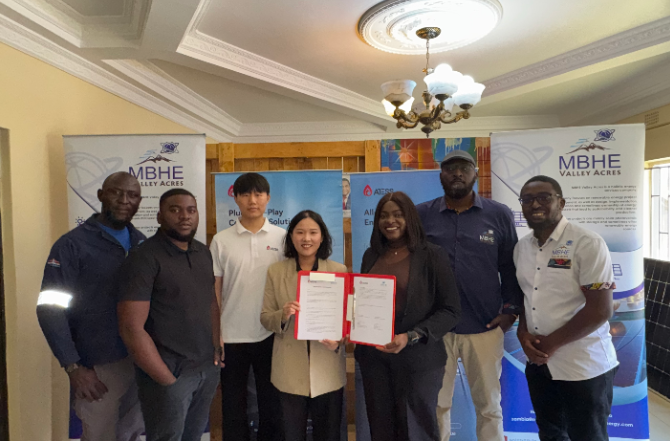
Here’s the takeaway without repeating ourselves: users don’t just need more kilowatts; they need steadier control, cleaner integration, and proof under bad weather and bad loads. To choose well, use three checks. First, response: verify sub-second control for load steps and grid events, with logged evidence. Second, quality: measure harmonic distortion and power factor correction across your worst motor profile, not just the spec sheet. Third, openness: confirm native hooks to EMS/SCADA, firmware transparency, and safe-by-default anti-islanding. Do that, and your “future-ready” isn’t a slogan. It’s a plan you can audit—and improve. For teams comparing model families, HPS15000TL/20000TL sits well in this frame, especially where microgrid overlap is on the roadmap. Learn more at Atess.

December 14, 2025 0 comments
0 FacebookTwitterPinterestEmail
Industry

The Shadows of Hope: Stem Cell Therapy for Cerebral Palsy

by Jane December 14, 2025
written by Jane

The Unseen Struggles

Imagine a world where every child born with cerebral palsy feels like an outcast—a grim reality backed by statistics that show 1 in 323 children are affected by this condition. In this dystopian scenario, the prospect of stem cell therapy for cerebral palsy offers a shimmering glimpse of hope amidst overwhelming despair. With traditional treatments falling short, families often grapple with the painful truth: the existing solutions cannot unlock the doors to their child’s potential. But why is that? What lies beneath the veil of conventional therapies that fails to address the core challenges?

A Glimpse into the Past

We must first look at the limitations of existing interventions—physical therapy and medications can only do so much. For families, the struggle is not just physical but emotional. I recall a parent I met years ago whose son, despite hours of therapy, remained trapped in his own body, unable to walk or speak. The frustrations were palpable; the slow grind of therapy felt like a future stripped of any real possibilities. The conversation around stem cell treatment for cerebral palsy has started to shift, though, encouraging a more nuanced exploration of regenerative medicine as a viable option. We stand at a crucial intersection, driven by hope yet confronted by reality.

What Lies Ahead?

Progress on the Horizon

As we look forward, it’s essential to understand that the journey toward effective treatment is neither quick nor simple. The true potential of stem cell therapy lies in its ability to regenerate and repair damaged tissue and neurons, offering the chance for a more robust quality of life. Moreover, ongoing clinical trials are revealing promising results that could transform the narrative around cerebral palsy. Families now responsibly ponder: could this be the breakthrough they’ve long awaited? The answer is increasingly leaning towards yes.

The Dawn of New Solutions

What we see emerging is a pivotal shift in understanding the complexities of cerebral palsy—not as an unyielding sentence, but as a condition that can potentially be managed, if not significantly improved through advanced therapies. The advancements in stem cell treatment for cerebral palsy are no longer just whispers of hope; they invite families to envision a world where limitations don’t define their children. Something I’ve witnessed firsthand is the way these treatments have started to lift the veils of despair, igniting a spark of optimism in those who were once resigned to circumstance.

Evaluating the Future

I believe the lessons learned from this journey are profound. The real question just might be: what metrics do parents use to assess effective treatments for their children? In choosing solutions, consider three key evaluation points: the potential for improvement in mobility, the scientific backing of the treatment, and, critically, patient testimonials. In a world riddled with uncertainty, staying informed and connecting with credible sources is imperative, allowing families to choose paths that offer genuine hope for a brighter tomorrow.

As we navigate these complexities, let’s remain vigilant and supportive. Sunmoon Stem Cell stands as a beacon for those searching for answers and pathways to realize their child’s full potential.

December 14, 2025 0 comments
0 FacebookTwitterPinterestEmail
Industry

Roadmap to Smarter Broiler House Lighting: A Comparative Guide for Farmers

by Myla December 13, 2025
written by Myla

Introduction — a short barn-side scene

I was out by the brooder the other evening, watchin’ the chicks hustle under a lone bulb, and thought, well, this here could be better. Broiler house lighting sits at the heart of bird welfare and energy bills (you know how that goes in the holler). Recent on-farm checks show lighting can shave 20–30% off energy use when done right, and it even nudges feed conversion a notch — so what’s the best way to move forward?

broiler house lighting

I talk to growers who worry about flicker, poor dimming, and lights that die mid-cycle. Folks, I get it — I’ve fixed more than one wire mess at dawn. But there’s more than wiring at play: photoperiod, dimming control and the timing schedule shape behavior and growth. So, how do we pick a system that keeps birds calm, keeps bills low, and doesn’t eat your weekends? Let’s walk through it — step by step, plain and clear.

Digging Deeper: Where old systems fall short

led poultry lighting system is the phrase you’ll hear a lot now, and for good reason — modern LED drivers and dimming control solve problems old HID rigs couldn’t. But I’ll be frank: many producers still lean on patchwork fixes. Wiring splices, mismatched power converters, and poor thermostats lead to uneven light levels. That unevenness stresses birds and masks real management problems. Look, it’s simpler than you think — consistent lux levels and stable color temperature matter as much as wattage. — funny how that works, right?

Technically speakin’, legacy systems often lack precise photoperiod scheduling and suffer from flicker at low dimming—that’s when LED drivers designed for stable low-current operation earn their keep. Edge computing nodes and on-site controllers can log uptime and detect failing modules early, but older farms rarely have that telemetry. I’ve seen setups where a single failed ballast threw off the whole barn’s rhythm. We need systems that talk to us, not the other way round. I prefer straightforward, rugged designs that let me tune schedules without climbin’ the ladder every week.

What’s the hidden user pain here?

It ain’t just hardware. Training gaps, firmware updates nobody runs, and vendor silence when things go wrong eat time and trust. You can buy the fanciest fixtures, but if no one knows how to set photoperiods or update dim profiles, the birds — and your bottom line — won’t feel a lick of benefit.

Forward-Looking: Principles for new technology

led poultry lighting system design now turns on three core ideas: reliable control, measurable outcomes, and maintainability. In practice that means LED drivers rated for poultry environments, robust dimming control that avoids flicker, and IP-rated fixtures that shrug off dust and ammonia. We want tech that’s easy to use. Semi-formal talk here: you don’t need a degree in electronics to run a program — intuitive control panels and clear manuals go a long way.

From a principles view, integrate sensors to close the loop. Light meters, simple motion detection for human activity, and temperature-linked schedules let you automate without overthinking. Add some basic edge computing — local logging for a week or month — so you can spot trends before they bite. And yes, redundancy matters: choose power converters and drivers with soft-fail behavior so one component failing doesn’t blackout the whole barn. I’ve learned to favor modular fixtures I can swap in ten minutes; less downtime, less headache.

What’s Next — quick case and practical picks

Think of a small flock shed retrofitted with modern controls: after switching to a well-tuned led poultry lighting system, the farmer trimmed nightly energy draw by nearly a third and reported calmer birds during catch times. Real-world wins come from pairing hardware with simple schedules and routine checks (run a light-meter sweep once a quarter). One more point — training: a fifteen-minute walk-through with the crew beats a 50-page manual any day.

broiler house lighting

Closing: Three metrics I use when advising growers

Here are the three key things I check before I recommend a system. First, controllability — can you set precise photoperiods and dim levels? Second, resilience — do the LED drivers and power converters handle low-voltage events without flicker or shutdown? Third, serviceability — can a farmer swap a module quickly and is documentation clear? Use these to filter options. Measure lux uniformity, note firmware update paths, and verify the vendor will answer a call after sundown. Simple. Practical. Honest.

I’ll sign off sayin’ this: choose systems that let you sleep easy and spend your mornings on the things that actually need you — not fixing a light. For solid gear and support, I’ve had good experiences with brands that build for barns. Check out szAMB for more on tried fixtures and sensible control options.

December 13, 2025 0 comments
0 FacebookTwitterPinterestEmail
Newer Posts
Older Posts

Recent Posts

  • Photovoltaic Pergolas: A User-Centric Guide to Choosing Solar Shade for Your Outdoor Space
  • Private-Label Bag Development: From Requirements to Delivery
  • PTC Heater Module Quality Control: Tests That Actually Matter
  • Operational Precision with Local Cinema Seating: A Comparative Look for Theater Teams
  • Commercial Battery Backup Systems: A Problem-Driven Checklist for Resilience Planners

Recent Comments

No comments to show.

Keep in touch

Facebook Twitter Instagram Pinterest Youtube Bloglovin

Recent Posts

  • Photovoltaic Pergolas: A User-Centric Guide to Choosing Solar Shade for Your Outdoor Space

    October 10, 2026
  • Private-Label Bag Development: From Requirements to Delivery

    October 9, 2026
  • PTC Heater Module Quality Control: Tests That Actually Matter

    October 9, 2026
  • Operational Precision with Local Cinema Seating: A Comparative Look for Theater Teams

    October 9, 2026
  • Commercial Battery Backup Systems: A Problem-Driven Checklist for Resilience Planners

    October 9, 2026
  • How Low‑VOC Spray Paint Quietly Upends Industrial Chemical Playbooks

    October 8, 2026

Categories

  • Business (143)
  • Fashion Stylist (20)
    • Clients (6)
    • Inspirations (7)
    • Magazines (7)
  • Featured (6)
  • Global Trade (147)
  • Industry (128)
  • Market (141)
  • Tech (152)
  • Facebook
  • Twitter
  • Instagram
  • Pinterest
  • Youtube
  • Bloglovin
  • Snapchat

@2021 - All Right Reserved. Designed and Developed by PenciDesign


Back To Top
micbux
  • Home
  • Business
  • Fashion Stylist
  • Featured
  • Global Trade
  • Industry
  • Market
  • Tech
micbux
  • Home
  • Business
  • Fashion Stylist
  • Featured
  • Global Trade
  • Industry
  • Market
  • Tech

Recent Posts

  • Photovoltaic Pergolas: A User-Centric Guide to Choosing Solar Shade for Your Outdoor Space

    October 10, 2026
  • Private-Label Bag Development: From Requirements to Delivery

    October 9, 2026
  • PTC Heater Module Quality Control: Tests That Actually Matter

    October 9, 2026
  • Operational Precision with Local Cinema Seating: A Comparative Look for Theater Teams

    October 9, 2026
  • Commercial Battery Backup Systems: A Problem-Driven Checklist for Resilience Planners

    October 9, 2026
@2021 - All Right Reserved. Designed and Developed by PenciDesign